

Introduction
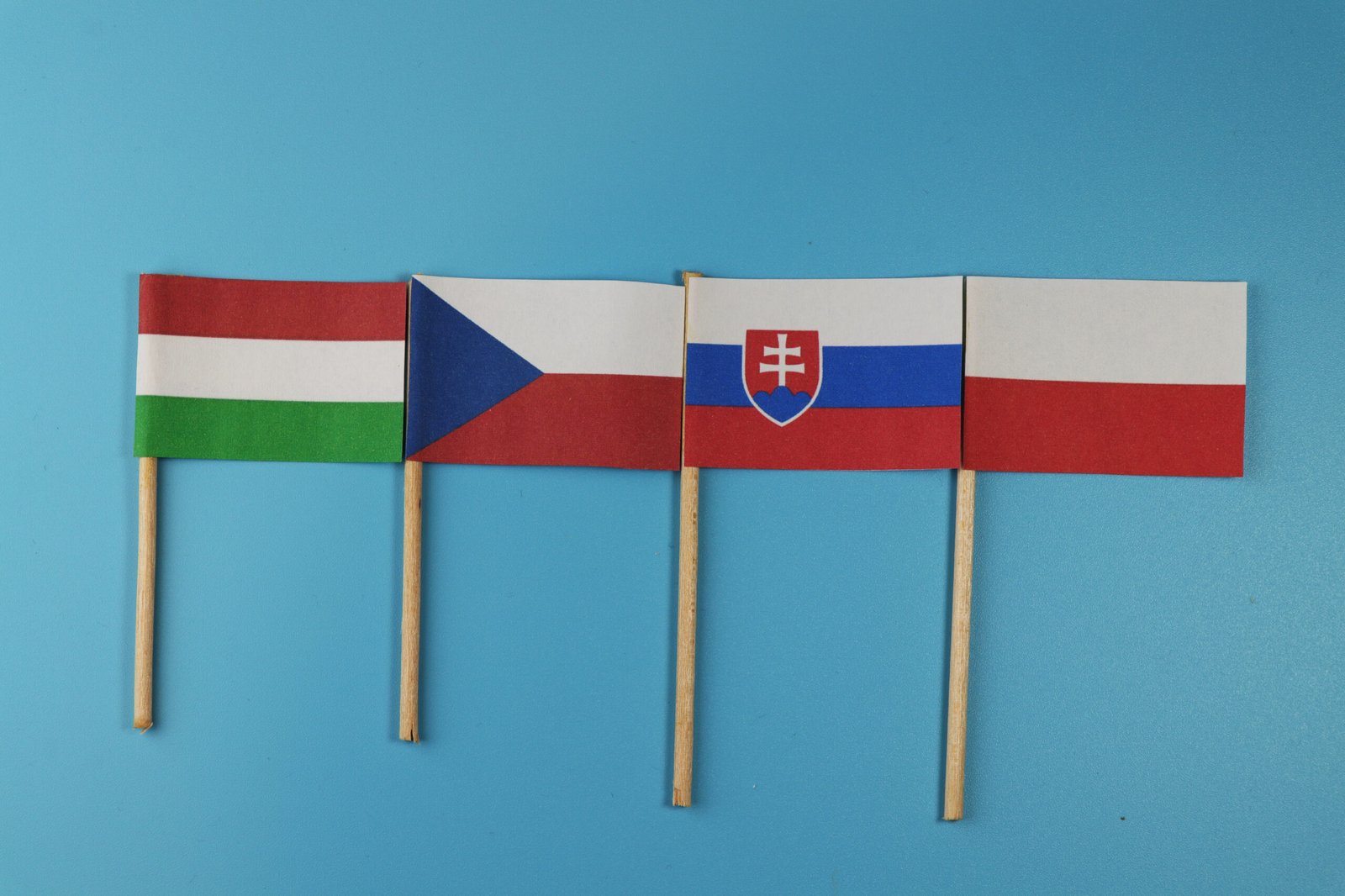
After his landslide victory in April, Péter Magyar and his foreign affairs minister, Anita Orbán, have already visited Poland, Austria, and Brussels, starting the revitalization and improvement of Hungary’s diplomatic relations. The Visegrád Four (Hungary, Slovakia, the Czech Republic and Poland) once formed one of the EU’s more cohesive regional blocs but, in recent years, the Orbán regime’s closeness to Russia has weakened this cooperation. So far, the new government’s actions suggest that they are explicitly seeking to reverse course and strengthen relations again. This leads to one specific question: whether Péter Magyar will be able to restore the V4 cooperation and thereby reorganize the balance of power within the EU. Three experts, Máté Szalai (Corvinus University of Budapest), Samuel Dempsey (The European Correspondent, POLITICO) and Michel Don Michaloliákos (The Hague Institute for Geopolitics) contributed to this article.
The disintegration of the Visegrád cooperation
The Visegrád cooperation has deep historical roots that go back to the Middle Ages. In 1335, the Visegrád Castle, then the seat of the Hungarian kings, was the site of a summit of the Polish, Czech and Hungarian kings, where they agreed on close cooperation in the fields of politics and trade. This inspired their later successors to the create a Central European initiative; Václav Havel, President of the Czechoslovakia, József Antall, Hungarian Prime Minister, and Lech Wałęsa, Polish President, at an event on 15 February 1991 signed a declaration that the three (now four) countries would work closely together on the path towards European integration, supporting the transition towards a pluralistic and democratic society.
Later, the V4 mostly functioned as an informal coordination platform between the countries and achieved moderate successes in representing their common interests, for example during the 2015 migration crisis.
In 2022, after Russia’s full-scale invasion of Ukraine, a clear break occurred among the V4. Poland became the vanguard of European security with very strong anti-Russian rhetoric. In contrast, Viktor Orbán pursued a very different approach to Russia, including hindering Russian sanctions and consistent government propaganda against Ukraine. Since 2023, Slovakia has also challenged the EU’s positions on the matter and at the end of 2025, a change of government brought the Czech Republic also closer to Hungary and Slovakia’s position. Although, the Czech prime minister, Andrej Babiš still presents a more flexible approach.
At the same time, Szalai notes that the V4 cooperation is unlikely to become comprehensive, despite the opposing stances on the war, because even before that, they mostly only cooperated on an issues-based level, such as budget negotiations or the aforementioned migration crisis.
The new government as a catalyst
For the new Hungarian government, restoring relations with Poland is one of the most important reforms. Péter Magyar promised in his victory speech that his first official trip as prime minister would be to Warsaw, and he did indeed travel there after the inauguration. On the one hand, this visit is a symbolic gesture, the Hungarian-Polish relation has a long history and is important to the Hungarian people. On the other hand, Poland is the most politically and economically influential member of the V4, which suggests that the meeting and the accompanying discussions focused not only on rebuilding bilateral relations, but also on strategic objectives related to the future of the V4.
Cooperation is expected in areas where Central Europe’s interests differ to a greater or lesser extent from those of the EU’s stronger Western European member states, such as energy, agriculture, defence, migration, and enlargement.
Dempsey says: “All four governments maintain staunch anti-migrant stances, to differing degrees. That will be policy focus number one. Second, all four economies face the same structural industrial concerns: contracting manufacturing industries and exposure to Chinese investment. They are in need of reindustrialisation, in which they could cooperate more, though that has yet to be seen. They also hold massive agricultural sectors which they will look to protect.”
Michaloliákos mentions that “the existence of a converging interest is important because it can lead to converging groups”. He adds that the EU budget could be an area for tighter cooperation due to joint interest, especially with Poland’s budget deficit and the defence and migration expenditure aspects.
Austria may also join
In his speech, Magyar also promised that the second country he would visit after his victory was Austria. And so, the prime minister and his delegation travelled to Vienna directly after Warsaw to meet with the Austrian leadership.
However, Szalai draws attention to the fact that Péter Magyar’s political performance so far has been strongly characterized by “politics of communication” or “theatracial politics”, therefore it is questionable whether such gesture represents an actual intention to cooperate or whether basic diplomatic normalization goals were behind the meeting.
Austria’s accession to the V4 would significantly increase their interest representation weight at the EU level. However, according to Szalai, “Austria’s accession brings as many questions as benefits”, for example due to its neutrality (it cannot be a member of any military alliances (such as NATO) and cannot allow the establishment of foreign military bases on its territory). Szalai notes that this condition “makes it complicated to discuss hard security questions, leaving out an important pillar of Central European common interests.”
Dempsey highlights the rise of FPÖ (far-right party in Austria) that makes the potential for migration collaboration realistic, however, “everywhere else, I believe the designed purpose and shared history would make it challenging for Austria to really enter the fold.” Adding that “if in the future we see a more universal far right in the V4 and Austria, this equation could change.“
Rebalancing of power or illusion
Dempsey mentions that a truly united V4, could indeed leverage power in the Council and could become a critical swing bloc on areas of qualified majority voting that decides the future of the Union. Furthermore, if Austria were to join the Visegrád Group, the Central European region would truly become stronger in terms of interest representation and the region would have even more legitimacy and capacity in certain negotiations.
According to Szalai, this is not impossible, but there have only been promises in this regard for years. According to him, the strength of Poland is more relevant in the question of the rebalancing of power within different regions of the EU and not Austria’s accession or the attitude of the new Hungarian government.
Dempsey notes that the entire possibility of tighter V4 collaboration depends on these countries’ stance on Ukraine, and currently the politics are too divisive, highlighting the reality of “the sovereigntist occupying the Slovak and the Czech governments”.
The reality is that the V4 already have their own strong divisions and individual interests in current political matters, and besides the common communist past, history also rather carries conflicts that are still alive such as in the area of minority issues (i.e. the continued presence of the Beneš Decrees in the Slovak and Czech legal systems).
Conclusion
In conclusion, with the new Hungarian government and its pro-European attitude there is a higher chance for the V4 cooperation to strengthen relations and cooperate at the European level. However, due to the current sovereignist leaderships in Slovakia and the Czech Republic, it is likely that existing common interest in areas such as migration, agriculture or the EU budget would not be sufficient for the current four members to become more united to shift policies on the EU level.
Furthermore, this political division hinders the V4 to appear appealing for Austria to join them, although its neutrality questions the extent to which it could contribute to interest representation of the region, with the key cooperation area of security being eliminated.