

The central question: How does geopolitics affect the Dutch public sector?
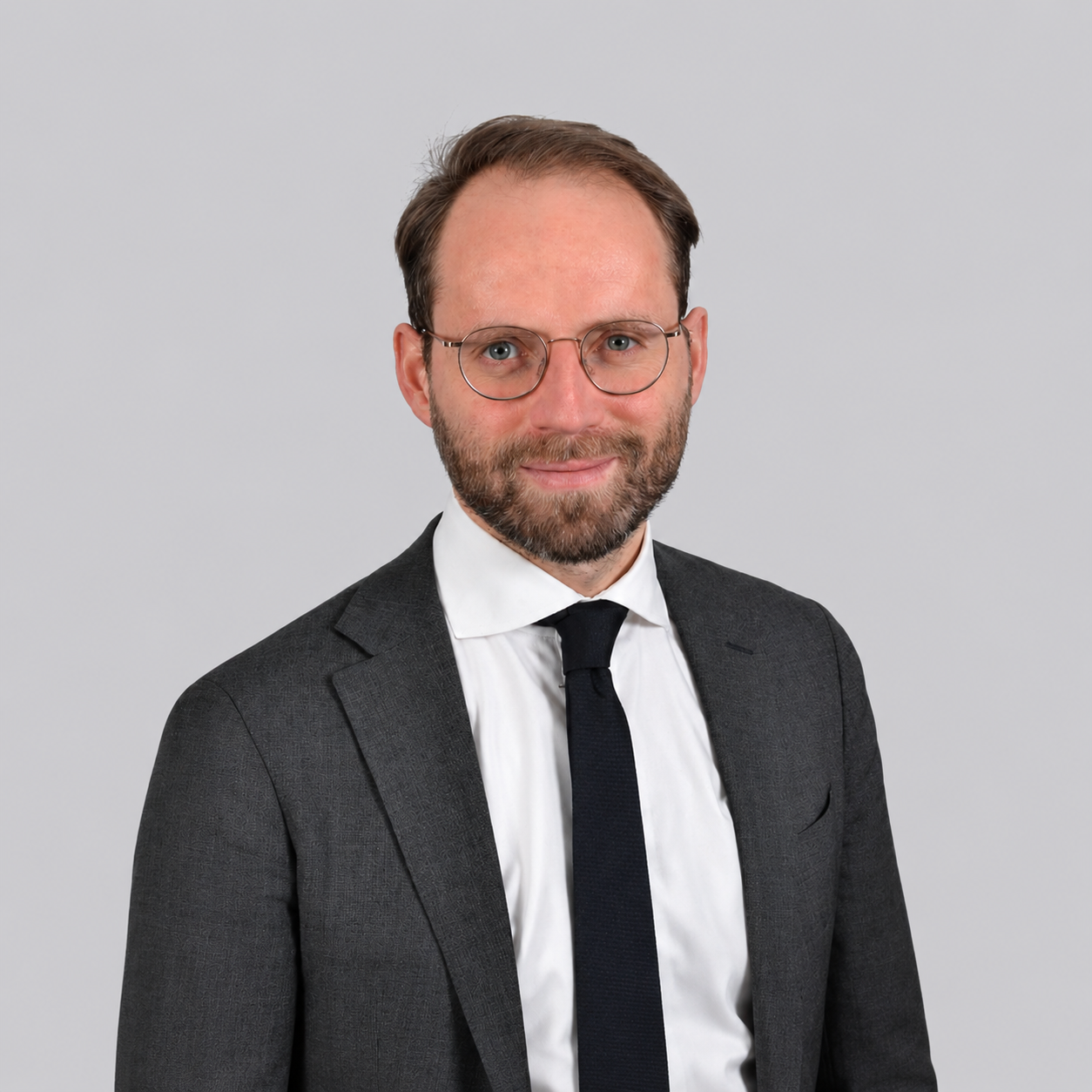
We are very grateful to Jozef Waanders, senior strategist at the Strategic Policy Unit of the Ministry of Foreign Affairs, for sharing his ‘Ten Geopolitical Commandments’.
Disclaimer: In this interview, Jozef speaks in a personal capacity. The views expressed are those of the author and do not necessarily reflect the official position of the Ministry of Foreign Affairs or the Dutch government.
I. To me, geopolitics means…
In a strictly academic sense, geopolitics means the influence of geographical factors on (foreign) politics. It is therefore about how foreign policy is partly shaped by geographical factors such as mountain ranges, access to (critical) raw materials, or whether a country has access to the sea via ice-free ports. In my current role, I have also wanted to zoom out from current events to ask myself what we are actually talking about when we speak of a geopolitical Europe. What does that actually mean? To answer such a question properly, you have to ask yourself what geopolitics really is and also study the history of the term itself. Because today, the concept is used very frequently and in all kinds of contexts. Nowadays, geopolitics does not always merely mean thinking about the influence of geography, but in a broader sense denotes the current context of power politics and strategic rivalry.
II. Geopolitics matters to the Netherlands
For a very long time, we told ourselves the story that geopolitics did not really play a role for the Netherlands. Our security was guaranteed through NATO, and furthermore, we thought: we are too small for this, and we are a trading country with an open economy that benefits from regulated international relations. But in a strict sense, the fact that we are a trading country naturally stems from a geopolitical reality: we are a river delta by the sea at the end of a large landmass, which offers excellent opportunities for inland ports and seaports. This ensures that you become a trading country, and in that sense, geopolitics was always highly relevant to the Netherlands, given that our geographical location is also a political reality. The fact that the Netherlands was traditionally oriented towards the UK and the transatlantic region, rather than primarily towards continental Europe, also partly stems from that coastal location. Now, we are finding out that we have built up major dependencies: in the energy sector on Russia, for critical raw materials and the cheap manufacturing industry on China, and for (digital) tech and defense on the US. In the context of clashing and rivaling great powers that weaponize these dependencies to achieve their goals, that is a problem. These, too, are geopolitical realities.
III. The Netherlands matters geopolitically
When it comes to this topic, most people immediately talk about ASML, and ASML truly is a vital asset. I believe it is wise to become indispensable in certain key sectors and to diversify dependencies wherever possible—mostly within a European framework. In a more transactional world, that gives you a degree of strategic leverage. However, full strategic autonomy is an illusion, and the Netherlands will never be a major geopolitical power player. Therefore, the Netherlands will always have to commit to European integration and a more or less functioning multilateral system; that is directly in our own interest as a relatively small and open trading nation. We have a vested interest in a world order where raw power politics is somewhat tempered.
IV. Geopolitics influences my work
In my current role at ESA (The Strategic Policy Unit), I am asked to think strategically in the long term, looking past the delusion of the day. I wanted to contribute to the reflection on what the new anchor points should be for our foreign policy in a world order that is slowly fracturing. A major motivation for me in this regard is the question of how Europe can become geopolitically more resilient. How can we prevent Europe from becoming a pawn of other great powers? How do you retain agency in a world of increasing power politics? For me, these are critical questions.
V. My colleagues also deal with geopolitics
Broadly speaking, there are of course very different views within the Ministry of Foreign Affairs regarding the course we should sail. The traditional anchors have disappeared, and as a result, everyone is searching for how we should reposition ourselves in this rapidly changing world. Furthermore, not everyone is equally comfortable with the term geopolitics. Of course, I cannot speak on behalf of all my colleagues, as the ministry has many different pillars and policy areas, but I think everyone in their respective field is confronted with the consequences of the fragmenting world order. Overall, there is certainly a strong awareness of the changing geopolitical landscape.
VI. I know where to source my geopolitical knowledge
I believe so, and this is naturally layered. There are several think tanks we collaborate with both at home and abroad, such as the Brussels Institute for Geopolitics (led by Luuk van Middelaar), Clingendael, and the European Council on Foreign Relations. I also read books for deeper background context and conceptual understanding. The book The Revenge of Geography by Robert Kaplan is highly recommended to gain a better insight into the history of various geopolitical theories and their current relevance. Geopolitiek by the Belgian professor David Criekemans was also very interesting to me. But that really concerns history and theory. For the more current debates, I follow specific think-tank analysts with whom I also have regular contact.
VII. Our public administration can better anticipate geopolitical developments
I believe this is highly important and that serious steps have already been taken. Before I started in my current job, I worked at the Ministry of General Affairs. During that period, the National Security Council was established, providing space for strategic and in-depth analyses in the areas of both domestic and foreign security policy. There is a clearly growing awareness that this issue has a government-wide component. This touches all policy areas and demonstrates that a resilient society is about much more than just defense policy. Serious preparation is also desirable at the municipal level, for instance, and within society itself.
VIII. Geopolitics requires new ways of thinking and collaborating
I believe other parameters have become decisive in decisions where, for a very long time, free-market logic used to be dominant; you can see that this is no longer the case for many issues. That has admittedly been a transition spanning several years. The fact that governments now exclude certain parties from international tenders for security reasons, or make it more difficult to acquire shares in sectors and companies that are vital to us, shows that a fundamentally different way of thinking has broken through. In my view, that is a very evident paradigm shift. Geopolitical realities also require us to view our partnerships and partner countries through a primarily political lens, rather than a purely economic one.
IX. I can translate geopolitical, theoretical knowledge into practically relevant information
A good strategist is capable of bridging the gap to concrete policy proposals and challenges. This is what I have tried to do as well. Whether that has been entirely successful is for others to judge, but that was certainly the approach. In previous roles, I was driven much more by the daily news cycle, while it became increasingly clear that the international order was unraveling. At a certain point, I felt the need to take a step back and think about what the new reference points should be for our foreign and security policy. Questions like: what kind of world order are we heading towards, and what place do we actually want to occupy within it ourselves? I noticed that within the Ministry of Foreign Affairs, the need for this kind of strategic reflection was also very strong.
X. Concluding thought
The dark side of geopolitics is that it sometimes seems to deny the existence of freedom and agency; after all, it strongly presumes that fixed geographical determinants entirely dictate your political actions. On the one hand, you have to be realistic, but at the same time, it is essential to keep searching for the space where freedom of action still exists. The great danger surrounding geopolitical issues is that you start thinking in deterministic structures: ‘we cannot do otherwise, because the world leaves us no choice’. That leads to a kind of defeatism, which has a dangerous edge. It creates the impression that there is no free space for different policy choices, but that everything is forced by structural forces. In politics, that is a dangerous notion: there are always alternatives. It is crucial that we approach the world realistically and strengthen our resilience, but we must not fall into the trap of believing that we live in a fully deterministic geopolitical reality devoid of choice.