

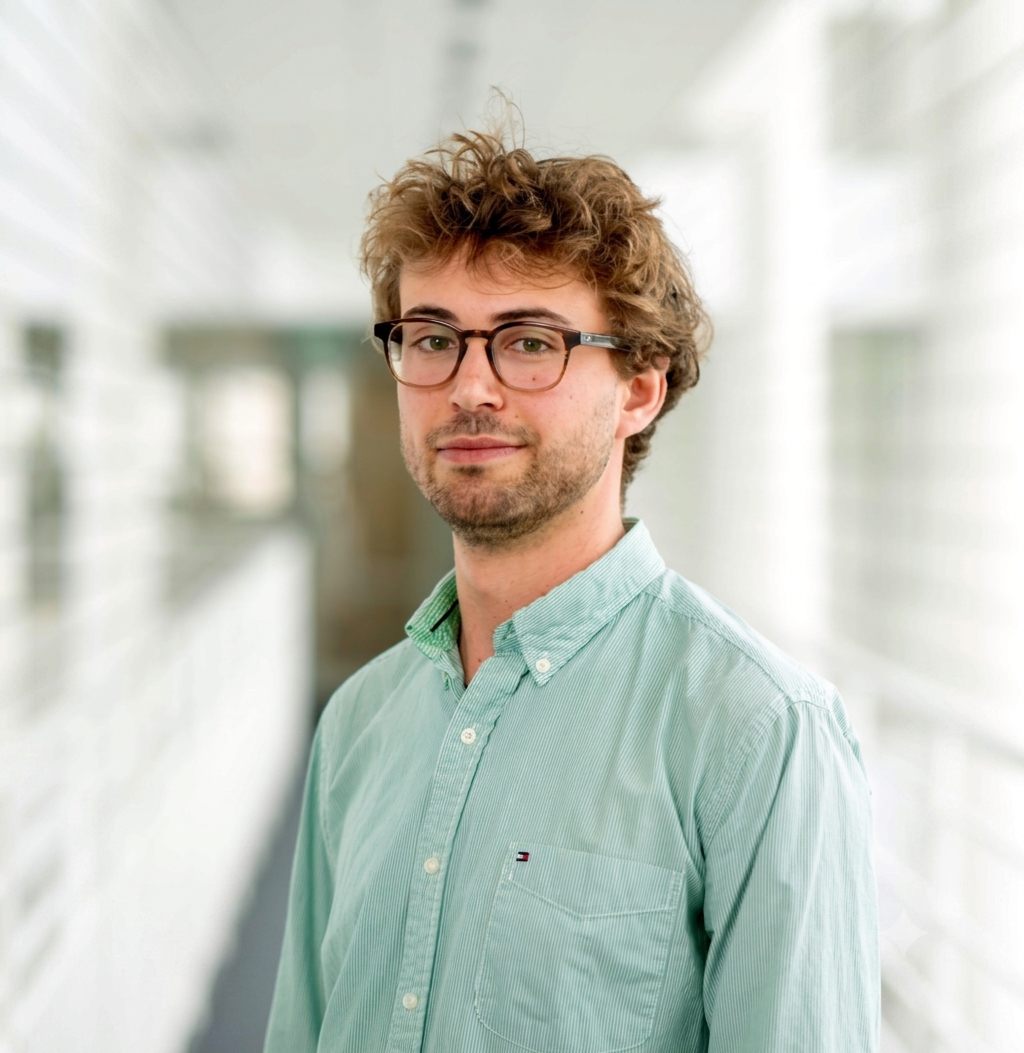
The central question: How does geopolitics affect Dutch public administration?
We are very grateful to EU Representative for the City of The Hague Ruben Sansom for sharing his 10 geopolitical commandments.
Disclaimer: In this interview Ruben speaks in personal capacity. The views expressed are those of the author and do not necessarily reflect the official position of the Dutch government.
I. To me, geopolitics means…
I thought about it yesterday. I think a lot of my answers are about the connection between the international and the local. Because that’s what I represent. For me, it’s everything that happens on the international level. Which can have an impact on the local level. It can be broad. It can be about establishing an international cooperation. Like the European Union, which is very important for my work. But also a technological race between different parts of the world. To get an economic advantage over a different country or continent. We’ve had that for a long time with batteries and chips. And now with AI, of course. That’s the most mainstream example. But for me, it’s not just about politics, or treaties, or wars. But also about the technological and economic differences between countries and continents.
II. Geopolitics matters to the Netherlands
Yes, definitely. I think it’s even more important for The Hague. To give you a concrete example. They’re working on a new European budget. A four-year budget. That’s for 2028 to 2034. And you can see that the economic power gap in the world. That it really affects the budget. The EU invests a lot of public money in new technologies. In cyber, in quantum, in AI. And you can see that the EU is trying to react to that. Also with its own budget.
And that’s why a very different budget structure is being adopted. Which is not necessarily beneficial for local governments. Because they invest a lot more money directly to local governments and now the European Commission wants to keep everything central. To be able to give more control to the companies so that they can strengthen the economic position of the EU. And so you can see that such an economic power struggle on the world stage has an impact on how we can finance projects in The Hague. So it’s not just for the Netherlands. But also for The Hague. And the daily life in The Hague. And the daily work of not only me as a EU representative.
But also for the rest of the municipalities. And maybe also for the citizens of the municipalities. The municipality of the Hague has certain ideas about how to best spend the money and where the money has the greatest added value. On the one hand, I understand the argument. That we have to tackle this centrally and strategically. On the other hand, you have already spent money in a way that works very well. In The Hague, for example, thousands of people work every year based on European money. When the European Social Fund falls away later that is also a bit of a social highlight. But also from an economic point of view. It is of course disadvantageous if you stop supporting a small part of the population that works and can contribute to a strong local economy. If you do that everywhere in Europe that also has an impact on the economic sustainability of the continent as a whole. So on the one hand, yes, I understand the thinking steps. On the other hand, we also have our own economic model in Europe with which we have already achieved a lot.
III. The Netherlands matters geopolitically
Yes, I think it’s nice to hear from the perspective of The Hague. The Hague is the international city of peace and justice. So in that sense, it is a city that has always had an important international profile. And also played an important role in international law. Because The Hague is quite a concept in that sense. With all the courts that we have in The Hague. And it is also a kind of neutral meeting place for various parties to go into consultation with each other. But we are now trying to expand that profile. In the new government (college) Agreement, which was signed not so long ago, we no longer only speak about the international city of peace and justice alone. But the international city of peace, justice and security. That third element has been added.
Because The Hague is increasingly focussing on cyber security. You have various international organisations in The Hague. Also European agencies, but also the national government. Many embassies and international companies. So that means that the cyber-resilience of the city must be very high. Also with respect to last year.Of course, all security must be in order. Also in the field of cyber. And that is why there is quite a lot of expertise in The Hague. There is a lot of cooperation between public and private parties in this area. And we now want to expand that more internationally. Because The Hague is a city that has a lot of knowledge of affairs in that area. And that security is now an international priority. For a functioning international judiciary. You can only organise a NAVO top if it is not hacked.
That would not work. So in that sense, we are still trying to expand the profile. And I think there are opportunities. Because everyone in the city knows me with that profile. I hope that we can now really expand that. And become known as a global cyber capital. We certainly want to take the lead in this field. But we will also cooperate a lot with other cities that do a lot on cyber already. For example in Finland and the Baltic States. They did a lot for a longer time. They are very advanced in that area. Lille, for example. In northern France. It is a very advanced cyber city. With a large cyber campus. So I speak to those partners a lot in Brussels. To work together. To test things together. To exchange ideas together. So it is a bit of both. Of course we would like to put The Hague on the map. But for that we have to cooperate with other cities that do a lot on cyber.
IV. Geopolitics influences my work
As I said. At the EU, there is a lot of pressure on what is happening on the geopolitical stage. And plays into that. And here in Brussels, in conversations with the institutions. And all lobbyists around it. You know very well what the EU wants to do in the coming years. And in which direction the trend is going. First, everything in the EU was very focused on green and sustainability. And now it is much more focused on competitiveness.
And much more on the digital. And you could actually see that before the proposals actually arrived. Just through the conversations that were held in Brussels. So I think in that way, through Brussels’ presence. With certain geopolitical themes very well on the agenda. Also not with everything.
I am much less involved in the possible military conflicts between different countries. I am less involved in that. But when it comes to certain geopolitical and economic themes. For that, I think that Brussels’ presence is a good source in itself. I can’t say something too quickly. That I read something and say that is my source. So I would just say Brussels’ presence. Yes, logical. It is also logical that you don’t necessarily have to know everything about the conflict around the South China Sea. Yes, exactly. That is just a bit less relevant for me directly. Then there will be a step after that, maybe. Then you know that European policy will influence again. And then it will be relevant again. But then I also hear it.
V. My colleagues also deal with geopolitics
Yes, I think it also definitely impacts all the personal of the city of the Hague as a whole. Because they really see themselves as an international city. For me, the challenge is to bring more European elements in. As I said, we have a European team. As a team as a whole. That is one of our tasks. To increase the European awareness in the municipality. That colleagues in all services are aware of what is coming. What kind of European legislation, What kind of new European subsidy options. And as I said, a lot of what comes from Europe. Is ultimately strongly influenced by what is happening on the geopolitical scene. Europe also reacts with new legislation. For example, in the field of cyber security. With new subsidy programmes. For example on AI or quantum. And that offers opportunities for The Hague.
And sometimes also risks. As I said, with the changing financing structure, there are real risks. That is something we are trying to do. To make the municipality as a whole, as an organisation, more active. So that people know that it influences their daily work. Whether you like it or not. And you can be aware of that. And try to influence that. And maybe change things in Brussels. Instead of just waiting for everything to be there. And then the work will influence. So yes and no.
We are working on it. But it is a very large organisation. To make it a real European adult. That takes time. Yes, and you notice that there are certain services. Where you think that there are a few people. Who have a lot of interest in it. And have the capacity to work on it. And then one service can do a lot on its own. That they come to me. This and that proposal is coming up. We have heard. What should we do about it? That they ask me proactively. While in other services that does not happen at all. So it really changes. It depends on the people who work somewhere. And whether they are busy with an international development or not.
VI. I know where to source my geopolitical knowledge
I would say that I gain a great deal from my presence in Brussels. As I mentioned, the EU monitors geopolitical developments and responds to them. Here in Brussels, through conversations with lobbyists and the like, you get a very clear sense of what the EU is likely to do in the coming years and the direction in which trends are moving. The focus shifted from green initiatives and sustainability to competitiveness and the digital sector, for instance; you could sense that shift coming and see it unfolding through the discussions taking place in Brussels. So, I find that being in Brussels keeps me very well-informed on specific geopolitical themes. Not everything, of course I am far less involved in potential military conflicts between nations, for example. But when it comes to geopolitical economic issues, I believe working in Brussels is a valuable resource.
VII. Our public administration can better anticipate geopolitical developments
Yes, what I said. I think we try to make ourselves stronger in that. That we know well. Also from my role. That we know well what is coming. Yes, maybe another round. But I have now also spoken a lot about subsidies and European policy proposals. But I think if we can do a little more in The Hague. We have that profile of an international city. And of peace and justice. So safety. Things often happen on the world stage. On the one hand, you want to speak out about it as a city. And those are things in which you can bring international justice into play. And on the other hand, The Hague also has to keep that profile of a kind of neutral meeting place.
VIII. Geopolitics requires new ways of thinking and cooperating.
I think new ways of working. Yes, sometimes I think that is a bit old-fashioned. Because as I said in the beginning. On the one hand, you have to act on what is happening internationally. As the Commission is doing now with the new budget structure. But at the same time you have to stick to your own values. And what you do well yourself. The European economic model is different from that of the EU. And because the EU is now investing money in a very specific way. I don’t necessarily mean that you have to let go of your European way of investing. And that you have to copy the model of the EU. So I think sometimes you have to stick to what you stand for yourself. And what you do well yourself. When it comes to the way you work. But in terms of cooperation, absolutely. I mean, especially in Europe. These are all very small countries. So you have to be careful.
If you want to be stronger internationally. You have to work together. And we also try to do that as cities. That we more and more attract together as cities in Brussels. But that is also the only way that we can really play a role of meaning in Brussels. If I keep things to myself at the Commission. Then it doesn’t have much chance of succeeding. If we come there with a big alliance of cities. And say we all see this problem. And we would like to do something about it. Then we are often listened to.
IX. I can translate geopolitical, theoretical knowledge into practically relevant information
Yes, I mainly think in the way of how much of what is played on the world stage. Has practically followed the European Union. Such as such a budget. Such as certain legislative proposals that come to it. And then I can translate that. Okay, what does that mean for The Hague? Maybe we get money for that. Maybe we need to set up more projects that increase sustainability. For example, in the field of cyber. Then we can get more money for that. But the Commission, because sustainability is now a big theme. So that way you have that link of what is played internationally. Where the sustainability issue just gets bigger.
Now there are more things going on in Europe. Then that has a practical effect on the city. Part of that translation happens automatically. The Commission with new proposals and I have to translate those proposals. Where are the opportunities for The Hague? What should we do more and less in The Hague? For example, to get more European money. And to increase our European relevance. Yes, that’s really your main job. To make that translation to a measurable level.
And actually strengthen the starting position of The Hague. On the European stage, so to speak. But it goes in two directions. On the one hand, things happen in Europe. And then you translate that to what we may have to do in The Hague. But on the other hand, European proposals are often set up at a fairly high level of abstraction. Also by people who are not necessarily always aware of the local practise. And then I have to go to Brussels to bring those positions and visions back to politics and policy makers at the EU level.
X. Concluding thought
To make good international policy. Like in the European Union. You really have to know how that translates into practise. And what is not effective. And cities know that like no other. Cities do a lot of the implementation of what happens on an international level. That happens in European proposals. And those are then implemented locally. Think of subsidies. For example, the Commission would like more rules in subsidies. So that you can selectively select European companies. Because the Commission would like that if we let a bus drive in The Hague. That we not only get batteries from China. But that those batteries come from Europe.
And that is very logical on the one hand. On the other hand, that is difficult. Because there are often just not enough European batteries. Or the supply procedures are very complicated for that. And in smaller cities there is little capacity for that. So you have to think about it very well. How does that work best in practise? Because the thought behind it is of course good. But of course also that it just works well. And that it becomes effective.
And those practical knowledges have cities like no other in the house. And that is why it is really important that they are represented in Brussels and internationally. And that the practical and local knowledge is brought to the EU. Cities are kind of the front line in the geopolitical battle in a way.