

The central question: How does geopolitics affect Dutch public administration?
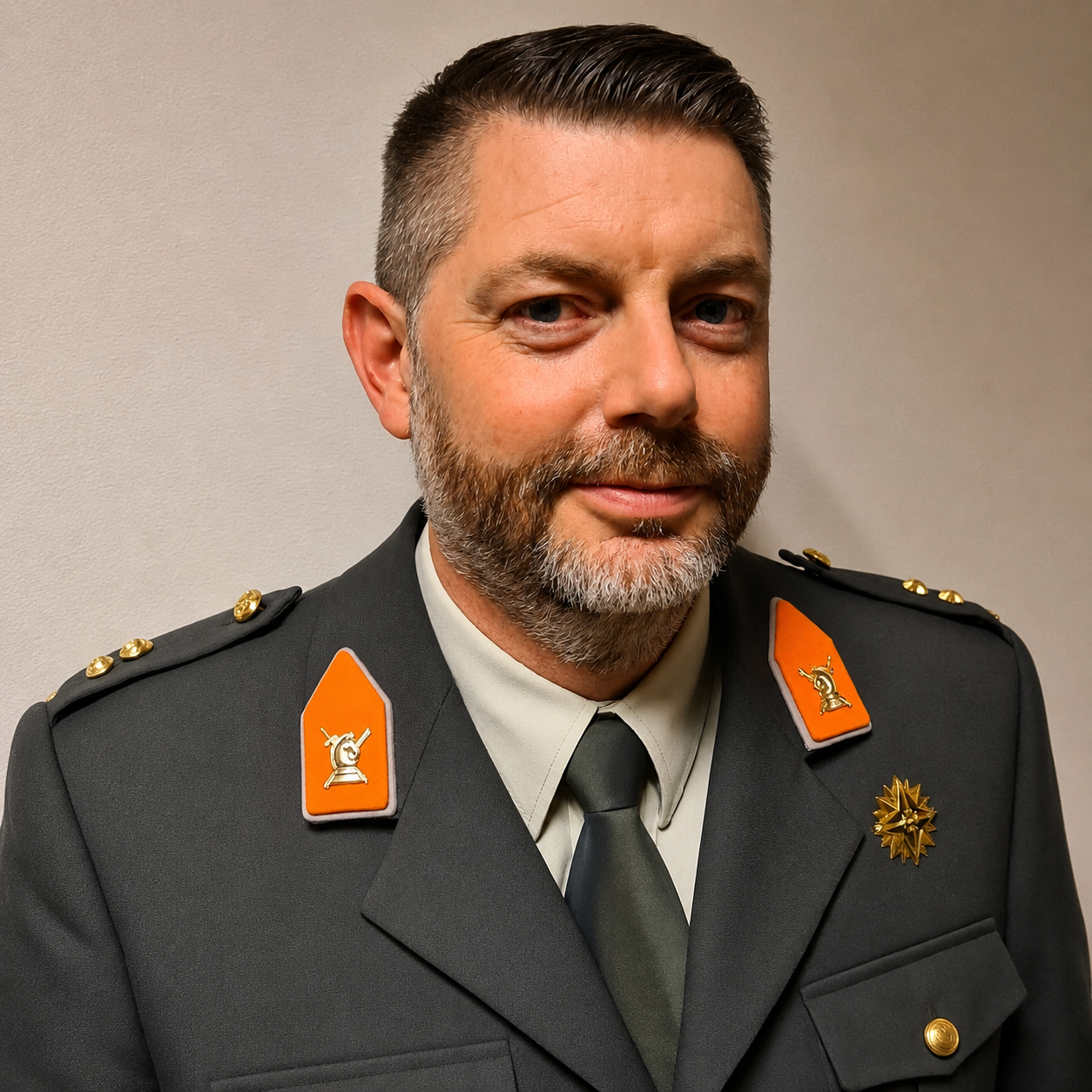
We are very grateful to Robert-John Hendriks, diplomat and deputy Defence Counsellor – defence, armed forces, international security, international relations of the Permanent Representation of the Kingdom of the Netherlands to NATO.
Disclaimer: In this interview Robert speaks in personal capacity. The views expressed are those of the author and do not necessarily reflect the official position of the Dutch government.
I. To me, geopolitics means…
The reality of how humankind behaves and interacts at the strategic level. That includes dealing with ever more diverging paradigms, such as the ‘West’ largely still in a post-modern stance, whereas the ground truth on a global scale is that far more nations think and behave according to modern state principles. Let me add here that geopolitics sometimes shows large parallels with the behavior of humankind as individuals. Sociology and such studies are excellent multipliers to International Relations and Political Affairs studies.
As a Royal Military Academy and Advanced Command & Staff Course graduate, my personal interest in geopolitics is rather obvious. Early on in my military career, I added History of International Relations, and later also International Relations, to my academia aiming to broaden my scope from sec military, yet certainly with security and defense as focal topics.
II. Geopolitics matters to the Netherlands
This goes without saying, in my opinion. We do well as a nation if the geopolitical situation is stable, although one could discuss what ‘stable’ exactly means nowadays. We do well as a nation in confirming the fundamentality of alliances and memberships in international organizations for us, as well as for the whole. First and foremost, of course, are the EU and NATO. Neither is perfect, but even so, with 23 overlapping nations, these two in tandem are an excellent foundation for our interests, which for a large part overlap with those of our partners in such organizations. The shared purpose is by far larger than the differences, but that latter category, of course, gets the most attention. IMHO, this makes for an existing unity of purpose that is sometimes obscured and therefore does not always get the unity of effort it does deserve.
III. The Netherlands matters geopolitically
Without any doubt. Look at our history: when we were a force to be reckoned with on our own, we were ‘movers and shakers’. Later on, when we had to concede that dominant position, we still wielded great influence among the then-powers. And we have certainly managed to maintain such a position of influence in contemporary history. Influencing, by the way, includes in my view facilitating others to come to terms on topics. We are ‘not big enough to be a threat’ yet also ‘big enough to seriously weigh in’. Furthermore, our national views are only very seldom in the outer limits of international debates. I would use the Pareto 20/80 Optimum and claim that we are never in the utmost left or right 10% of any debate, resulting in a comfortable 80% middle bandwidth to operate in. These two aspects by default enable us to perform by our own initiative but also oftentimes on request in a mediating role, the figurative version of one of the truly Dutch specialties: ‘bridge building’.
We apply those characteristics, and the advantages they bring, in the organizations I described above. In doing so, we invest in the functioning of cooperation models that enable and safeguard our fundamental interests: welfare and security, resulting in the well-being of citizens.
IV. Geopolitics influences my work
I would rather turn this into geopolitics is my work. Certainly in my current position as diplomat -with a filled backpack of military and IR expertise- in the Netherlands’ Permanent Representation to NATO. Multilateral dealings, negotiations, discussions, and exchanges all day every day. Of course, it is multilateralism among 32 nations, but with a strong, core-shared view of the importance of moving things forward. It is therefore very different from negotiating with counterparts who have completely divergent interests.
The political center of gravity of NATO is unity among Allies, and notwithstanding occasional frictions, all of us understand that all too well. We discuss matters firmly, operating from the basic approach that we can be tough on content, but must always be soft on the relationship. Here, the world of diplomacy is the oil that soothes the harshness of the world of politics, both of which are inherently part of geopolitics.
The most obvious example currently is the burden shift discussion. Filtering out the loudness of the message, the Ally pushing the others to step up does have a valid concern. For decades the Europeans in NATO have disregarded to keep their military instrument of power up to date. And that Ally does have two strategic theaters to consider, whereas -in NATO- 30 of us focus on the euro-Atlantic theatre. I really must stress two things: firstly the ‘step up’ message of the US is not new, in my observation at least since Obama 1 the US has indicated that they have to perform a Pacific-pivot and hence need the others to shoulder a larger part of the burden. Secondly, and very positively- the others have woken up. The global security situation is not reassuring, and I can say with certainty that 31 Allies are not stepping up because the 32nd says so, but because we all see – and feel- the necessity. Historical decisions at the Hague Summit last year with regard to defence spending, and since then concrete and financed plans and actions to enlarge the set of military capabilities we can field. Of course the in-between element of bolstering defence industry is crucial; it is there where we transform budget into actual capabilities.
V. My colleagues also deal with geopolitics
Yes, most certainly. A bit of background here:
The Netherlands has what we call an Integrated Permanent Representation, with two main elements. The Permanent Military Representation, with a three-star general (who double-heads as the PermMilRep to EU by the way) in charge, and a Permanent Representation with an Ambassador at the helm, also being the overall lead. The MilRep and his team are as it were the advanced HQ of the NLD Commander in Chief of the Armed Forces, responsible for the NLD input and influence towards the best possible unfettered military advice to the NAC. The Ambassador and his team are the advanced HQ of the Dutch Cabinet, with foremostly strong ties with the Ministries of Foreign Affairs, Defence, and Justice & Security. That side is responsible for the NLD input and influence on all policy and political items.
These two elements are not ships passing in the night, but constantly mutually inform and cooperate. The relative small size of the integrated Representation (resulting in a multi-topic per person workload, that in turn resulting in broader perspectives) in combination with this deep civmil cooperation result in a very thorough information and influencing position. We manage to get beyond ‘awareness’ and achieve ‘understanding’ to throw in one of my all-time favourite doctrinal issues.
All of the overall team have roles and responsibilities adding to the NLD participation in, and contribution to, geopolitical issues in the HQ.
VI. I know where to source my geopolitical knowledge
Always challenging, not because of the difficulty of finding sources, but because of the plenitude of possible sources. Obviously, a firm grasp of national policies on geopolitical issues is a sine qua non for representing the national interest in a multilateral environment. Then, there are the core policy documents of Allies and partners, including the EU. Furthermore, since I firmly believe in assessing potential adversaries “from their point of view,” I will always try to stand in the bullseye of their worldview and look back at us as an Alliance. This can help in better understanding their actions and non-actions. Next, not in order of importance, but as a key reference here is the plethora of academic literature and think tanks. As a former Clingendaeler, I certainly track their publications, and organizations like SIPRI and Chatham House are also well-read.
I love reading, so I find it rather easy to dive into books on IR and political affairs. Among those, I prefer the more free-thinking, narrative-driven publications over the strictly academic ones. I find the former category more provocative than the latter, and provocation of the mind keeps the mind churning.
VII. Our public administration can better anticipate geopolitical developments
We can always do better, or at least try to do better. I am equally convinced however that many of the ‘how could they not have seen this coming’ sayers have the absolute benefit of hindsight. No one has a working crystal ball and there are no magic 8-balls, in the end people transfer collected data into information, assess that information and draw conclusions which lead to recommendations. Everyone in that loop does her/his utmost best…and in the end things still may go differently. The two cents I could offer is that 1. we might invest in shorter update loops for our analyses and related policies. The geopolitical world spins faster than ever, and a deep-policy piece simply does not have a decade(s) long lifespan anymore. Observe, conclude, adapt should be a continuous process…at the same time realizing what the involved effort would be, so easier said than done. And 2. that we really should make a multi-functional approach the standard. Global issues are not addressable within stovepipes, interdepartmental is the way, and honestly Whole of Governance will increasingly have to be replaced by Whole (or More) of Society even.
VIII. Geopolitics requires new ways of thinking and collaborating
Define new… to a large extent it is more ‘back to earlier’. As said earlier, the post-modernism of many European nations is not reflected on a global scale. That does not mean we should abandon our strive for the International Rules Based order, democracy, (human) rights etc. It does mean we have to be realistic about others. At the very least, transactionalism will remain in the spotlights. The global shortages and chokepoints (precious metals, rare minerals, but also water ) will alas not likely be solved in a ‘this is the best for everyone’-approach. So quid pro quo will – in my opinion – be an evermore present element. This makes it all the more important to hold each other close in the organisations I mentioned above, strength in like-minded numbers is a thing. In other words: if the world is fragmenting, you should aim to become a/o remain part of the larger coherent fragment. Partnerships will probably evolve too. We have aimed for encompassing and long term partnerships for a long time, this might necessarily re-balance to include partnerships of opportunity, even for relatively short timespans.
IX. I can translate geopolitical, theoretical knowledge into practically relevant information
Ah well, transferring knowledge into information to me sounds like lecturing. Which is an essential task-verb no mistake, education underpins so much. But I would rather speak about expertise, which to me is the product of knowledge and experience. If either of those two components is too little, the product will automatically become substantially smaller. I would therefore advocate that all professionals in the geopolitical environment should pursue expertise. Only ‘reading more, and more difficult books’ is not the way, but neither is only ‘stomping about doing things’, the combination is what elevates ones expertise, and that is what is needed to perform in contemporary geopolitics. I will insert a motto here, that has been guiding me for many years: “ Strive to be a warrior and a scholar, be forged in fire and tempered in knowledge. If not, you will lack the courage to fight for your ideals, or, will lack ideals worth fighting for”.
X. Concluding thought
Geopolitics is a tremendously interesting, as well as important, as well as sometimes frustrating, as well as oftentimes rewarding field to operate in. But, “if you read this”, then you probably already knew this or at least suspected it. Keep pursuing your personal advance in this field! Approach colleagues, ask questions, think – dare – follow through – serve your nation.