

The central question: How does geopolitics influence Dutch public administration?
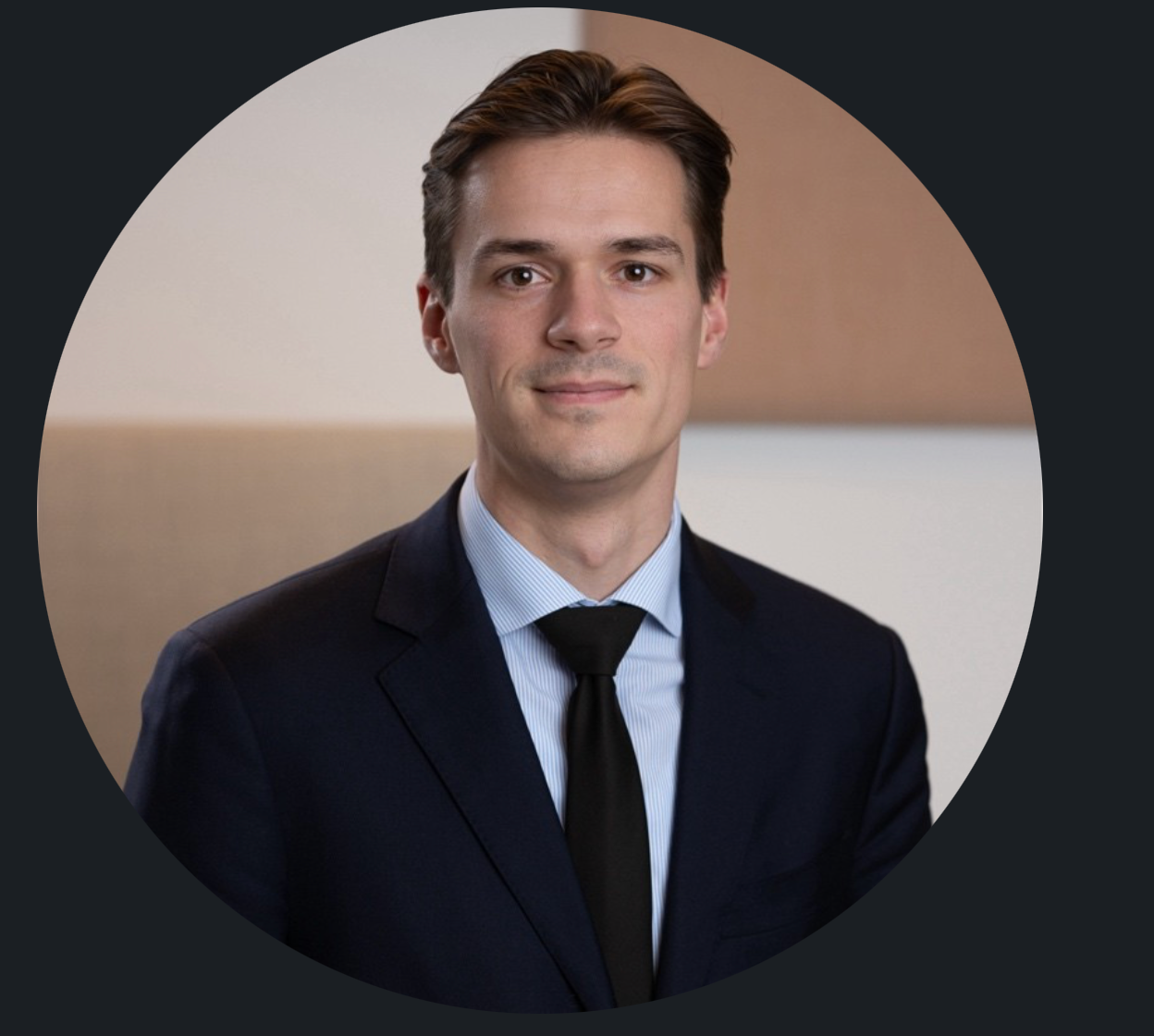
We are very grateful to policy advisor Patrick Slaman from the Ministry of Defence (Production and Supply Security) for sharing his 10 geopolitical commandments.
Disclaimer: In this interview, Patrick speaks in a personal capacity. The views expressed are those of the author and do not necessarily reflect the official position of the Dutch government.
I. To me, geopolitics means…
Scarcity. Ultimately, it boils down to how countries and organizations deal with scarce resources and how they manage to pursue their interests within that scarcity. To me, that is the essence of geopolitics. Many developments, ranging from technological progress to climate change, increase or alter that scarcity and consequently reshape political relations. You see this reflected in the military domain as well. The challenge is to safeguard the interests of the Netherlands as effectively as possible within that context. At the same time, scarcity is not merely an objective fact; it is also politically defined, perceived, and magnified. Politicians play a key role in this. As policymakers, we must position ourselves relative to both that perception and the underlying reality.
II. Geopolitics matters to the Netherlands / III. The Netherlands matters geopolitically
The Netherlands certainly matters geopolitically. We possess a massive technological and industrial base. I often say: drive along any highway from The Hague toward the border and look at all the economic activity along the way. There are very few things the Netherlands cannot design, develop, produce, or industrialize. I sometimes miss that optimism. At the same time, this strength only gains true geopolitical leverage within a European context. With an internal market of over 500 million people, we can exert far more weight globally than the Netherlands could on its own.
IV. Geopolitics affects my work
My work, as well as that of many colleagues at the Ministry of Defence, revolves around ensuring that the armed forces have access to the equipment and innovations they need, precisely when it matters most. That cannot be taken for granted. For that reason, Defence has paid significantly more attention to industry and innovation in recent years. Where budget cuts previously led us to seek the best products at the lowest price, we now explicitly look at where something originates and whether it is better to produce it ourselves or alongside European partners. History has shown that dependency on others can severely limit the endurance and sustainability of an armed force.
Paradoxically, the importance of such a strong industry is acknowledged in the current European fragmentation in this area. Many countries evidently consider it just as vital to retain control over their own command structures as they do over their own defence industry. While this presents a rational barrier in the short term, over the long term it risks keeping us divided, maintaining a fragmented market, and ultimately limiting the operational effectiveness of both Europe and NATO.
V. My colleagues also engage with geopolitics
In my view, conducting geopolitics can only be done through a whole-of-government approach, so: yes. But I would add to that: the Ministry of Defence has grown significantly in recent years. More and more colleagues, like myself, only started after February 24, 2022. That generation has known no other geopolitical reality than the current one, bringing a fresh perspective. With over 80,000 people, we work every day to ensure the security of the Netherlands in this complex reality, and I believe this new generation offers genuine added value in that effort.
VI. I know where to draw my geopolitical knowledge today
I still draw on my academic background every day. I studied European political science, international law, and Latin American studies. That background benefits me in two ways: first, by enabling me to understand the perspective of others—which is invaluable during times of shifting alliances. Your own background allows you to apply useful information every day, often from very unexpected angles. My knowledge of Latin America helps me surprisingly often. Take Brazil, for example: over recent decades, that country built its own strategic aviation industry from the ground up. I can still refer back to sources I used during my studies.
VII. Our public administration could better anticipate geopolitical developments
I don’t think anticipating is the main issue. We have strong analytical reports at our disposal, such as the Draghi report and the Dutch Wennink report. The challenge lies primarily in execution: we often know full well what needs to be done; now we must get to work and implement it.
VIII. Geopolitics requires new ways of thinking and collaborating
A new generation is knocking on the door of public administration—a generation that views the world differently and was educated in a different era. My lectures on “international military law” began the day after the Russian war of aggression in Ukraine started. That inevitably leads to different lectures and perspectives than even two days prior. For that younger generation, growing up in a different era, the world looks fundamentally different. For us, the fall of the Berlin Wall is less of a benchmark than February 24, 2022. That is our “fall of the Wall” as a defining historical moment.
It is a fundamental difference, because for an entire generation, the prelude to this geopolitical era was completely different: the hopeful “end of history” (Fukuyama) belongs to a previous era; we only witnessed the earlier Russian aggression in Georgia (2008) and Ukraine (2014). I believe Dutch geopolitical thinking benefits from that perspective. That is why it is so great to see Defence explicitly giving this new generation the space to contribute to solving these challenges.
That said, I think we should also look back a bit more. Mark Carney said in that famous speech that we should not mourn the old geopolitical order, but at the same time I ask myself: what was that old geopolitical order? When I look back, I see an order built on the principles of international law—an order we now see being thrown overboard. Realism, to me, ultimately means holding on to what worked. New collaboration does not mean reinventing everything from scratch, but reinforcing those principles with new partners. This involves not only Europe and NATO, but also middle powers and countries in the Global South, such as the Mercosur nations. For the Netherlands and the EU, there lies a major opportunity to build lasting partnerships.
IX. I can translate geopolitical and theoretical knowledge into practical, relevant information
Ultimately, that is for others to judge. But I do believe that this is precisely the challenge: translating geopolitical and historical developments into choices that are relevant today. Emmanuel Macron is a good example of this for me. In his Sorbonne speeches, he managed to translate a theoretical and historical analysis into a concrete plan of action for Europe. In his first speech, he outlined what Europe ought to do; in his second, he warned that Europe as we know it could die. That concrete message proved visionary in hindsight. Many proposals he made in 2017 regarding European defence cooperation were viewed as utopian at the time, yet they have increasingly become reality. Naturally, the changed geopolitical context played a role in that shift. At the same time, Macron made his analysis so concrete that people felt the urgency and were willing to take action. That is a quality I admire and one that everyone in this field should strive for.
X. Closing Remarks
Ultimately, geopolitics comes down to two things for me. First, self-awareness: who are we as the Netherlands in the world? We don’t need to punch above our weight, but we shouldn’t underestimate ourselves either. The Netherlands is a technological powerhouse and, as a trading nation, has established a strong international standing. That should inspire more confidence in our own strength.
At the same time, geopolitics requires understanding the position of the other. That is precisely why we must continue to invest in acquiring knowledge about, and building relationships with, regions like the Global South. In doing so, we must uphold international law. It provides a anchor and enables cooperation, particularly in a world where geopolitical dynamics are constantly shifting. That predictability may well become one of our primary strategic advantages. This is why international law remains not a matter of idealism, but a strategic necessity.