

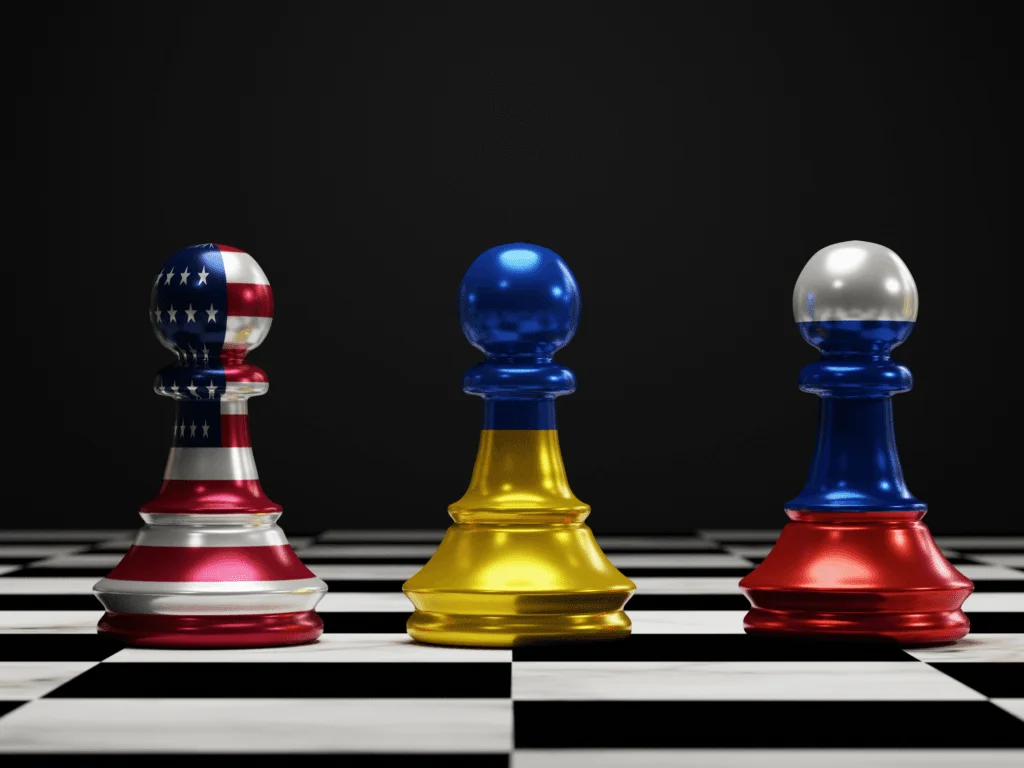
Ukraine-Russia Update | The war in Ukraine will enter its third year this coming February and is now in its final phase. Ironically, Trump’s victory last November actually prompted Russia to make one last-ditch effort to gain some ground in eastern Ukraine. Despite Trump’s warnings to Putin to stop bombing civilian targets, Putin continues unhindered. Something he has been doing for almost three years: killing innocent Ukrainians.
Whilst Russia continues to bomb Ukrainian cities on a daily basis, debate in the West is growing over the feasibility of a ceasefire. The brand-new President Donald Trump, in particular, is playing a leading role in this. Trump claims he can bring about peace within 24 hours. The question remains: is this realistic or a PR stunt? (1)
Diverging interests
For Russia and Ukraine, the interests are miles apart. Russia seems to be focusing primarily on a temporary ceasefire and hopes to pull the wool over Trump’s eyes, thereby gaining time to rebuild its depleted army.
Ukraine, on the other hand, wants any negotiations to lead to a lasting peace and a structural solution. Land for peace is only possible if a genuine way is found to ensure that Russia does not even consider attacking Ukraine again. NATO membership for Ukraine immediately springs to mind.
In Kyiv’s view, a ceasefire without structural solutions would be nothing more than a prelude to the next war. In 1994, Russia invaded Chechnya, but in 1996 Moscow concluded a ceasefire with the Chechen authorities. In the autumn of 1999, Russia invaded Chechnya once again. That is why Kyiv believes that a ceasefire in itself is meaningless. This position of Ukraine is shared by many Eastern European countries. (2)
Western and European credibility
The West also faces a huge credibility problem when it comes to Ukraine. In 1994, Ukraine emerged as the third-largest nuclear power after Russia and the United States. Not that Ukraine had manufactured all these nuclear weapons itself, but this was the legacy of the Soviet Union. A solution therefore had to be found. After lengthy negotiations, Ukraine gave up all its nuclear weapons in exchange for security guarantees under the Budapest Memorandum. The United States and other nuclear powers, including Russia, gave Ukraine ‘security guarantees’ in return. That promise proved to be worthless when Russia annexed Crimea on 18 March 2014. Obama wrote in his memoirs: “Crimea wasn’t worth a third world war to us.” The West therefore faces a massive credibility crisis when it comes to security guarantees for Ukraine. Even though certain strategic choices can sometimes be understood.
Neutrality
Russia seems to be putting one hard demand on the table for Trump in particular: neutrality. This sounds innocent, but it is a typical deception by the Kremlin. Proponents of negotiations, including many Trump supporters, do not seem to fully understand what this means. For Russia, neutrality means a country that, whilst allowed to determine its own domestic policy, remains internationally loyal to Russia. Russia’s vision of neutrality bears more resemblance to Belarus than to Switzerland. For Russia, the aim is to keep Ukraine out of NATO, and the expectation is that they will succeed in this.
Preventing a second war
But even without NATO, the key question remains: how do you prevent a second Russian invasion? Even if a temporary ceasefire is reached, Ukraine runs the risk that Russia will use this pause to prepare for a second war. Ukraine fears that, in the event of a ceasefire, there will be a lack of urgency in Europe to continue arming Ukraine at the same level as in 2022, 2023 and 2024. Without NATO membership or extensive arming of Ukraine, negotiations and ‘land for peace’ offer no fundamental solution. Negotiations without the prospect of NATO membership amount to kowtowing to Vladimir Putin; many Eastern European partners within NATO are also warning of this.
The future of Ukraine
The final sticking point lies in responsibility. Russia has killed thousands of Ukrainian civilians, completely destroyed towns and villages, tortured and even castrated people, and abducted thousands of children. There is even an arrest warrant out for Putin from the International Court of Justice. Will Russia compensate for the damage caused? Russia appears to want to destroy the Ukrainian state in its entirety. Some human rights organisations even speak of Russia’s genocidal war crimes. Without clear answers to all these thorny issues, you cannot reach a fundamental solution to the war in Ukraine, only a ceasefire.
That is why peace talks must not only focus on ending the current war, but above all on how to prevent a recurrence in the future. That is why the Netherlands, too, must campaign for Ukraine’s NATO membership.
Trump and Germany
However, the political reality is likely to be different. Once again, Ukraine will have to make do with ‘security guarantees’. Not from NATO, but at a bilateral level from countries such as Germany, the UK, France, Poland and perhaps also the United States. Putin is expected to do everything in his power to exclude Ukrainian NATO membership from the negotiations. In this way, Putin can bring about a ceasefire, undermine the arrest warrant issued by the International Court of Justice against him, and thereby further erode the international legal order – or what remains of it.
Russia’s strategy appears to be, above all, to wait until the West’s attention wanes, so that Ukraine can be attacked again by Russia, but this time successfully. In Eastern Europe, there is therefore a call to continue arming Ukraine and helping it rebuild in the coming years, ceasefire or not. Several senior NATO military officials say it constantly: we are already at war with Russia, just not directly yet.
- Peace in Ukraine in 24 hours. All for the sake of our Donald’s PR. – Hidde Bouwmeester
- https://bsky.app/profile/hbouwmeester.bsky.social/post/3lg633wx6ps2r
This article was translated, view the original here.