

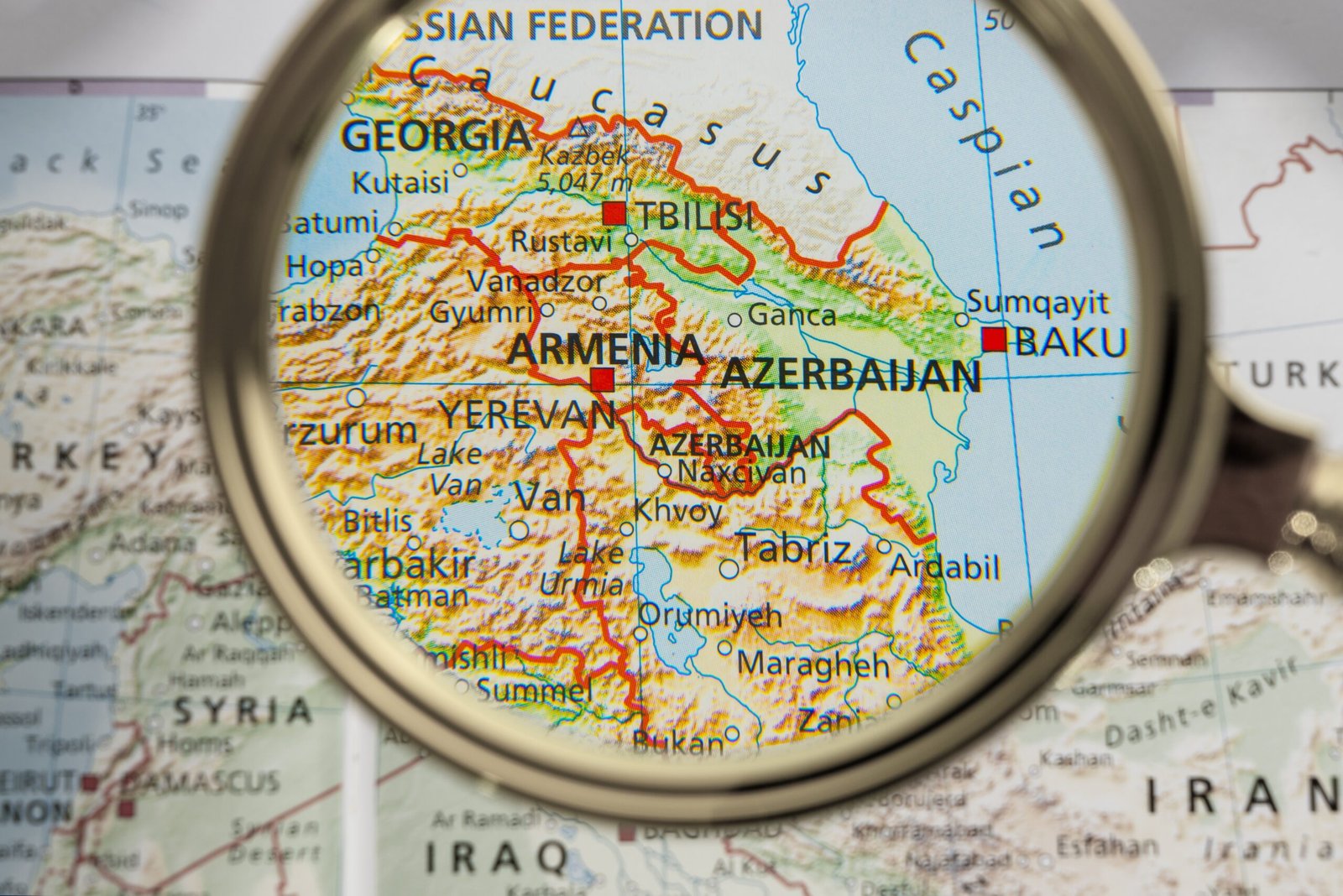
The June 2026 Armenian elections exposed divisions between supporters of Russia and closer EU alignment. Nikol Pashinyan, Prime Minister since 2018, has taken a pro-West focus and won the Armenian elections on June 7 with 49.81%. Pro-Russian competitors such as Samvel Karapetyan (23.29 per cent) and Robert Kocharyan (9.94 per cent) were rejected, and therefore Armenia is taking a pro-Western stance. While many Armenians support closer EU ties, others fear Russian economic or political sanctions, mindful of Ukraine.
Such tensions have increased after Russia failed to defend Armenia during the 2023 loss of Nagorno-Karabakh, which damaged Russia’s credibility as a security guarantor, thus opening the opportunity for Yerevan to pursue the EU, the US, and even improve relations with Turkey and Azerbaijan. Landlocked and geographically constrained, Armenia remains dependent on Azerbaijan and Russia for its land transportation. Due to this high dependency, Armenia’s agency- the capacity to set its own foreign policy course without an external veto- will be investigated further by answering the question:
In light of these diverging political sentiments within Armenia, the question arises: To what extent does Armenia have agency to decide its own political fate?
- Russia: A failed security guarantor
Russia was long Armenia’s main energy, trade, and security partner. Michel Don Michaloliákos, Founder of the Hague Institute for Geopolitics, explains the reason for Armenia’s distancing from Russia: “It’s an absolute necessity for Armenia to increase its agency to decide its own fate; it’s all born out of the fact that Russia did not protect Armenia in 2023. It was really an absolute game changer, a watershed in Armenia’s history.” Armenia subsequently “froze” its membership in the Russian-led Collective Security Treaty Organisation (CSTO), marking an institutional break with Moscow.
Before the election, Russia banned exports of Armenian flowers, mineral water, cognac, fresh vegetables and fruit. Moreover, Putin warned that “the crisis in Ukraine began with efforts to move toward EU accession”. Additionally, Fien Kroon from the Hague Research Institute for Eastern Europe, the South Caucasus and Central Asia explains that “Armenia acted as a sanctions hub; certain sanctioned goods by the EU were still able to reach Russia through Armenia. This has made them heavily dependent (on that dynamic).” The majority of Armenian exports in 2025 are to Russia (35%).
However, with Pashinyan turning towards the EU and the International Republican Institute reporting that in May 2026, 75% of Armenians are in favour of EU integration, turning back to Russia seems unlikely for Armenia. Edgar Vardanyan of the Armenian Council states, “In practice, (Russian trade pressure) had the opposite effect; it pushed Armenia closer to the West and accelerated diversification rather than slowing it down.” The EU can offer security against hybrid threats and address evolving security challenges, such as foreign information manipulation and interference (FIMI) and illicit financial flows. Due to the lack of connectivity to the West, Russia remains crucial to Armenia’s energy supply, providing about 82% of its natural gas.
Aware of this dependence, Pashinyan travelled to Moscow after the election to manage relations. This is framed by Michaloliákos as “cursed by geography, and blessed by consciousness”, referring to Armenia’s lack of connectivity, but skilled diplomacy.
- Azerbaijan, Turkey, and Iran
According to the International Fact-Finding Mission, Azerbaijani authorities deliberately engaged in ethnic cleansing against the ethnic Armenian population living in Nagorno-Karabakh between 2020 and 2023. In August 2025, Armenia and Azerbaijan signed a Joint declaration in Washington, DC, to achieve peace and establish bilateral negotiations. After a decades-long war, this marks a historical and crucial moment for the South Caucasus.
Vardanyan captures this shift in relations in terms of leverage: “Armenia has meaningfully increased its bargaining power simply by having somewhere else to turn. The conflict with Azerbaijan was the main factor tying Armenia’s hands… resolving that conflict gives Armenia a real chance to be more independent.”
Turkey and Armenia formally resumed trade relations after a 33-year freeze by 2026. Both countries aim to normalise bilateral relations, including the opening of airlines and railway connections between the countries. This will aid the bilateral commercial relationship, while restoring the Kars-Gyumri railway and being supported by the EU in connecting the energy networks of Turkey and Armenia.
Armenia and Iran are shaped by their joint infrastructure and long shared relations. This also includes a gas pipeline project that is directly connected with Russia through Gazprom Armenia, which is the Russian-controlled monopoly owning and managing Armenia’s gas transmission and distribution network. Additionally, Iran supports Armenia’s turn towards the EU and Western nations, as this can also be beneficial to Tehran. Given the current US-Iran tensions, Armenia must tread carefully in balancing its relations with Tehran against its deepening partnership with Washington.
- EU and US: a switch in dependencies?
The US and Armenia have grown closer ties since February 2026, when Vice President JD Vance visited Yerevan and signed a 123 Agreement on civil nuclear cooperation. This deepened energy partnership enables the US to legally license nuclear technology and equipment to other countries, which would enable up to $5 billion in initial US exports to Armenia, plus an additional $4 billion in longer-term fuel and maintenance contracts. This would offer Armenia an alternative to its high dependency on Russia for nuclear energy. In June 2026, Armenia and the US signed the Trump Route for International Peace and Prosperity (TRIPP) to create a critical trade route to open new markets for both parties and create further benefits for Armenian businesses.
The first-ever EU-Armenia summit took place on 4 and 5 May 2026, marking a milestone in Armenia’s relations with the West. To strengthen bilateral relations across multiple domains — including energy, transport and digital connectivity, as well as peace, security and broader global challenges — Armenia is moving closer to the West.
Furthermore, while becoming an EU member state is a complex process, Armenia’s parliament passed a law to launch the process of joining the EU, taking the first step in the process of gaining EU membership. Pashinyan hopes that by 2029, Armenian citizens will be enabled to travel to the EU visa-free. The EU evaluation mission aims to visit Armenia in the autumn of 2026 to review Armenia’s progress, which is on the right track for closer EU cooperation and accession. However, Kroon argues that “If Pashinyan doesn’t deliver the economic benefits, people will not necessarily vote in favour. EU aspiration is not a strong enough argument on its own.”
Edgar Vardanyan voices his scepticism, supported by Kroon: “Armenia’s long-term strategic autonomy will not be achieved by replacing one dependency, Russia, with another, the EU. It’s really by reducing dependence through regional normalisation, cooperation, and economic diplomacy.” On that note, it is important to highlight the crossroads over EU and the Eurasian Economic Union (EAEU) membership, as Armenia cannot be part of both. Regional cooperation amongst countries such as Azerbaijan, Turkey, and Iran is crucial to determine its independence. This poses another challenge to Armenia in making a choice. However, the economic reality is that Russia still dominates with around 35% of Armenia’s foreign trade in 2025, compared to the EU with 11%.
- Conclusion
Yerevan has been able to diversify since Russia failed as a security guarantor in 2023 by strengthening its ties with the EU, the US, and its regional neighbours. The elections in June 2026 have demonstrated a clear demand for a shift towards the EU by Armenia. Progress in relations with Azerbaijan has created new diplomatic and economic opportunities. However, Armenia’s strategic autonomy remains limited by its geography, economic dependence on Russia, and the need to carefully balance competing regional and global powers, such as the Iran-US conflict. Armenia’s long-term political fate will depend not on replacing one dependency with another, but on diversifying through regional normalisation, such as with Azerbaijan and Turkey, and pragmatic diplomacy.