

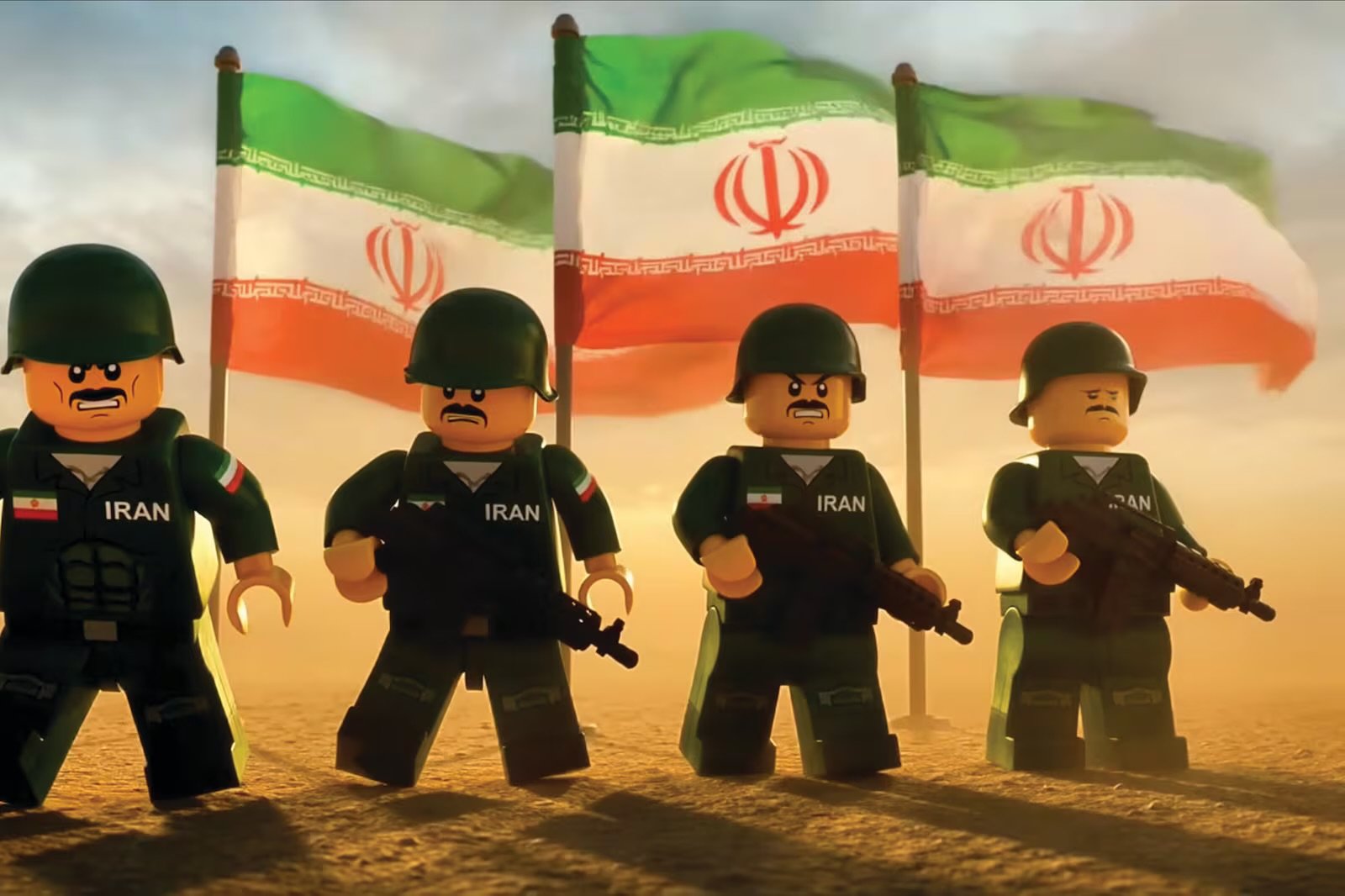
- Digital technologies have eroded the structural advantages that once allowed the United States to dominate their production and distribution.
- Iranian propaganda is effective not because it manufactures every grievance, but because it appropriates existing American distrust and contradictions and repackages them through culturally familiar forms.
- This creates a democratic dilemma: censorship undermines the openness democracies seek to defend, while opaque or unconvincing counter-messaging can further erode credibility and strengthen adversarial narratives.
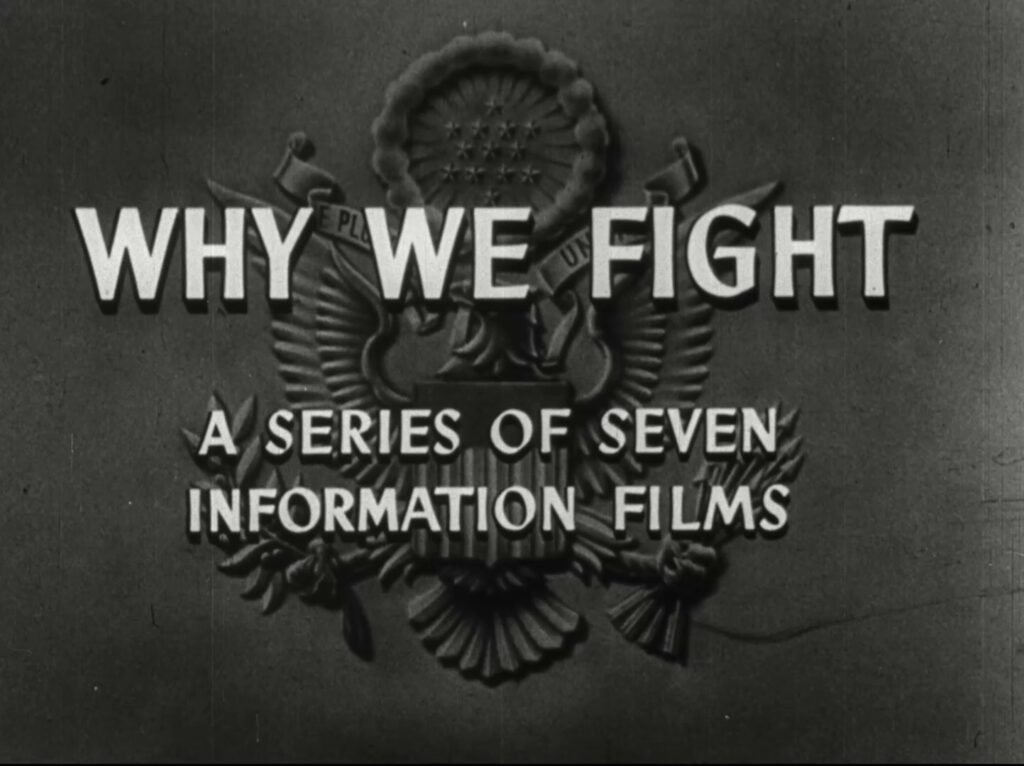
From Why We Fight to Why Are We Fighting?
In 1942, as the United States mobilised for the Second World War, the War Department commissioned filmmaker Frank Capra to write and direct a series of propaganda films, initially intended to explain the war to enlisted servicemen and later, at President Franklin D. Roosevelt’s request, extended to the wider American public.
The resulting Why We Fight series reflected an understanding that would become central to American power throughout the twentieth century: military superiority alone was insufficient. Power also required a political narrative capable of explaining what the United States was fighting against and, equally importantly, what it was fighting for.
During the Cold War, the “narrative race” continued, and the United States mastered the tools at its disposal, projecting the American way of life into homes, schools, cinemas, and popular culture across the world. Democracy, individual freedom, consumer prosperity, and free trade became not merely political principles but elements of a broader cultural narrative about what life under the American-led order could offer.
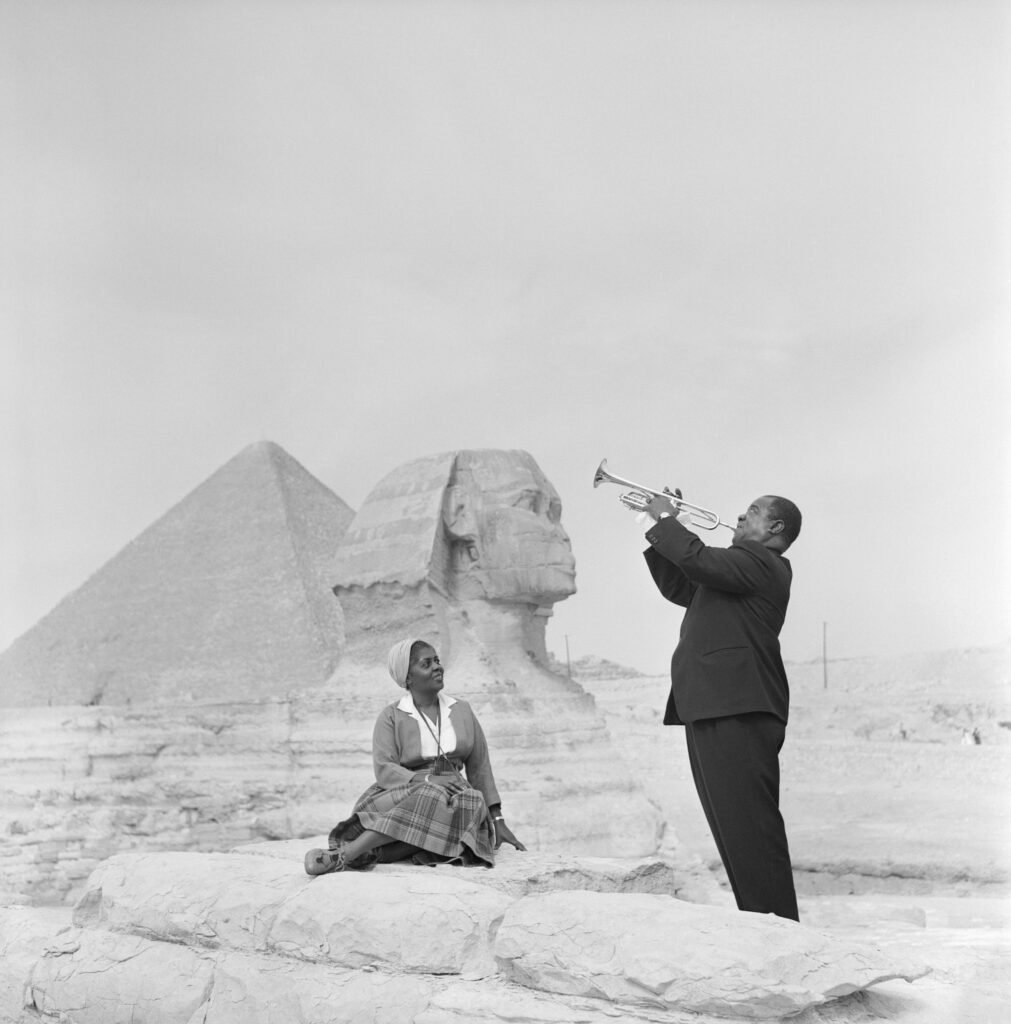
That narrative, of course, was never uncontested. The Soviet Union repeatedly exploited the distance between American ideals and their implementation, pointing to racial segregation, inequality, and the Vietnam War to challenge Washington’s claim to represent freedom and democracy, yet the narrative survived those exposures largely intact.
What changed?
America has not lost its capacity for cultural influence or strategic communication but the conditions under which narrative power operates have changed, affecting its impact. Two variables are increasingly decisive: new forms of communication and production, and widening gaps in domestic, political, and legal legitimacy that make counter-narratives more credible.
Twentieth-century propaganda required institutional infrastructure, substantial budgets, access to broadcasters, and expensive systems of international distribution. The digital model, what researchers3 cal neo-propaganda, has radically lowered those barriers. Generative AI reduces the cost and expertise required for production, while social-media platforms provide an instantaneous global distribution network. More importantly, audiences themselves become part of that infrastructure every time they like, remix, repost, or share politically charged content.
Adversarial narratives can now enter Western information ecosystems almost instantaneously, disguised not as conventional state propaganda but as memes, AI videos, and culturally familiar entertainment. They compete for attention within the same digital spaces as journalism, political debate, and ordinary social interaction. Propaganda no longer merely speaks at a foreign audience; increasingly, it speaks from inside its cultural ecosystem.
The Credibility Gap
Yet technology explains only half of the problem. Propaganda is at its most powerful when it does not need to manufacture the vulnerability it seeks to exploit.
Iranian propaganda bluntly articulates the American equivalent of Pulcinella secret: that U.S. actions in the Middle East are hypocritical, aggressive, and imperialistic, and that they sacrifice the well-being of ordinary Americans and service members alike. These claims enter an information environment already characterised by distrust and ripe with political grievance. Americans were already sceptical of another Middle Eastern war; from the outset, the administration struggled to articulate clear and consistent objectives, with its stated rationale and desired end-state appearing to shift as the conflict progressed. As constitutional-law expert Kenneth Manusama argues, although the war’s apparent illegality under domestic and international law affects its legitimacy, “it is the lack of objectives and urgency that erodes the democratic legitimacy of the war.” Manusma also stresses the importance of public support, noting that while previous administrations worked hard to build domestic support for military action, in the case of the Iran war there was no attempt made to make the conflict palatable to the American electorate.
The legality of the war was contested from its first days, while military action generated consequences across a region already shaped by more than almost three decades of American intervention and conflict. The administration therefore did not enter the information war with a reservoir of public trust or goodwill. Iran did not need to manufacture these grievances, it merely appropriated existing ones and repackaged them for its own strategic purposes. And thus, technology might answer the capacity question but American grievance explains the resonance.
The Democratic Dilemma
The result is a double vulnerability in contemporary American narrative power: adversaries have acquired cheaper and sophisticated means of penetrating the information environment precisely as this current US government supplies them with increasingly potent material to exploit. The question, therefore, is not simply how Iran became better at propaganda, but how the United States – and, by extension, other Western democracies – became more vulnerable to it. Part of the answer lies in the very openness of American democracy. Democracies are, by definition, open political systems in which information and competing interpretations of government policy can circulate relatively freely. In the United States in particular, freedom of expression and the protections afforded by the First Amendment make restricting political speech both legally difficult and fundamentally incompatible with the principles the country claims to defend. This openness creates a strategic dilemma. A democracy cannot respond to adversarial messaging simply through censorship without undermining the very principles that distinguish it from the authoritarian systems it opposes. Nor can it dismiss every criticism amplified by a hostile actor as disinformation. Iranian propaganda may distort, selectively frame, or manipulate information, but some of the grievances it exploits also exist independently within American political discourse. When the legal basis of a war is contested, its objectives remain unclear, and public trust is already weak, adversarial messaging does not need to manufacture an entirely fictional reality; it can appropriate existing criticism and turn it against the government. This creates a second problem: the counter-propaganda trap. Washington can and should challenge demonstrably false information, but counter-messaging becomes self-defeating when it relies on opacity, exaggeration, or claims that cannot withstand scrutiny. Rather than restoring narrative control, such communication can further damage the administration’s credibility, provide adversaries with additional material to exploit, and reinforce the very narrative it was intended to counter.
Contested policy, domestic distrust, and existing grievances do not create foreign propaganda, but they provide adversaries with better material from which to construct it. The legal dimension further complicates this dilemma. As Manusama points out, the constitutional ambiguity and vague language of the War Powers Resolution allow the administration to counter accusations of illegality wrung a legal argument of its own, narrowing teh focus of teh debate. When it was written the Resolution was intended to facilitate and force, of necessary, dialogue between the legislative and executive branch but, as Manusama notes, when one side chooses to forgo that dialogue, Congress has limited means to compel it. .
None of this is entirely new. Washington has weathered credibility gaps before, and its adversaries have always been quick to point at the distance between American ideals and American conduct. What has changed is not the vulnerability itself but the terms on which it is exploited: faster, cheaper, and disguised as culture rather than an attack. The Cold War narrative survived segregation and Vietnam because the United States could still out-produce and out-distribute its critics. That advantage no longer holds today.
This leaves Washington, and open societies more broadly, without a clean answer to the modern problem of digital propaganda: censorship betrays the principles being defended, silence cedes the narrative, and disingenuous rebuttals only supply adversaries with further material.
What the Iran war is ultimately proving is that deficits of credibility and lack of clear objectives magnify existing vulnerabilities and amplify the distance between the story Washington tells and the observable reality. In that sense the narrative war mirrors the conflict itself. The United States possesses enormous military capabilities, but kinetic power cannot compensate for inadequate strategy. Similarly, the immense cultural advantage the U.S. has accumulated over the last decades cannot counteract a credibility deficit. In both arenas, the gap between American power and its ability to wield it efficiently has become painfully visible.