

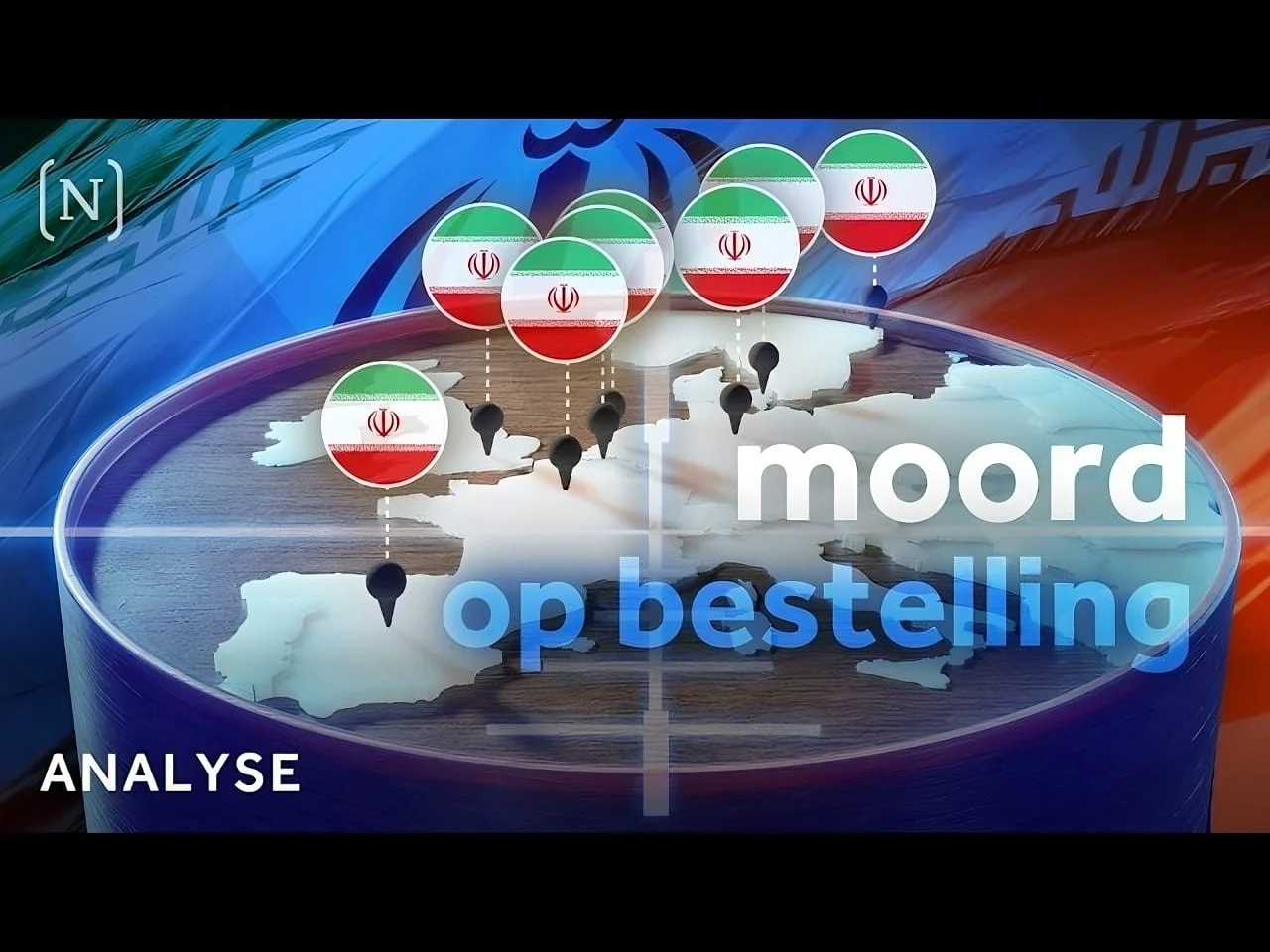
Iran Regional Update | In its recent annual report, the AIVD accuses Iran of an attempted assassination in Haarlem. Iran’s immediate summons of the Dutch ambassador in Tehran, coupled with the Iranian ambassador in The Hague’s accusation that “the Netherlands supports terrorism”, highlights a power struggle that The Hague is seeking to avoid. As Iran’s third-largest EU trading partner, the Netherlands must, in addition to trade, respond appropriately to such security issues.
The “Axis of Revisionists”—China, Russia, North Korea and Iran—which opposes liberal constitutional states, comprises the states that, according to the AIVD, threaten our national security. Whilst the threats posed by the first three states are significant, the Iranian threat is alarming: the long arm of the Iranian state is attacking Dutch citizens through hack-and-leak operations and assassination attempts.
The AIVD refers to “attempts” at assassinations without mentioning that Iran has previously actually had civilians killed in Almere (2015) and The Hague (2018) via criminal gangs. Tehran also placed two Dutch MEPs, a former minister and a Jewish organisation on its terrorism list. According to *De Groene Amsterdammer*, dozens of Iranian dissidents were sought for extradition on charges of “terrorism”, which would result in the death penalty. The Netherlands responded by expelling two diplomats and imposing symbolic sanctions against two Iranian ministries.
Iranian dissidents are under pressure worldwide, with twenty plots against British citizens since 2022, according to the British security service MI5. Tehran’s transnational aggression strengthens its position within the “Axis of Revisionists” and creates room for negotiation: Sweden and Belgium exchanged war criminals and terrorists sentenced to life imprisonment for prisoners.
In contrast to European soft-power diplomacy, this power-politics strategy appears to be effective. “We are not powerless,” emphasises AIVD Director Akerboom in the annual report. “The Netherlands can do a great deal for our national security.” *De Groene Amsterdammer* offers a more nuanced view: the Netherlands is failing to protect political refugees, who live in “fear” whilst the government and police provide “insufficient” guarantees for their safety.
Foreign Minister Caspar Veldkamp has succeeded in strengthening the Netherlands’ role as an intermediary on the global geopolitical stage. In November, Veldkamp received his Iranian counterpart Araghchi for the first time in ten years to promote “de-escalation” in the Middle East. A month earlier, he had conveyed “the announcement of an Israeli attack” to Iran. That deserves support. The more actively The Hague engages geopolitically, the better it is for the Netherlands and for the European liberal-democratic model. But this role is only effective if it acts as a deterrent against transnational Iranian aggression towards the Netherlands. The Dutch top diplomat plays a key role vis-à-vis Iran.
Talks between Veldkamp and Araghchi in February, March and April suggest that Veldkamp was asked to lobby a reluctant Brussels for a meeting with Tehran. Iran fears not only a military confrontation with Israel and the US, but also the reimposition of UN sanctions on its nuclear programme, a decision to be taken by the three European permanent members of the UN Security Council.
In January, President Macron described Iran as “the greatest strategic and security challenge” for Europe; this week, his chief diplomat warned Washington that if the nuclear talks do not align with European interests, the reimposition of UN sanctions against Iran will follow.
The Hague’s commitment to de-escalation between Israel and Iran and European diplomacy with Tehran strengthens the Netherlands’ geopolitical position. But does it also contribute to national security? With or without a nuclear deal, the Iranian threat requires special attention from Dutch politicians. Leaving this to Brussels does not guarantee national security. The Ayatollah regime, the ideological linchpin of the Axis of Revisionists, continues its transnational aggression unabated; the Netherlands is one of its five main targets.
This calls for a strong signal from The Hague. A registration centre for threatened dissidents and an interministerial task force are necessary tactical steps. Strategically, the Netherlands must, in line with the broad majority in the European Parliament, call on the Commission to develop an Iran strategy. This must include placing relevant sections of the Islamic Revolutionary Guard Corps (IRGC) on the European terrorism list. This is all the more urgent now that Europe is being sidelined by the US in the nuclear negotiations, which are also taking place with the IRGC. [Reference to my previous article on the negotiations] The anti-Semitic, anti-Western and misogynistic worldview is the raison d’être of the Iranian regime. As long as it exists, that worldview will neither change nor moderate.
Damon Golriz is a Strategic Iran analyst at the Hague Institute for Geopolitics.