

The Precipitating Event
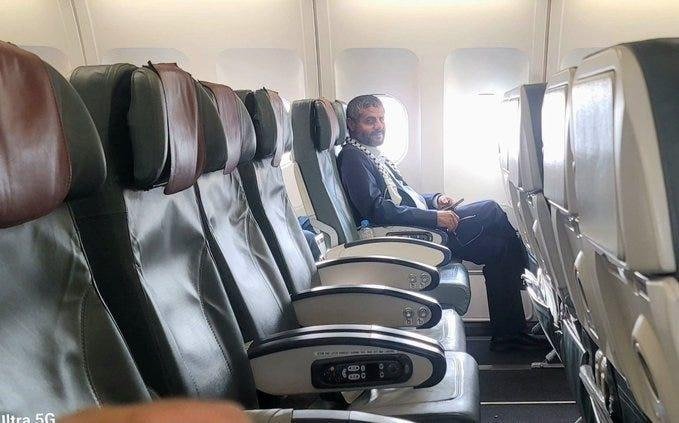
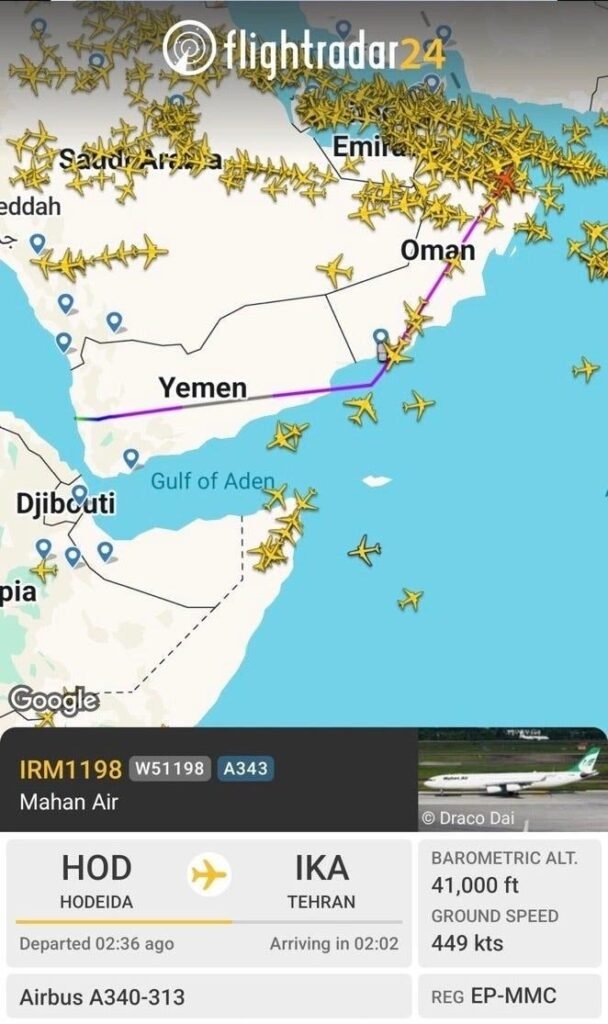
On 3 July, in the first direct Iran-Yemen flight since the outbreak of the Yemeni Civil War in 2015, an Iranian aircraft landed in Sana’a to transport a Houthi delegation to Tehran for Ayatollah Khamenei’s funeral. Despite its narrow operational scope, the flight carried disproportionate strategic weight for three reasons:
- Precedent for logistics normalization. Normalizing direct air links would provide the Houthis with an unrestricted channel for resupply and military personnel movement, circumventing the aerial blockade Saudi Arabia has maintained for a decade.
- De facto legitimation. Tacit tolerance of the flight risked being read, regionally and domestically, as an implicit Saudi acknowledgment of Houthi governing authority in northern Yemen, superseding the internationally recognized Yemeni government.
- Coalition cohesion risk. The flight generated alarm within the Saudi-led coalition, for which any erosion of the blockade regime represents a direct threat to core strategic interests.
In anticipation of possible interference, Houthi officials pre-emptively signalled that any obstruction of the delegation’s return flight would be treated as an act of war. Mohammad al-Bukhaiti, a member of the Houthi political bureau and governor of Dhamar, stated the delegation would return on the same aircraft from Tehran to Sana’a, framing this as an Yemeni sovereign right rather than a matter subject to Saudi approval, and warned that military action against the flight or the airport would be met with retaliation, explicitly naming oil infrastructure, ports, and airports as potential targets.
Saudi Strike and Houthi Retaliation
Nominal responsibility for the 13 July strike on Sana’a airport rests with Yemen’s internationally recognized government, a Saudi ally; the stated objective was to destroy the runway and prevent the delegation’s aircraft from landing. Houthi-aligned sources, however, attribute the operation directly to Riyadh rather than to its Yemeni partners, a distinction with significant implications for how any response is framed, whether as an intra-Yemeni matter or as a direct Saudi-Houthi confrontation.
To prevent further escalation, the Saudis allowed the Iranian aircraft to land at Hodeidah, a Red Sea port city under Houthi control, delivering the delegation onto Houthi-held territory despite the runway’s destruction.
In the strike’s immediate aftermath, the Houthi movement pursued a coordinated, multi-track response:
- Kinetic retaliation. A missile and drone strike reportedly targeted Abha International Airport in southern Saudi Arabia.
- Aviation-sector pressure. The Houthis issued a formal advisory warning all airlines against flying through Saudi airspace, urging them to take the warning seriously until the blockade on Sana’a International Airport is lifted, an attempt to extend pressure into the commercial aviation and insurance domains.
- Strategic framing. Official Houthi statements consistently present the campaign as directed at ending the decade-old air blockade, rather than as opportunistic escalation.
Abdulmalek al-Houthi’s Speech of 16 July
In a televised address on 16 July, Houthi leader Abdulmalek al-Houthi, in a highly emotional speech, accused Saudi Arabia of lacking genuine interest in peace, alleging that Riyadh seeks to subordinate and impoverish the Yemeni population through control of civilian aviation, imports, and port access. Employing a rally-around-the-flag appeal to Yemeni tribal audiences, he questioned whether any Yemeni tribe would accept subjugation to Saudi Arabia on those terms and answered by asserting the Yemeni people’s inherent freedom and refusal to serve any authority but God.
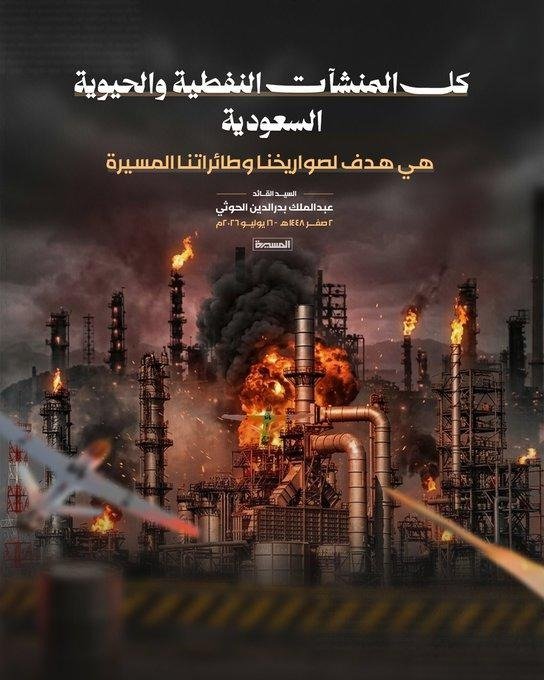
Moreover, Abdulmalek al-Houthi issued a direct threat against Saudi oil facilities and critical infrastructure, warning they would become targets should Saudi Arabia launch a comprehensive military campaign against Yemen. He further articulated an explicit reciprocity framework for future escalation, summarized in his own words as: “The equation is airports for airports, ports for ports, and blockade for blockade.”
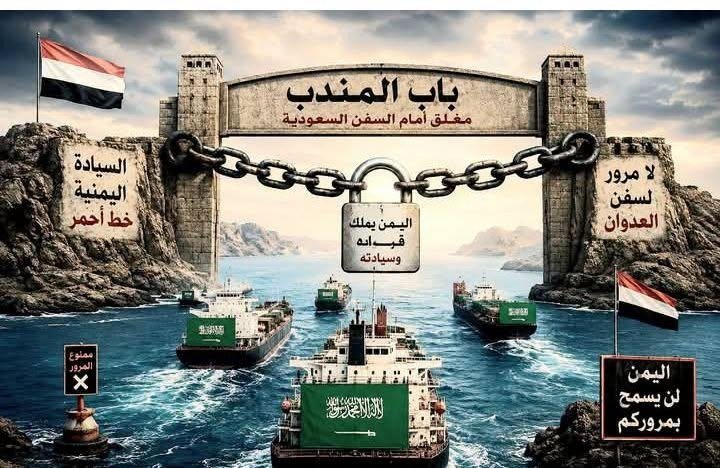
Notably, Abdulmalek al-Houthi’s address made no reference to the Bab al-Mandeb Strait. This omission was considered to possibly reflect Houthi caution regarding the risks of maritime escalation in the Red Sea, where a renewed blockade could disrupt the Houthis’ maritime logistics corridor, particularly their oil supply route, vital for their survival and already under strain from the conflict.
Related Developments
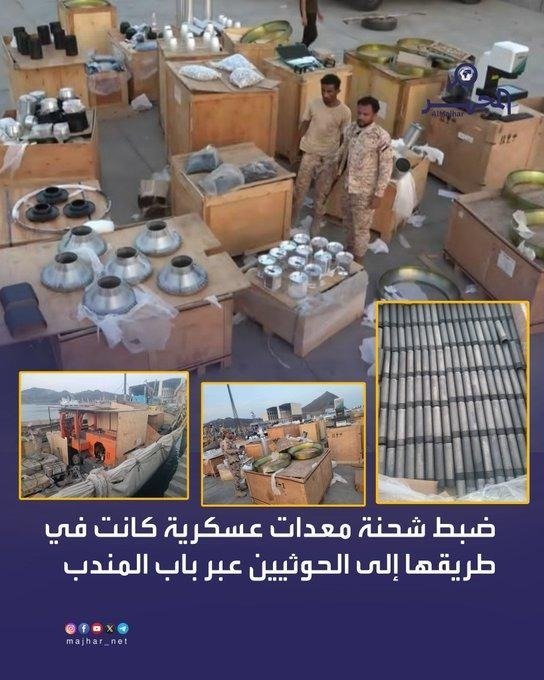
- Interdicted matériel. On 14 July, the Southern Giants Forces intercepted a large shipment of military and industrial components destined for Houthi forces. Some components were reportedly associated with the Type 358 surface-to-air missile — known to the Houthis as the Saqr-1 — a system previously linked to the downing of a US MQ-9 Reaper and a Chinese Wing Loong II unmanned aerial vehicle. This is an indication that the Houthis’ maritime supply chain is under increasing pressure, making the lifting of the air blockade an increased necessity.
- Iranian posture on the Red Sea. Iran, the Houthis’ principal regional ally, has reportedly urged the group to maintain readiness to close the Red Sea’s oil transit route if the United States strikes Yemeni civilian or power infrastructure. This is an indication that Bab al-Mandeb, while absent from al-Houthi’s rhetoric, remains an active contingency within the broader Iran-aligned axis.
- Forward indicator. A prospective third Tehran–Sana’a flight, and the nature of the Saudi response to it, is likely to serve as a key signal of Houthi intent — both regarding the bilateral standoff with Riyadh and the broader question of Red Sea maritime security. According to regional analysts, response is anticipated to be the same.
- The 20 July Naval Blockade Declaration
On 20 July, Houthi Armed Forces spokesman Yahya Saree announced, in a televised statement, that the movement was imposing “a maritime embargo against the criminal Saudi enemy, based on the equation of an eye for an eye, effective immediately.” The declaration was framed as a response to what the Houthis characterize as an “unjust and oppressive siege” imposed on Yemen by Saudi Arabia for nearly twelve years, extending the reciprocity doctrine articulated by al-Houthi on 16 July from the aviation domain into the maritime one. Enforcement is unclear, since there is no shipping attacks or Saudi response yet. But still could cut or to reduce further the global oil supply and raise shipping costs.
Compromise or Saudi Capitulation?
Notwithstanding the blockade declaration, steps toward de-escalation between the Houthis and the Saudis have taken place. The Jordanian airline will resume flights to Sana’a, breaking the decade-long air blockade. But the Houthis are expected to increase pressure for direct Iranian flights to Sana’a airport, to avoid inspections by Jordanian authorities. For the Iran-Houthi axis, a direct, uninspected air corridor between Tehran and Sana’a is the anticipated outcome of the current escalation. That corridor, could compensate, partially the lose of the Syrian corridor in 2024. The fall of Bashar al-Assad has made the resupply of Hezbollah, an Iranian vital ally, increasingly risky, and degraded.
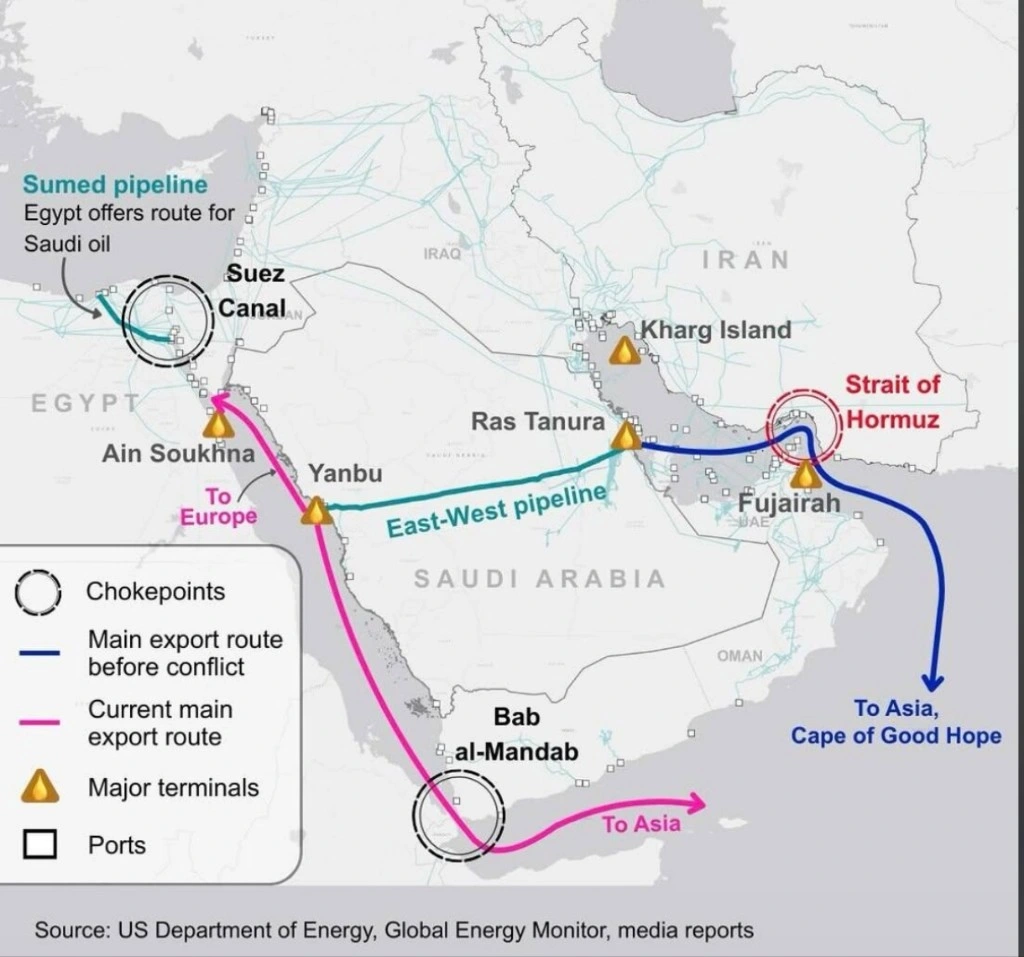
The Houthi leader’s direct threats against Saudi civilian infrastructure, especially oil facilities, are skyrocketing the risk for Saudi Arabia. Amid the renewed hostilities between Iran and the United States, and the closure of the Strait of Hormuz, any disruption of oil exports through the East-West (Yanbu) land corridor would be catastrophic for Riyadh.
This placed Riyadh in a highly precarious position. Iran and the Houthis seem to be attempting to exploit Saudi weakness. Riyadh is struggling to stay out of the Iran-US war and to avoid restarting a war with the Houthis. The functioning of the Yanbu oil corridor is of vital strategic interest to Riyadh. Moreover, US military engagement against the Houthis, to assist the Saudis, doesn’t seem like a realistic option. The last thing Washington wants to see is the closure of the Bab al-Mandeb Strait and disruption of oil flow to western markets via the Red Sea.
The 20 July declaration should accordingly be read as a further step on the escalation ladder, by which the Houthis and their Iranian allies appear to be seeking to compel Riyadh to accept the creation of a ‘southern Arabian air corridor.’
Strategic Assessment
- Objective asymmetry. The Houthi movement has articulated a clearly bounded goal, the termination of the air blockade, lending its escalation a coherent internal logic and an identifiable off-ramp. Saudi objectives are less clearly defined in available reporting, increasing the risk of escalation without a corresponding resolution mechanism.
- Iran-axis dimension. A successful Houthi campaign to lift the blockade would likely be read regionally as a victory for the movement primarily, and secondarily for Iran’s broader network of aligned actors, reinforcing a narrative of Iranian-backed resilience against Gulf/Western pressure.
- Aviation and economic exposure. The advisory to international carriers constitutes a distinct escalation vector, capable of drawing civil aviation and insurers into the conflict and imposing reputational and commercial costs on Saudi Arabia extending beyond the immediate military confrontation.
- Attribution and coalition unity. The divergence between official (Yemeni government) and alleged (Saudi) responsibility for the strike may determine whether the episode is managed as an internal Yemeni dispute or a direct state-to-state confrontation, with corresponding implications for coalition cohesion and any prospective mediation track.
- Maritime risk activated, not merely reserved. The omission of Bab al-Mandeb from al-Houthi’s 16 July Speech rhetoric could be interpreted as evidence the Houthis were calibrating maritime escalation as a reserved option. The 20 July declaration closes that gap: the option has been exercised rhetorically, even though enforcement on the water remains unconfirmed. The distinction between a declared blockade and an enforced one is now the central variable to monitor.
- Energy security. Hydrocarbon abundance once means of wealth, political stability, and power projection, for the Gulf states, now have transformed to an Achilles heel, due to Axis of the Resistance asymmetry strategy. Houthis, low-cost military hardware (UAV, missiles), is a Damocles Sword against the regional and global economical and geopolitical world order, which multibillion high-tech military hardware, is unable to protect.
Conclusion
The long Saudi blockade, alongside the devastating civil war, has wrecked the Yemeni economy and generated hardship for Yemenis. These dire socioeconomic conditions pose a serious threat to Houthi political survival — equal to, or even more dangerous than, that posed by the US/Saudi air force. Moreover, since the outbreak of the war in Gaza and the Iran-US war, the supply lines between Tehran and Sana’a have become increasingly challenging. Thus, lifting the blockade — suffocating for the Houthis — constitutes a strategic priority.
The 13 July flight incident and the subsequent escalatory developments are more the outcome of strategic design by the Houthis and their allies in Tehran than of an emotional, unplanned reaction. Lifting the air and naval blockade, and building up a “southern Arabian air corridor,” will enhance the “southern flank” of the Iranian-led Axis of Resistance, while making Hezbollah’s supply line more secure.
It will serve the survival and operational efficiency of the Houthis. It will establish a new balance of power in the Gulf region, where the Axis of Resistance’s interests cannot be ignored and its political will cannot be coerced. Finally, it constitutes the next step in imposing and communicating the Axis’s dominant role over the two maritime choke points vital to the global economy: the Strait of Hormuz and the Bab al-Mandeb Strait.