

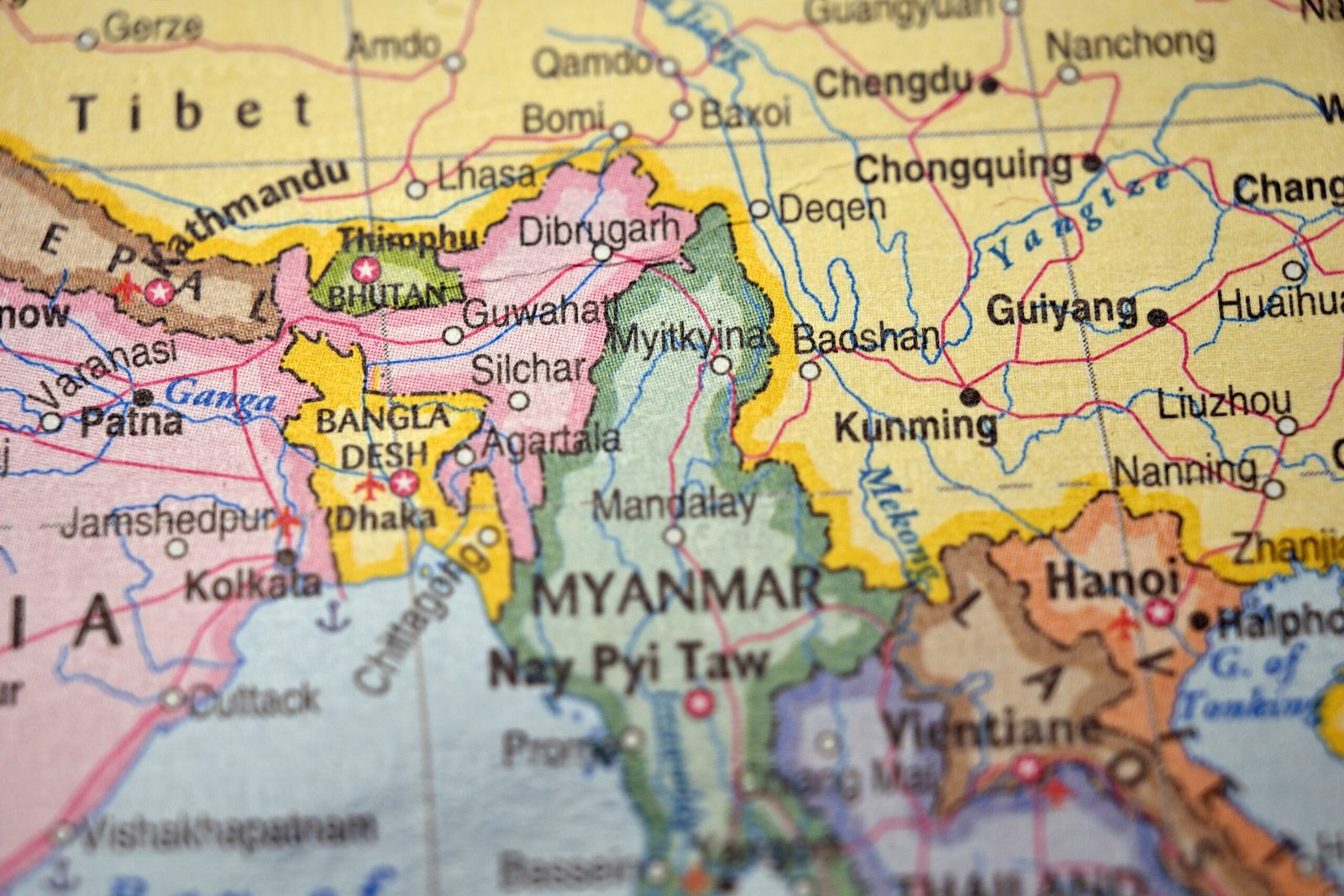
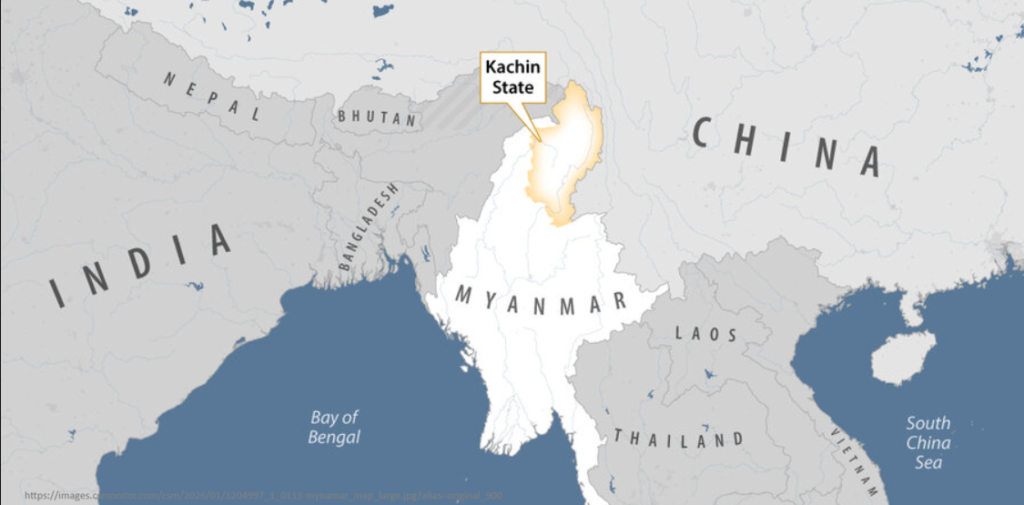
While China is known as the world’s largest processor of rare earths, not all rare earths are mined within China. Myanmar is one of the world’s largest suppliers, and its geostrategic position bordering China in the north has made it crucial for China’s heavy rare earth monopoly. Considering Myanmar’s current political situation, following the Junta’s (Myanmar’s military) 2021 coup, rebel forces and ethnic armies took over large parts of the country, leaving the rest split between military control and conflict zones.
China and Russia are reinforcing the Junta by supplying aircraft and arms, despite the UN Security Council’s concerns about military atrocities. Since the February 2021 coup, rare earth extraction has rapidly expanded in Myanmar. The ethnic armed organisation Kachin Independence Army (KIA) has exported rare earths, especially dysprosium and terbium, to China. These heavy rare earth elements are essential for producing high-performance neodymium-iron-boron (NdFeB) permanent magnets, used in smartphones, wind turbines, defence technology, and electric vehicle motors.
How is the mining of rare earths in Myanmar creating complications regionally?
The dirty side of rare earths
ISP shows that the rare earth exports from Myanmar to China since 2021 have skyrocketed fivefold to USD 3.6 billion, contributing to over half of China’s total rare earth imports. In 2024, around 370 mining sites and 2,700 rare-earth collection pits have been identified, most discovered after 2021.
While rare earths are not as rare as their name suggests and are widespread globally, extracting and processing them causes toxic waste, water pollution and ecosystem destruction. Rare earth refining is among the most environmentally harmful metallurgical processes in the modern economy. Additionally, workers are exposed to toxic dust, heavy metals and radioactive materials, causing severe health issues. Western countries face stricter pollution controls and environmental regulations, while China gained a strategic advantage through its rare earth processing monopoly, accepting the domestic environmental costs.
On October 1st, 2024, China implemented Rare Earth Management Regulations, aimed at protecting and utilising rare earth resources. In 2022, a Global Witness investigation found that most of China’s rare earth processing capacity had outsourced much of its extraction to Myanmar.
Amara Thiha, Non-Resident Fellow at Stimson Center, highlights not dependency on Myanmar, but its economic convenience: “Myanmar’s rare earth production offers China a price-competitive source of supply, enabling it to preserve its domestic reserves, maintain cost advantages in global markets, and extend its dominance across the entire rare earth value chain.
The strategic benefit for China lies not solely in access to raw materials but in the ability to suppress global rare earth prices, thereby reinforcing the barriers to entry that prevent competitor nations from developing viable alternative supply chains. Framed in this way, China’s utilisation of Myanmar’s rare earths does not represent a vulnerability; rather, it functions as a tool for consolidating and extending its monopoly position in the global market.”
Mining in Myanmar: A catastrophe in the making?
While in 2018, Myanmar’s civilian-led government banned exports and rejected Chinese miners’ operations, after the coup of 2021, the civil conflict allowed China-linked extractions to continue. Moreover, this extraction is explicitly illegal, with no regulation on mining standards, as the Kachin Independence Organisation (KIO) is de facto working as the government in Kachin, the largest mining region in Myanmar.
Not only does the mining-caused pollution concern Myanmar, but it also affects the Mekong River, which is polluted by Southeast Asian mining sites and endangers the lifeline of many people, including the Lahu in Thailand, as Laetitia van den Assum, diplomatic expert, highlights: “Several rivers along the border with Thailand are now poisoned. It’s unthinkable that this can continue, but we live in the age of transactional deals, which are taken above the communities and the heads of the people who live in these areas. We’re being confronted with the consequences, and nothing is happening, nobody is doing anything.”
International Implication
Given the catastrophic conditions spreading in Myanmar and neighbouring countries, the question arises about the international response. Van den Assum explains: Myanmar, particularly on the border with China, has changed almost on a daily basis over the last couple of months. […] All the major possible donors which would help out with studies that would need to be done are less engaged now. Many embassies have already closed; this year, the Dutch Embassy in Yangon is closing; it’s like we are giving up.“
Experts argue that international action on rare earth mining in Myanmar is complicated. Nyein Nyein Thant Aung from the Pacific Forum Young Leader programme states that it is highly likely that rare earth mining will go further underground or become less transparent in the extraction process and the logistics chain, as international organisations are more focused on the end stage of the rare earth supply chain.
Thiha agrees, arguing that: “This selective focus reflects both the difficulty of upstream regulation in conflict-affected zones and a degree of strategic discomfort with confronting the full implications of critical mineral dependency.”
Nyein Nyein Thant Aung from the Pacific Forum Young Leader elucidates that both rare-earth mining areas, “Kachin and Wa, are seeking alternative markets (such as India), implying that they have leverage by controlling unexplored areas for rare-earth mining. This suggests that the KIA and the United Wa State Army (UWSA) still require technical, financial, and human resources to achieve comprehensive control over rare earths, including market assessment and technical expertise for extraction or processing. […] The current agreement concerning rare earth extraction with China lacks formal institutionalisation or legal legitimacy. It is based on mutual consent with private firms, which poses a risk of jurisdictional disputes due to the lack of regulatory legitimacy of Ethnic Armed Organisation (EAOs).”
Conclusion
Amidst Myanmar’s political unrest, the KIA has become a strategic asset for China’s heavy rare earth monopoly, contributing to widespread illegal mining in Kachin and other regions. While this trade has generated economic activity, it has also triggered severe environmental destruction. Myanmar, as well as neighbouring countries, are heavily affected by the Mekong River’s pollution, causing harsh health risks.
Despite these consequences, there is no international action. This selective focus, disregarding the extraction in Myanmar, is due to the critical mineral dependency, which is the harsh reality behind the current demand for heavy rare earths and the technology it brings.