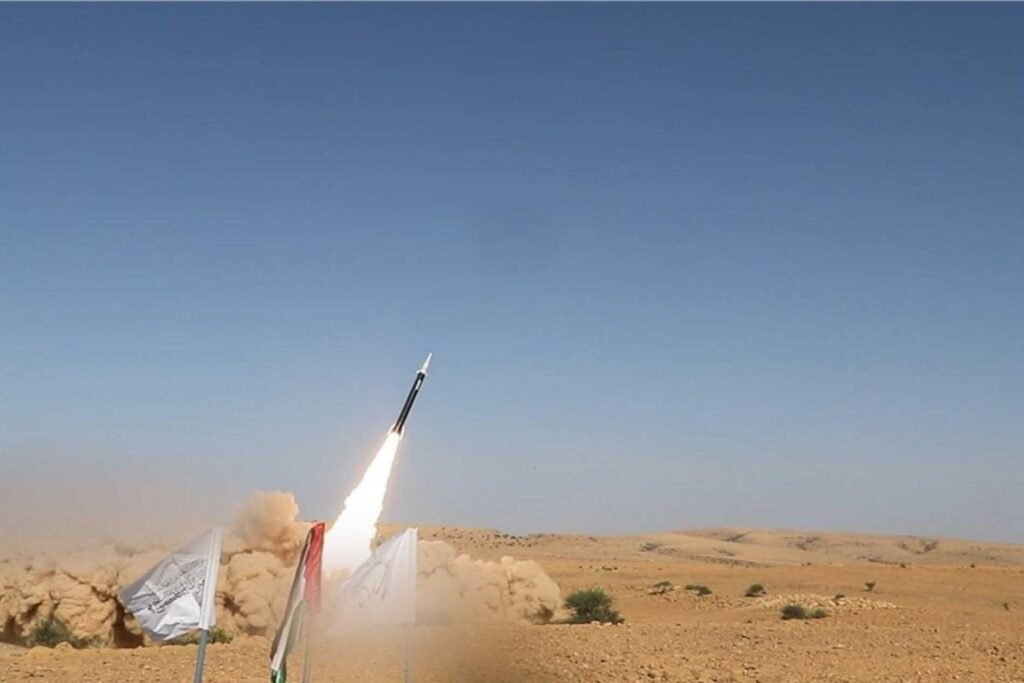
Houthi Aerial Strike Capabilities: Rockets and Ballistic Missiles
This section of the analysis illustrates the development of the Houthis’ ballistic missile arsenal since the outbreak of the Yemeni Civil War in 2015. The missile arsenal will be categorized chronologically, in terms of range, and by fuel propulsion type.
Very Short/Short-Range Missile Arsenal
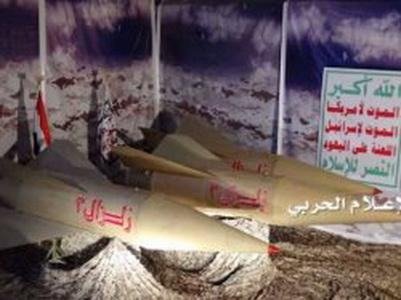
Zelzal (“Earthquake”) rocket: It is a first-generation, solid-fuel, very-short-range, unguided missile (artillery rocket), used at the first stage of the Civil War. The Zelzal-1, locally manufactured, has just a 3 km range. Zelzal-2 is based on a modified, old Soviet air-to-ground missile, the S-24. Zelzal-2 has a 15 km range, with a 140 kg high-explosive payload. The Houthi Zelzal-3 missile must not be confused with the Iranian Zelzal-3 missile. Zelazal-3 is based on a cannibalized, old Soviet 9M21 rocket from the 9K52 Luna-M system (65-70 km range), inherited from the Yemeni Arab Republic’s (North Yemen) old arsenal. It is a solid fuel, unguided missile, with a potential range 65-70 km, rocket, since is fundamentally the same physical rocket as the 9M21. A Zelzal-3 missile was allegedly fired against a Saudi military camp in Marib governorate.
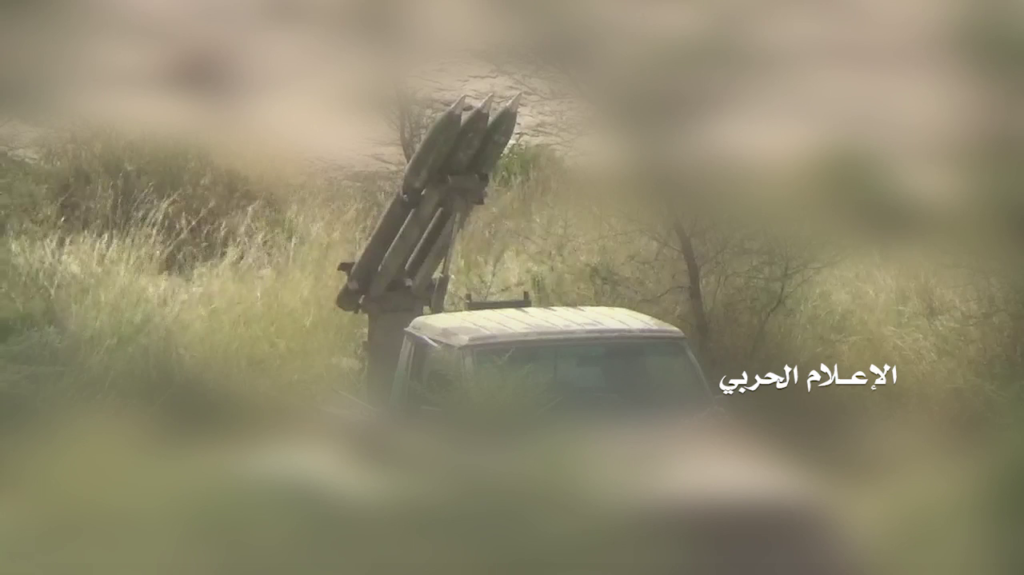
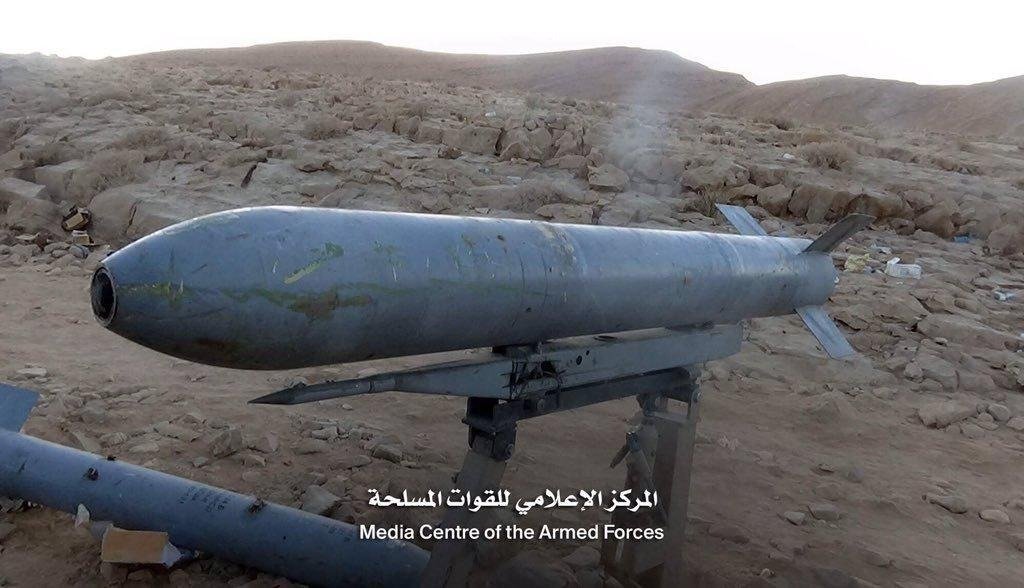
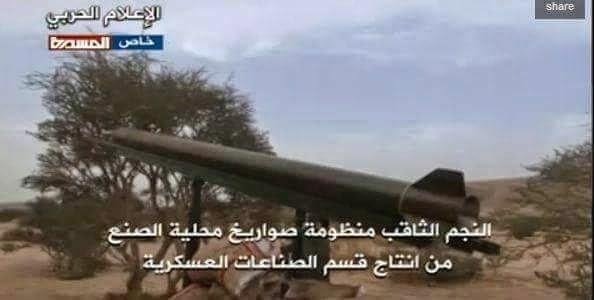
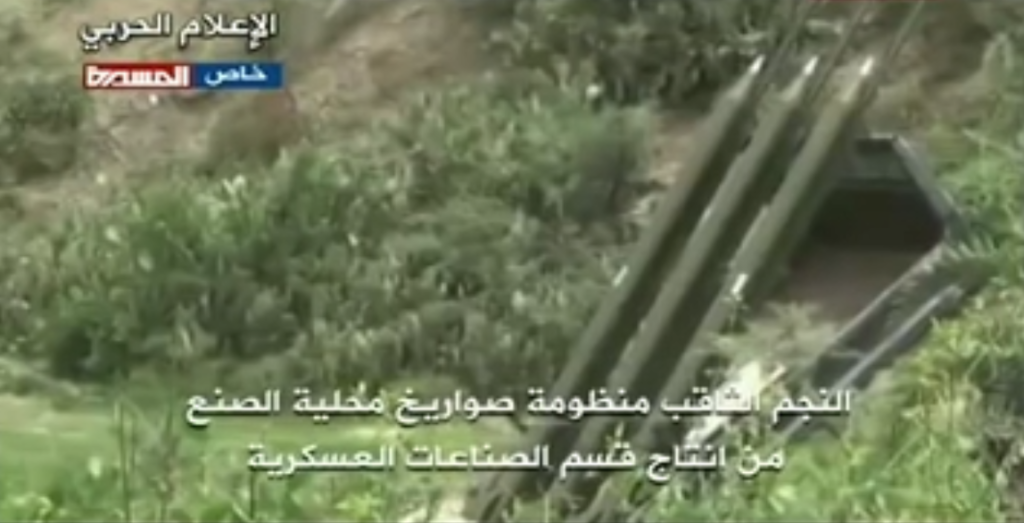
Al-Najm al-Thaqib (“Piercing Star”) rocket: A first-generation, locally produced, based on the Iranian Oghab “Eagle” missile. The Oghab “Eagle” missile is based on the Chinese Type 83 artillery rocket. Al-Najm al-Thaqib is a solid-fuel, unguided missile (multiple rocket launcher), with a range of up to 45 km and a 50 kg high-explosive warhead. Al-Najm al-Thaqib-2: An improved, unguided version with a 75 km range and a 75 kg high-explosive warhead. It should not be confused with the surface-to-air Thaqib missiles. Al-Najm al-Thaqib missiles have allegedly been used against the Saudi cities Jizan, Asir, and Naijran on May, 2015.
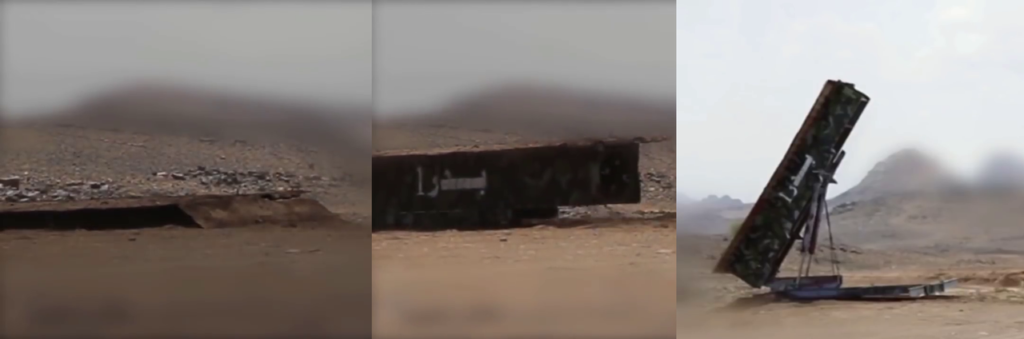
Badr-1 (“Full Moon”) rocket: It is a short-range, solid-fuel, unguided rocket. No verified information is publicly available about its range or warhead. Badr-1 has been used against the Saudi’s Jarba military camp, located in Dhahran, Asir province.
OTR-21 Tochka missile: An old Soviet heavy tactical, solid-fuel, unguided short-range missile used in the early stages of the Civil War. Tochka has a 70 km range and a 482 kg high-explosive warhead. Tochka has been confirmed to have been used in two cases, with devastating results. On September 4, 2015, struck Marib, and on December 2015 struck a military base in Bab al Mandeb, causing hundreds of casualties. More specifically, the Houthis struck a military base of the Saudi-led coalition forces in Safer, Marib governorate. The missile hit an ammunition storage site, causing dozens of casualties. Among them were 52 Emirati, 10 Saudi, 5 Bahraini, and 36 pro-government soldiers. The strike in Bab al-Mandeb killed over a hundred coalition personnel, including the head of Saudi special forces. On September 4, 2017, a Tochka missile targeted a base of the Saudi-led coalition in Marib province, killing over 100 service members of the coalition and destroying millions-worth military hardware.
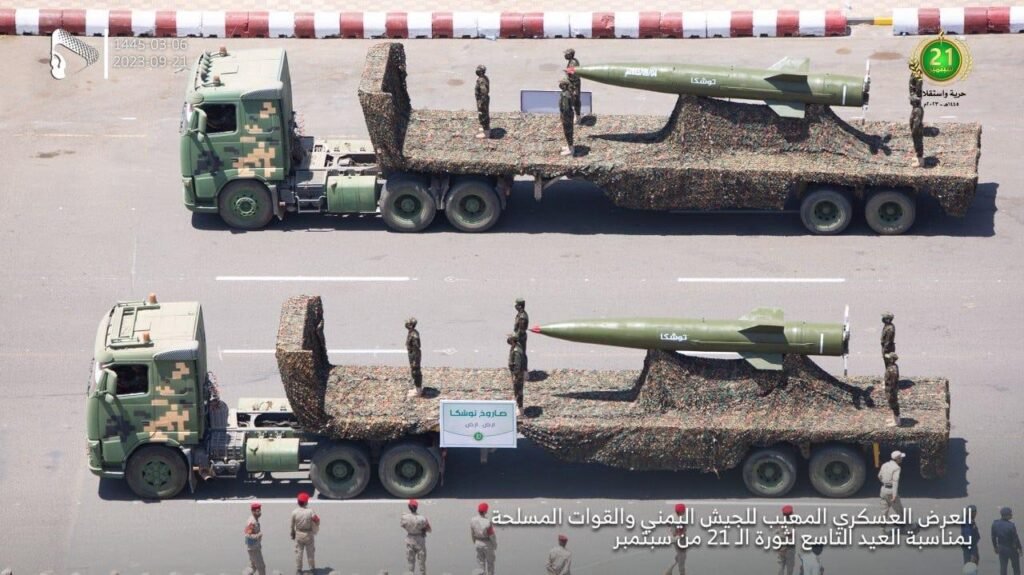
Picture 7. Tochka tactical short missile.
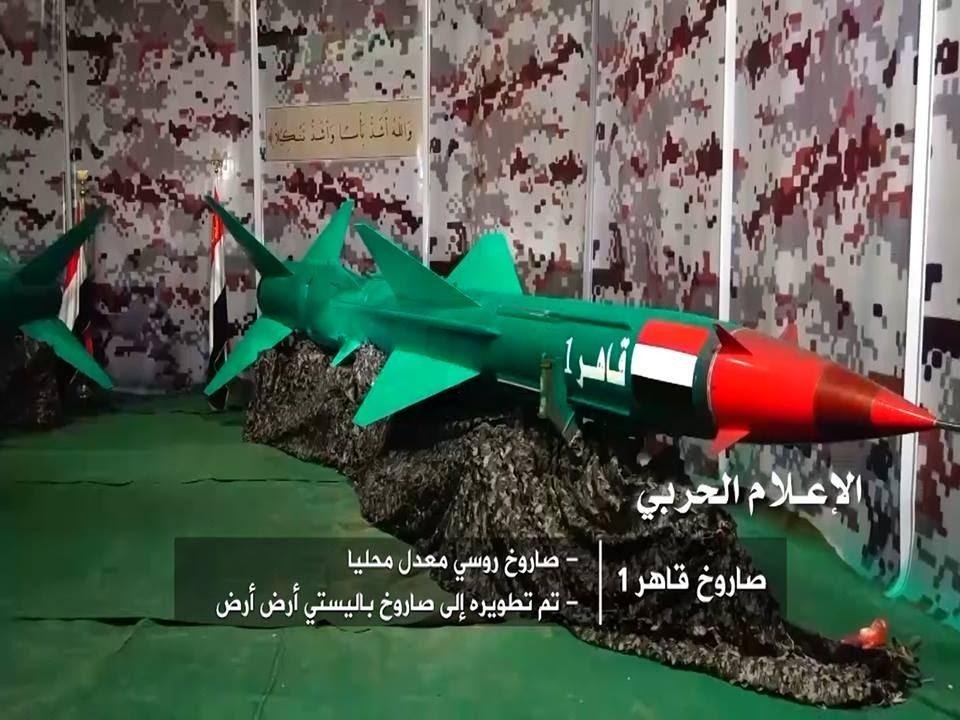
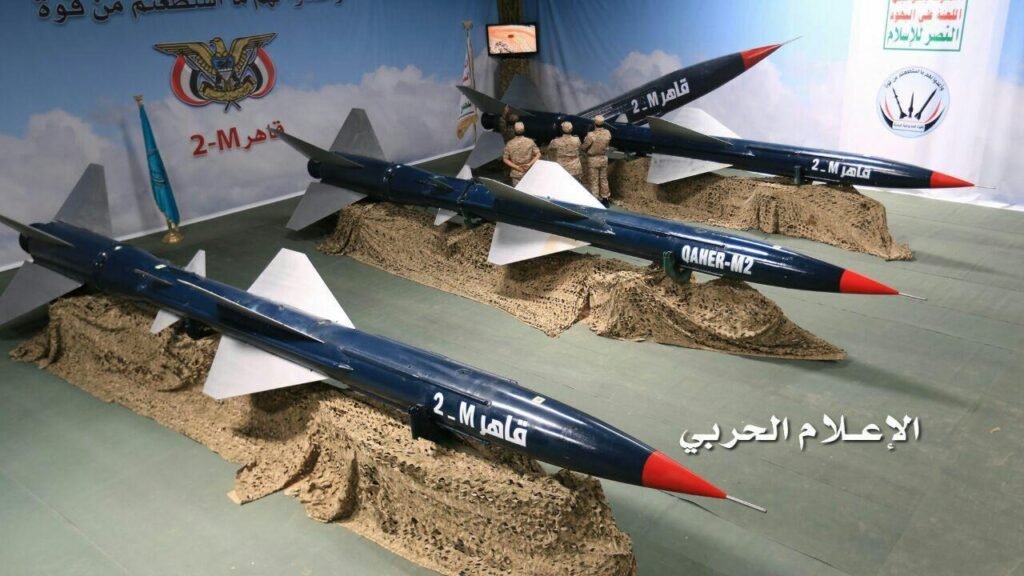
Qaher (“Conqueror”) missiles: The Qaher family of missiles is based on the old Soviet surface-to-air missile SA-2, which with Iranian assistance repurposed by the Houthis into a surface-to-surface weapon. Qaher-1, unveiled in 2015, is a solid-and-liquid-fuel, unguided, short-range missile. Qaher-1 has a 250–300 km range and a 195–200 kg fragmentation warhead. The Qaher-2 missile has a range of 400 km and a 300 kg warhead. The Qaher-2’s fuel propulsion type and the existence of a guidance system are disputed. Qaher-1 has been used against the King Khaled Air Base and the adjacent Khamis Mushait Military City. The Qaher-2 was used in combat against the Saudi Abha airport in March 2018.
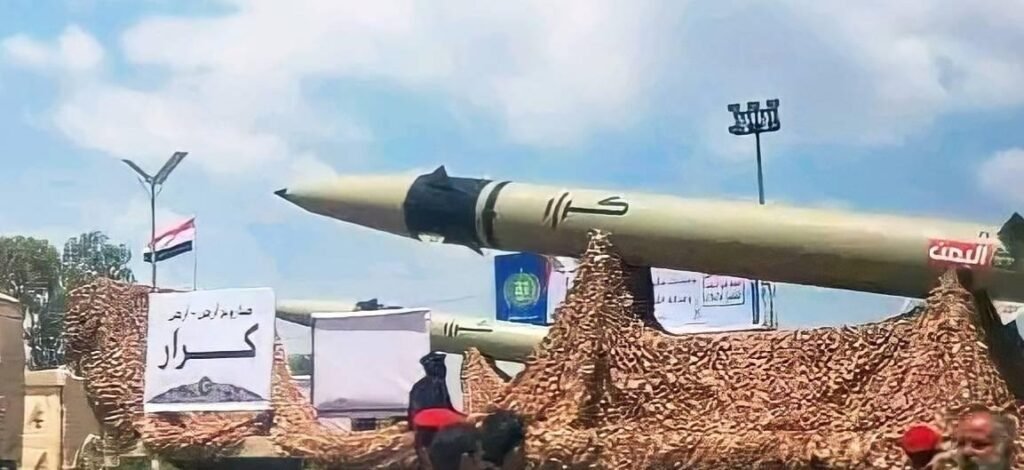
Karar (“The Repeated Attacker”) missile: It was unveiled in 2022 and is a solid-fuel missile with a 300 km range and a 500 kg warhead. It is derived from the Iranian Fateh-110 missile. Its guidance system has not been independently verified, but is likely inertial guidance, as the Fateh-110 missile is.
Badr (“Full Moon”) missiles: Badr is a family of solid-fuel, guided missiles. Badr-1P has a 130–150 km range and an accuracy of 3 meters, but no publicly available information exists about its warhead. The Badr-F missile has a range of 160 km (no publicly available information exists about its warhead) and detonates 20 meters above the ground, spraying 1,400 fragments across a 350-meter-diameter area. No publicly available information exists for the Badr-3 and Badr 4 missiles. Badr missiles have high accuracy. A Badr-1P missile allegedly hit hit a Sudanese military base in Al Hudeydah.
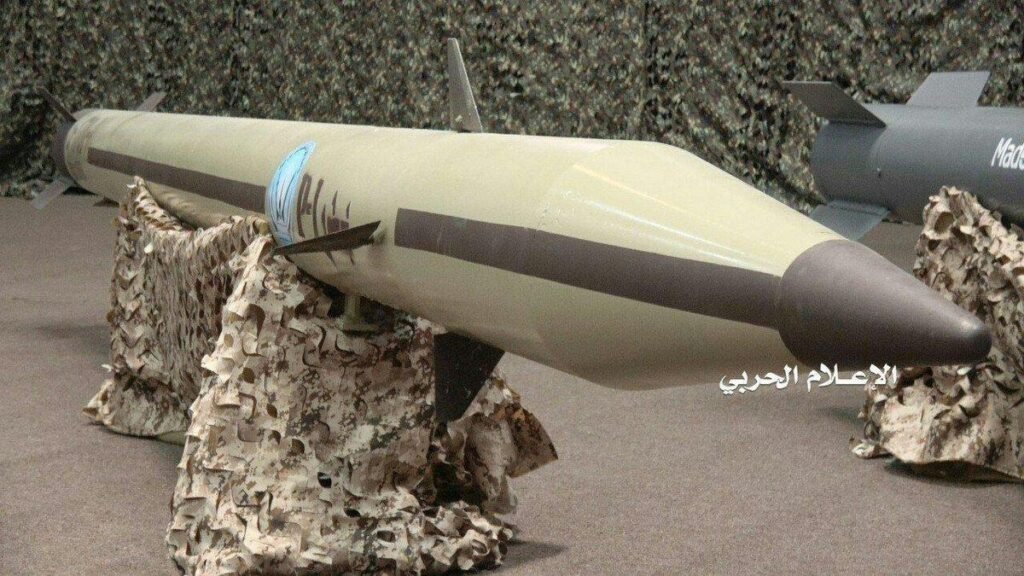
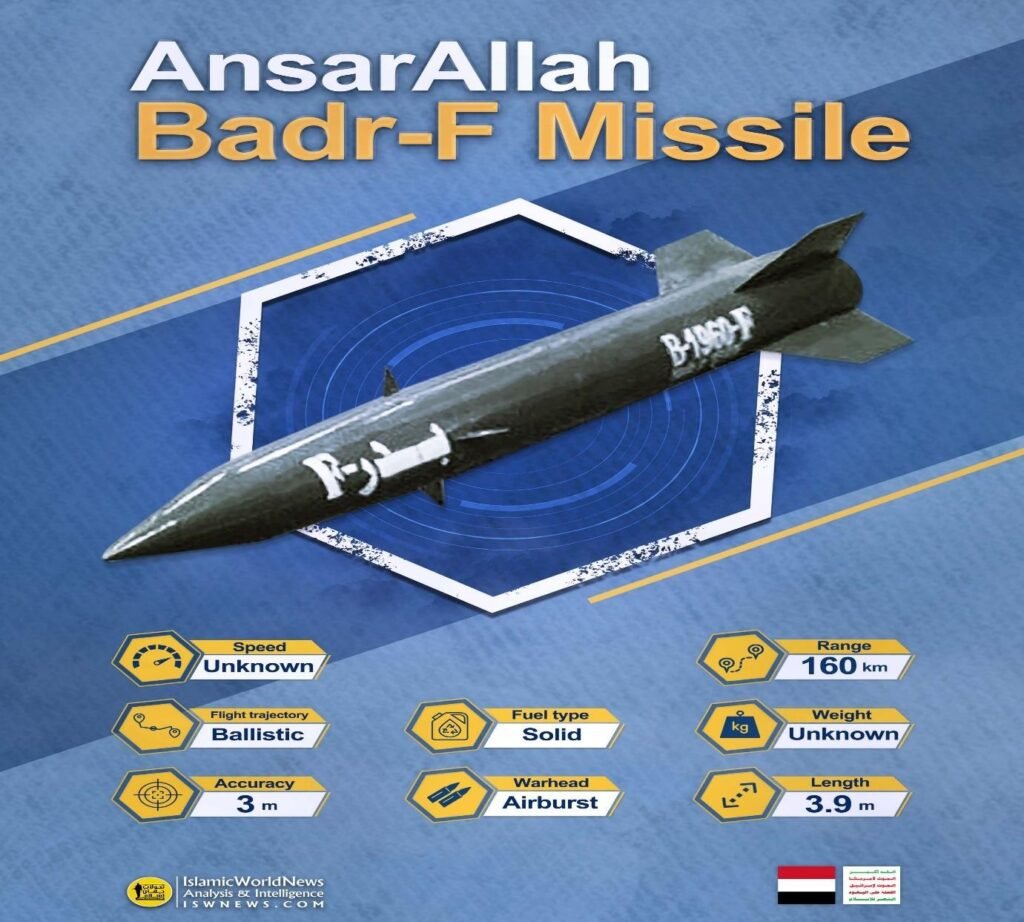

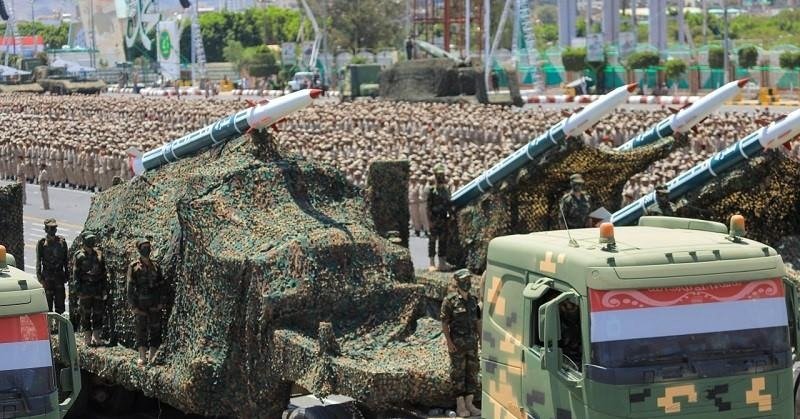
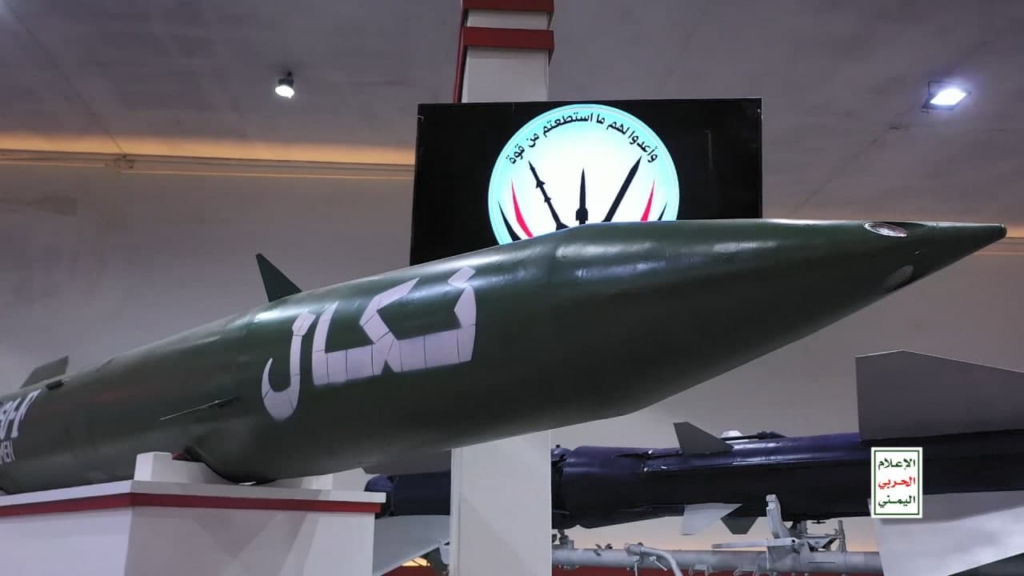
Nakal (“Exemplary Punishment”) missile: Nakal was unveiled officially in 2021, thought it was used in combat in 2019. It is a solid-fuel, guided missile, with a range of 160 km, but no publicly available information exists about the weight of its warhead. Nakal is an improved version of the Badr-F missile, and its warhead has air-burst capability (detonating 20m above the ground and spraying fragments across a 350m-diameter area). Nakal missiles targeted Saudi troops in the city Najran on 26 August 2019.
Medium-Range Ballistic Missiles
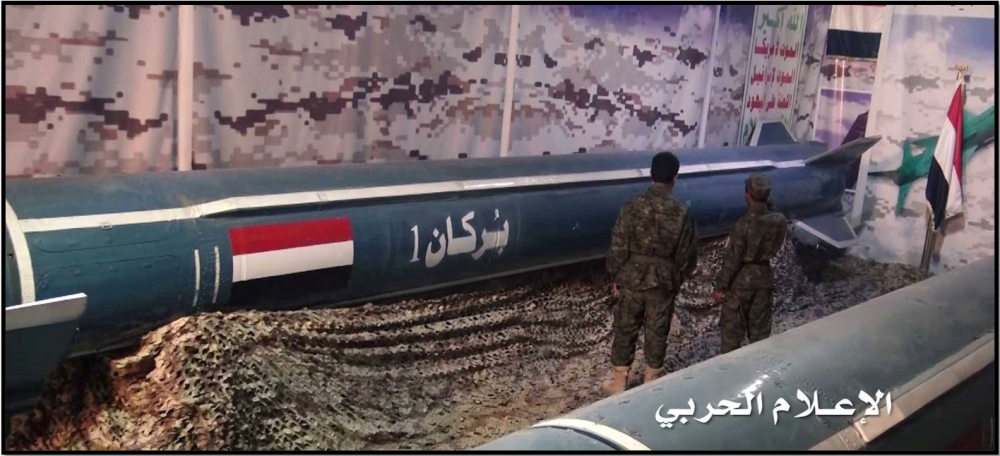
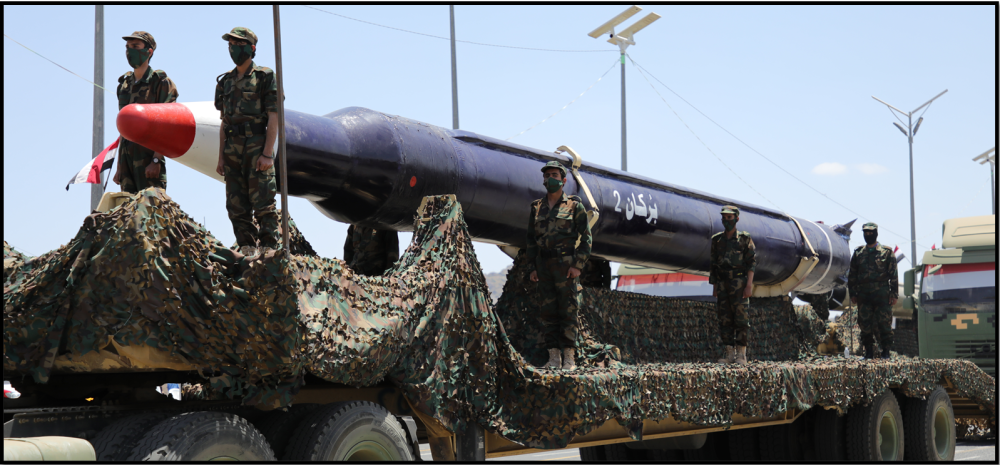
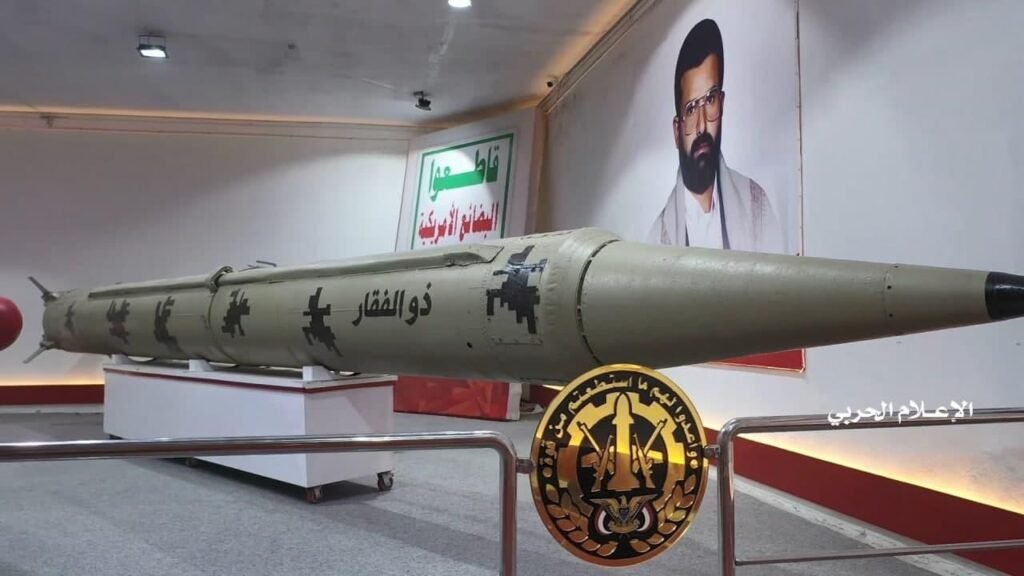
Burkan (“Volcano”) missiles: Burkan-1, unveiled in 2016, is a liquid-fuel, guided missile. Burkan-1 has an 800 km range and a 500 kg warhead. Burkan-1 is linked to the old Soviet Scud missile. The Burkan-2, unveiled in 2017, is a liquid-fuel missile with a range of 1,000 km and a warhead of 250 kg; it is also linked to the Soviet Scud missile. The Burkan-3, or Zulfiqar, unveiled in 2019, is also a liquid-fuel, guided missile with a range of 1,200 km and a warhead of 250 kg, and it is linked with the Iranian Qiam or Rezvan missile. A Burkan-2 allegedly hit an oil refinary in Yanbu, Saudi Arabia, on 22 July 2017. A Burkan-3 was allegedly used against Ras Tanura, Saudi Arabia, on 1 February 2021; against Damman, Saudi Arabia, on 7 April 2021; and against Israel on 11 December 2023.
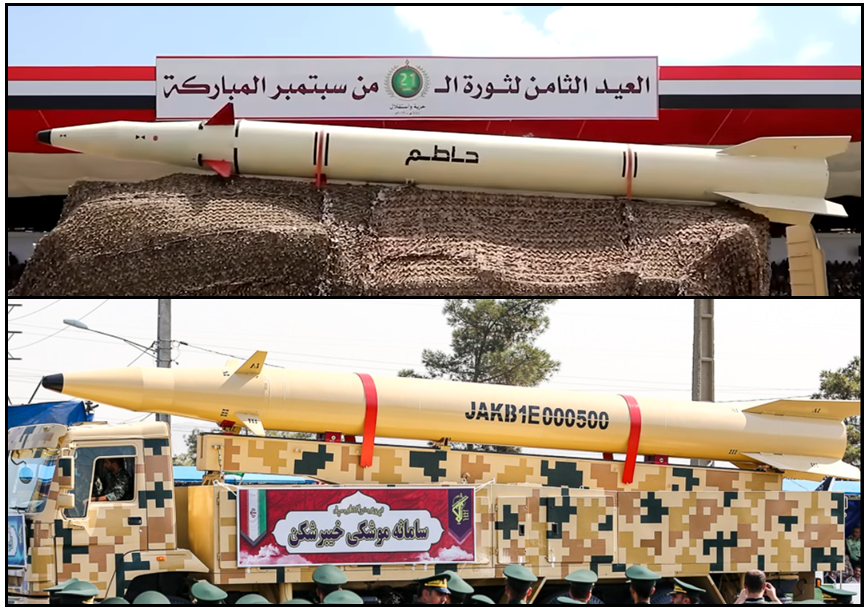
Hatem missiles: Hatem-1 was unveiled in 2022 and is a solid-fuel, guided missile. Hatem has a range of 1,450 km and a 500 kg warhead. Hatem-2 was unveiled in 2024, but there is no information indicating that it differs from Hatem-1. Both are based on the Iranian Kheibar Shekan missile. A Hatem-2 missile hit the Israeli vessel MSC Sarah V on 24 June 2024. A video from a Hatem-2 launch: https://defencesecurityasia.com/en/for-the-first-time-houthis-claim-launch-of-hypersonic-missile-hatem-2/
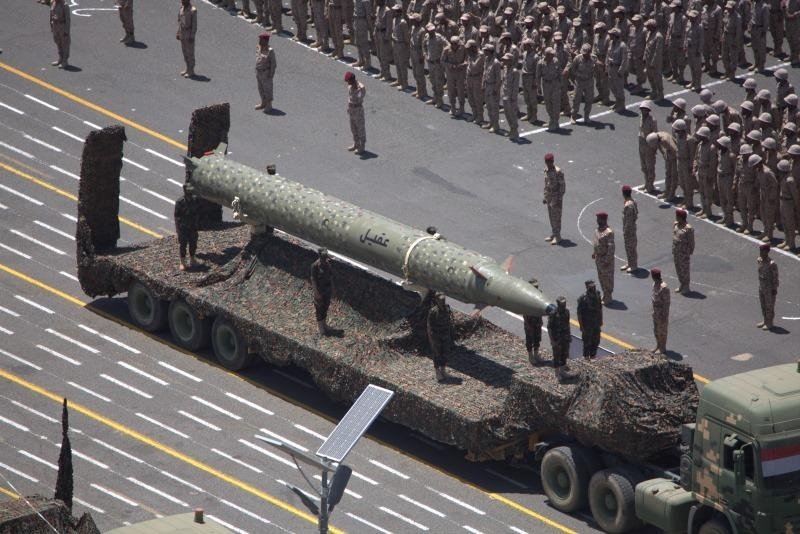
Aqeel missile: It was unveiled in 2023 and is a liquid-fuel, guided missile. The Aqeel missile has a 1,000 km range, but no publicly available information exists for its warhead. It is based on the Iranian Qiam missile.
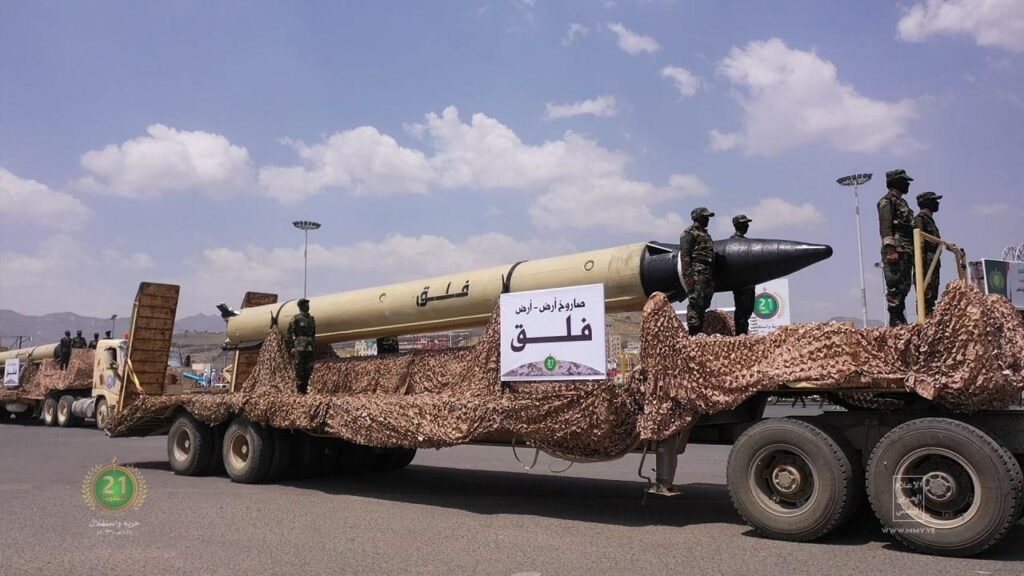
Falaq (“The Dawn”) missile: Falaq is a guided missile with a range of 1,000 km. Information about the warhead and fuel propulsion type is not publicly available. The Falaq missile is based on the Iranian Qiam-2 missile. The surface-to-surface Falaq missile must not confused with the anti-ship Falaq missile (140-200 km range).
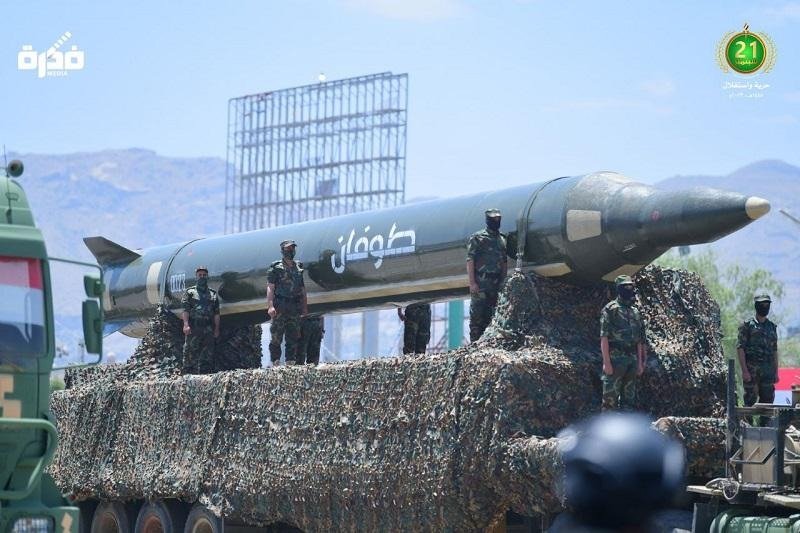
Toophan (“Storm”) missile: It was unveiled in 2023 and is a liquid-fuel, guided missile. Toophan has a range of 1,950 km and an 800 kg warhead. Toophan is based on the Iranian Shahab-3 missile and the North Korean Hwasong-7 missile.
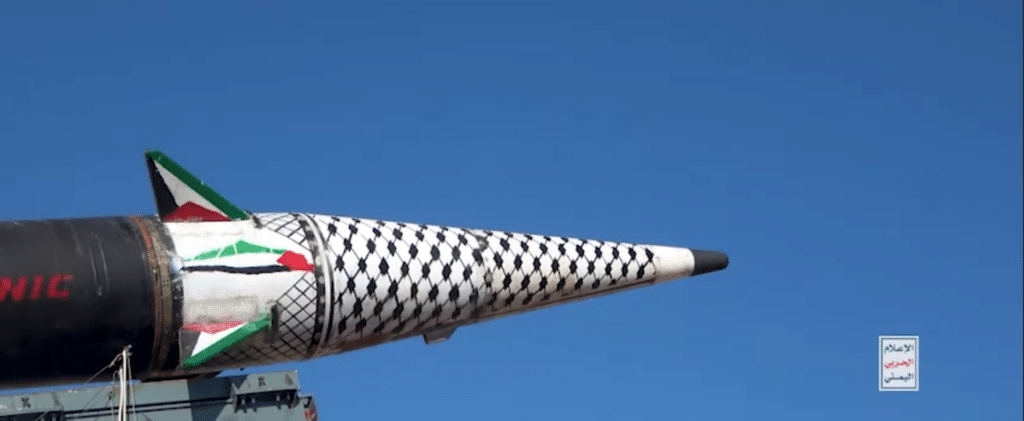
Palestine missiles: The Palestine-1 missile, unveiled in 2024, is a solid-fuel missile, with not confirmed guidance system. Palestine-1 has a range of 1,400 km, but no publicly available information exists about its warhead. The Palestine-2 missile, unveiled in 2024, is a two-stage, solid-fuel, guided missile. Palestine-2 has a range of 2,150 km and a 500 kg warhead. Both missiles have been used in combat. A Palestine-1 was launched against the port of Eilat on June 5, 2024. The Palestine-2 missile has hit several targets in Israel, such as Ben Gurion Airport on December 27, 2024, and a power plant in Haifa in January 2025. Palestine series missiles, alongside other types of missiles and drones, hit weapons storage sites in Mocha, in the Al Makha district of Taiz governorate, on 9 August 2026. Palestine missiles are based on the Iranian Fateh-110 and Kheibar Shekan missiles.