

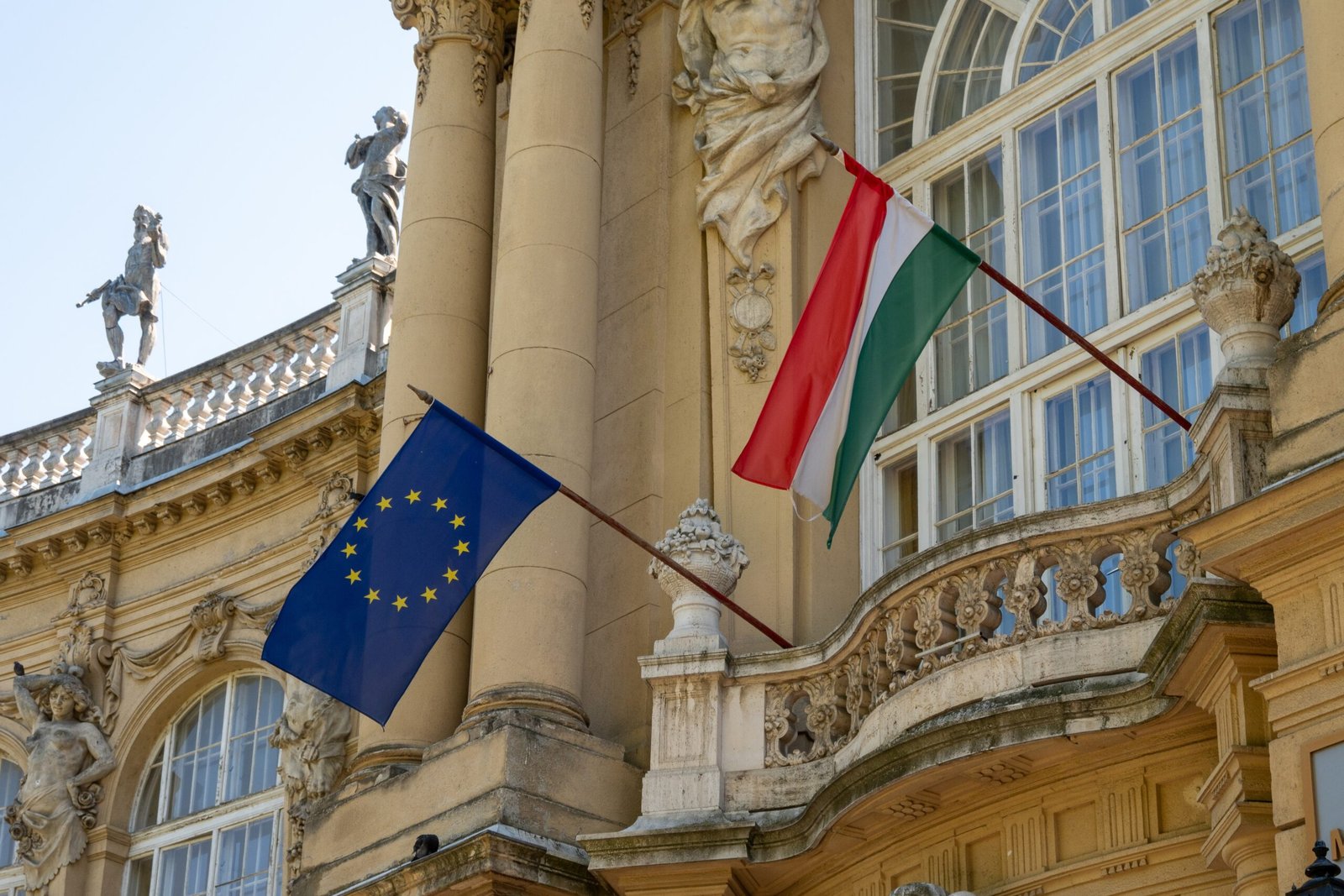
With Péter Magyar now serving as Hungary’s new prime minister, backed by a two-thirds parliamentary mandate, his new government can swiftly and effectively begin shaping and implementing the reforms promised during the campaign. One of the most important aspects is the restoration of the rule of law which would ensure, in Magyar’s own words, that “Hungary will no longer be a country without consequences”. However, erosion of the rule of law was not merely a domestic political issue; the European Union froze billions of funds due to various violations related to corruption, media freedom and the education’s autonomy. These funds are essential for Hungary’s development, so it is no surprise that one of Péter Magyar’s key campaign promises was to bring those back to Hungary. Since his election, he has already met with Ursula von der Leyen, and further meetings are on the horizon. Both sides have learned a great deal from the examples of Donald Tusk and Poland; the EU is more cautious now, but Magyars’ sweeping victory has brought the chance of structural and institutional changes of such depth and mandate that Tusk never had the opportunity for. Now, the question is how will Péter Magyar’s government restore Hungary’s rule of law to unlock frozen EU funds? Two renowned academics, Kinga Korányi (University of Wroclaw) Tommaso Pavone (University of Toronto) contributed to this article.
Frozen funds under Orbán
A total of 21.8 billion euros has been withheld and frozen from the 2021–2027 European Union budget, specifically from the Cohesion and other funds, as well as the Recovery and Resilience Facility (RRF). This was executed primarily due to concerns regarding the rule of law, anti-corruption measures, transparency, judicial independence, protection of EU funds; furthermore because Hungary does not adequately guarantee the rights enshrined in the Charter of Fundamental Rights of the European Union regarding academic autonomy, sexual minorities, and refugees.
The most significant turning point occurred in December 2022, when the EU suspended several billions of euros some of which were later partially released. Pavone mentions the example from December 2023, when the Commission made €10.2 billion from the Cohesion Fund accessible to Hungary in an effort to persuade Viktor Orbán to withdraw his veto on the start of accession negotiations with Ukraine and Moldova.
Many in the Hungarian public discourse interpreted the absence of EU funds as one of the reasons for the downfall of the Orbán regime, since those presumably contributed to the establishment of the economic elite. According to Korányi “EU funds played a huge role in the establishment of the Orbán system, but the freeze alone did not cause its downfall; the amount frozen was not a sufficient deterrent”. Furthermore, Korányi emphasizes that the final disbursements of funds allocated for the 2014–21 cycle continued to flow into the country until 2024.
Possibilities and priorities of reforms
According to the Financial Times, the European Commission expects Péter Magyar and his government to meet 27 conditions and, if met, the €35 billion in frozen EU funds for Hungary will be released.
The two sides are expected to sign the first agreement in May already, following the announcement of the arrival of a high-level delegation from the European Commission to Hungary this week. It is clear that the goal is for the negotiations to reach a stage where Magyar can travel to Brussels during next week and sign an agreement. This political agreement would stipulate that Hungary must meet the conditions set for the release of EU funds by August 31.
According to experts the most important reform points are the reform of anti-corruption measures, accession to the European Public Prosecutor’s Office, and the restoration of media independence; although the latter two are not included on the EU’s list of demands. In Pavone’s view, it is paramount to first restore the independence of the judiciary and the prosecutors.; “without independent courts and prosecutors, there is no rule of law and corruption can continue to fester”.
According to Korányi, the issue that will kick off the negotiations and lead to a partial release of funds is the two billion euros withheld due to the lack of academic independence. This is likely because it does not require a constitutional amendment, and if an agreement is reached on this in May, the Erasmus program could resume in Hungary as early as September of this year. She continues “from a domestic political perspective, everyone is waiting for the judicial reforms, but negotiations will likely not begin with this issue, as it would require a constitutional amendment”.
Reality check
According to Korányi’s analysis, implementing these four reforms could free up roughly ten billion euros from the Cohesion fund in the short term; however, the loan of RRF will likely be lost, as Hungary would have to meet 27 milestones in a very short timeframe, including four judicial reforms. “The negotiations are currently still obscure and are likely based primarily on political deals, while extremely complex legal processes are unfolding in the background.”
With a two-thirds majority, the new government party has the authority to amend the constitution or create a new one; the victory exceeded Brussels’ expectations, but it also raised the stakes. If the EU expects comprehensive reforms, Korányi says the funds will not be released until summer. The European Commission wants to provide the funds to Hungary, but at the same time, they want to avoid at all costs a repeat of what has happened in Poland, which was an important learning lesson for the EU according to the experts. Korányi adds, there will be no summer break for those involved in the negotiations this year, as “the entire summer will be spent concluding the negotiations”.
Based on Pavone’s assessment, realistically, most EU funds will probably be restored by the end of this year, however, ideally, EU funds should be unfrozen gradually, to the extent of the reforms being implemented and achieved. Furthermore, he says “ it’s unwise to hastily confuse promises for reality. Magyar was, for a long time, a lesser-known Fidesz loyalist deep within Orbán’s inner circle, so it’s important for the Commission to not cede its fiscal leverage prematurely, as it has in the past, and wait until Magyar concretely proves his commitment to restoring democracy and the rule of law via concrete restorative reforms”.
Main actors and recommendation
Both experts agree, the negotiations are led by Péter Magyar on the Hungarian side and Ursula von der Leyen on the EU side. Since no ministry responsible for European Union affairs has been established, Péter Magyar and the new foreign affairs minister, Anita Orbán, play the most important roles in the ongoing political negotiations.
Pavone adds that “on paper, von der Leyen holds most of the cards since the EU has the fiscal leverage. But in reality, the sweeping victory achieved by Magyar- made all the more extraordinary by the fact that he won despite an electoral system that Fidesz had rigged in its favour- will likely mean that the Commission and EU countries will be keen to embrace him as one of their own and restore EU funds.”
Korányi recommends that it would be beneficial for the new government to bring this topic into the public discourse, as it would be easier to explain to citizens that they should not expect an economic miracle from EU funds and that EU funds are fundamentally not economic tools.
Conclusion
Péter Magyar’s two-thirds victory has created a historic opportunity for Hungary to rebuild its relationship with the EU and to restore the rule of law. Although the release of the frozen funds is urgent for the economy, its significance extends beyond financial issues, as the restoration of judicial independence, the deduction of corruption, and the strengthening of media and academic autonomy will determine the success of the restoration of Hungarian democracy as a whole.
The two-thirds parliamentary majority allows for rapid institutional changes; however, experts believe that, based on the Polish experience, the European Commission will likely release the funds gradually and subject to strict conditions, requiring rapid and concrete reforms to be implemented in the coming months. Successful implementation of this would result in a significant improvement in Hungary’s reputation in the EU and globally.