

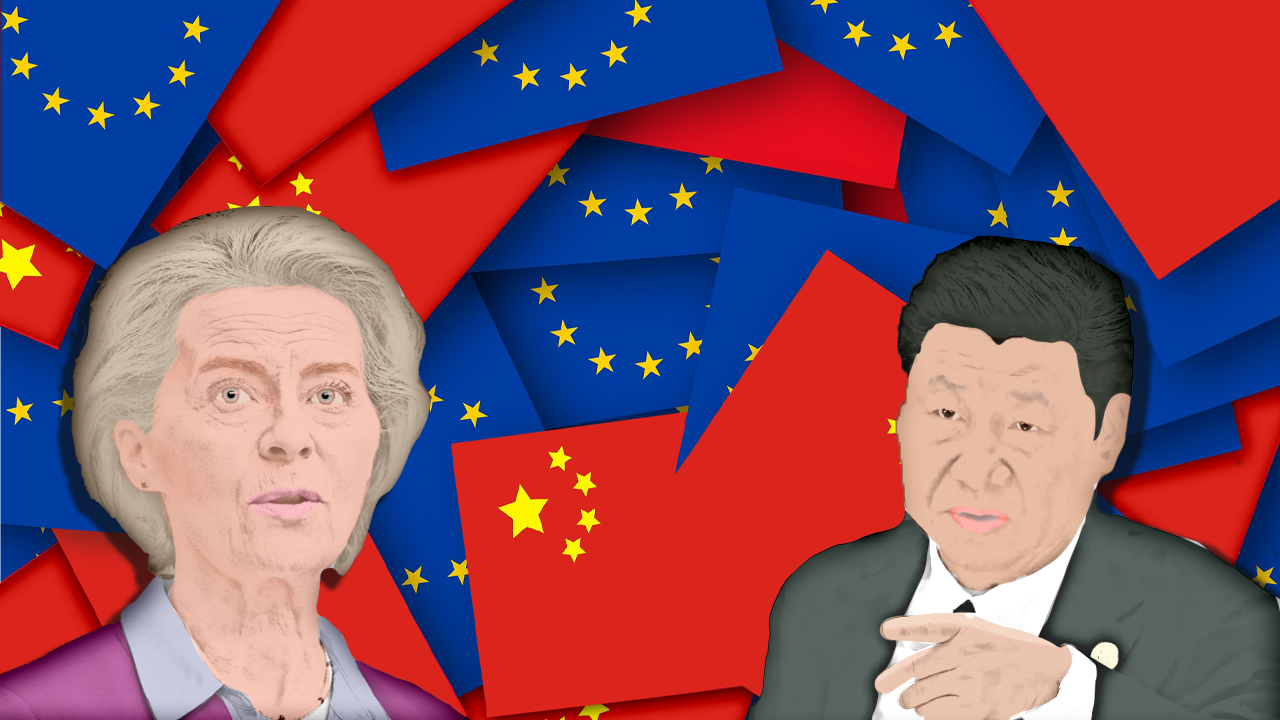
With the intensified China-U.S. competition and the Belt and Road Initiative (BRI) pulling more countries with infrastructure and economic needs into Beijing’s geopolitical orbit, the European Union faces the reality of a changing global order. Large-scale changes, conflicts on the Union’s periphery push the ‘stable entity’ that is the EU to adjust and restructure. The Global Gateway (GG) is an initiative that aims to strengthen the EU’s stabilising role and ensure stable supply chains in the changing world order by offering sustainable finance, grants, and good governance, simultaneously combating China’s BRI influence sphere.
This article is the second part of the article series and will focus on the analysis of the EU’s competitive capabilities regarding China and the Belt and Road Initiative. The European Union’s ambitious Global Gateway (GG) initiative, conceived as a response to Beijing’s Belt and Road Initiative, will undergo examination to ascertain its efficacy and anticipated results. This raises the question: Can the EU compete with China and its Belt and Road Initiative through the Global Gateway, or does an alternative approach appear necessary, and what results should we expect?
The table below shows the strengths and weaknesses as examined in Part 1 of this article series.
| Strengths | Weaknesses |
| Transparency | Lack of Coordination |
| Normative Approach | Conditionality |
| Long-Term Reliability | Distanced Private and Public Spheres |
| High Standards – Conditionality | Slow Decision-Making |
| Lack of a Clear Goal/Strategy |
Global Gateway and Belt and Road Initiative
There are substantial, multifaceted overlaps between the Global Gateway and the Belt and Road Initiative, which follow similar trajectories. The Global Gateway is perceived as an alternative investment platform to the BRI, as evidenced by the competition in the Lobito corridor. Under the Global Gateway, the Lobito corridor is promoted as one of its flagship projects, focusing on connecting a crucial trade route between Zambia, Angola, and the Democratic Republic of the Congo (DRC). This is a direct move against China and its BRI, which has dominated economic force in Africa and holds the largest critical mineral portfolio on the continent. The structural variations between each initiative are considerable. The difference between state-driven and (private-public) hybrid models is notable in frameworks, while objectives highlight differing priorities: one emphasises higher standards, long-term advantages, and sustainable growth, the other focuses on large-scale signature projects, rapid delivery, and high-risk loans. Each strategy has both fundamental strengths and weaknesses.
First, there is the Global Gateway. It serves as an initiative or strategy for the EU to invest in sustainable development and to develop secure connectivity and engagement-channels. The Union intends to fund substantial projects through the Global Gateway, with a primary emphasis on infrastructure development. Hence, the Global Gateway serves as an answer to shifting geopolitical dynamics, and especially Beijing’s Belt and Road Initiative, which has been around for over 11 years.
Second, China’s Belt and Road Initiative, otherwise referred to as the Silk Road, is a large-scale infrastructure development strategy which consecutively acts as the flagship of Beijing’s foreign policy. Outlined by five general goals, the initiative has attained substantial global reach, swiftly growing into a dominant strategy, engaging with 146 countries that signed a Memorandum of Understanding (MoU). While an important role of the BRI was the expansion of trade routes for China, the five outlined goals include:
While the Global Gateways is an ambitious strategy, it lacks concrete goals and leadership, and consequently faces substantial challenges which could undermine its effectiveness. Challenges such as difficulty attracting private investment and lack of concrete guidelines and entry point- stem from the overlapping issue of ‘lack of cohesive decision-making capabilities’ within the EU. Although the EU’s Global Gateway mobilised EUR 307 billion of ‘blended funds’ for global purposes between 2021 and 2024, the original structure outlined the EU’s direct contribution of EUR 58 billion, and private sector entities were expected to provide EUR 135 billion. The dependency on the private sector is among the biggest challenges for the EU when competing with China’s top-down or state-driven core model. To illustrate, EUR 44.2 billion in investments are allocated to the Enlargement and Eastern Neighbourhood regions. The EU’s direct contribution consists of EUR 11.6 billion out of the EUR 44.2 billion, nearly a quarter of the total sum, indicating the need for a private sector.
“We cannot exactly compete with China through initiatives; we don’t have an initiative on the same scale. When looking at the shortcomings, coordination is the number one issue. We have plenty of capacity, but no coordination mechanism to put it to use, and we are very risk-averse.”
– Michel Don Michaloliakos, EU Geo-economic analyst at HIG
This indicates the necessity for private enterprises, which would play a large role in the total sum of EUR 300 (now 400) billion. Private enterprises have been hesitant, and the EU has persistently faced the challenge of persuading ‘European business actors’ (private sphere) to the Global Gateway, affecting its ability and tangible results. The distanced private and public sectors act as a structural barrier, a key reason for Europe’s lagging competitiveness[1].
In contrast to the Belt and Road Initiative, centralised state backing has led to roughly USD 1 trillion invested and still growing. Clear leadership, state backing, a central state fund, and the ‘no-strings-attached’ approach enable the BRI to step in where the EU falls short. No-strings-attached starkly contrasts with the EU’s conditionality, as it takes conditions out of the equation. Many perceive the EU’s conditionality as neo-imperialist, self-centred, and as pushing its own agenda. In the original Global Gateway plans, conditionality is apparent; projecting that only EUR 53 billion is in guaranteed volume, with EUR 232 billion projected to be in sustainable finance, which takes environmental, social, and governance considerations (ESG) into account.
“In terms of mindset, China has much lower uncertainty avoidance than the EU, as reflected in its economy and flexibility, and is more willing to take risks when pursuing its strategic goals.
– Carina Fohr, MA. Research Intern at The Hague Institute for Geopolitics
As China is one big country and the EU consists of multiple countries, China has a very centralised political system, while the EU is consensus-based between the member states, making the decision-making far slower than China’s. Especially as member states have different needs nationally, this can conflict with the coordination within the EU. This enables China to work fast, especially in terms of its implementations and projects.”
However, the Global Gateway has significant principles and values which should, in theory, make the initiative very appealing to recipient countries. Transparency, good governance, debt-diplomacy, investment in sustainability, and better addressing the needs of developing nations; each factor is crucial for long-term development, stability and growth. These are reflections of the EU’s strengths, which is a clear distinction from the BRI’s lack of transparency and poor governance; neglected debt-sustainability. These challenges, combined with poor planning, resulted in significant debt, trade deficits for recipient countries, bloated costs, delayed or cancelled projects, and public scrutiny regarding work and labour conditions and debt-trap diplomacy. Putting things into perspective, from 2014 to 2018, the EU and EU Member States provided EUR 350 billion in ODA grant equivalent, while the Belt and Road Initiative provided around EUR 200 to 400 billion in loans, resulting in a greater financial burden. Grants ultimately represent a greater financial contribution compared to loans, which shows the supporting role of the EU.
Where Global Gateway struggles in competition with The Belt and Road Initiative
First, conditionality versus the no-strings-attached approach, which is appealing to recipient countries because of the short-term, tangible results. Infrastructure projects under the BRI are swiftly and easily projected and backed by state-owned enterprises. The centralised-management structure of Beijing’s BRI allows for better cooperation, fewer checks and balances, and quicker results. The European Union’s inherent limitations (e.g. lack of coordination and slow-decision making because of the complex structure of the EU) significantly impede its ability to compete with the Belt and Road Initiative, as Karakasis stated “Like a ship taking a long time to change its course”. Second, its colonial past, a dialogue Beijing utilises to shape relations with historically affected nations (especially prevalent in Africa) hampers the EU.
“There is no question about it, EU’s historical ties structurally hamper engagement. Visible when it comes to different types of papers with the vaccines back with the Ebola crisis. This post-colonial suspicion of EU conditionality is often framed as conditions that we never imposed on ourselves. For local elites and regimes this is actually a good tool; either for rallying along the flag effect in order to justify the extortion or exclusion of any EU conditionality policies or EU Aid to some extent. I believe that China has found a clever way to use this framing.”
– Vasilis Karakasis
While the Global Gateway shows considerable ambition and strength, when considering the decentralised private sector, a lack of coordination among EU Member States, the EU’s considerable complex structure resulting in slowed decision-making, and the absence of a clear strategy or aim it lacks the essential foundation for effective competition. Another important factor is China’s influence in the BRI-recipient countries. Since the launch of the Belt and Road Initiative, its extensive scale substantially amplifies China’s influence and brand recognition, fostering improved relations, trade pacts, and mutual advantages for both China and partner nations. The Belt and Road Initiative’s earlier start allowed China to grow to be the largest trading partner of many BRI recipient countries, making China the more likely partner in logistical connectivity.
“I am uncertain whether we should combat Chinese influence; we should serve Africa’s ends and provide the African countries with options; options for self-growth, options to allow them to grow their own economies, options to serve their own ends. We should acknowledge what African countries want to see instead of pushing our own agenda. We should combat disinformation, seek trade agreements, and push for economic growth. I believe we could benefit now because China’s reputation has somewhat been tainted because of the lack of positive spill-overs.”
– Michel Don Michaloliakos
Recommendations & Conclusion
While the Global Gateway may not be the answer to Beijing’s Belt and Road Initiative, the EU has the capabilities and capacity to provide an answer. The EU’s strengths, as portrayed in the previous article, allow it to beat China on multiple abstract fronts. First, the ‘normative approach’ and ‘long-term reliability’ that the EU provides is unique; as previously established, it requires no force. Grants compared to BRI loans, setting global standards without mandate, the EU has a stabilising and reliable status. However, the EU struggles against the Belt and Road Initiative, which has been active for 11 years, with a total of USD 1 trillion invested. Beijing has geopolitical footholds in many of the BRI recipient countries through trade-relations and infrastructure engagement, thereby making them a logical option over GG. Weaknesses present within the EU, including its colonial history, hamper its ability to utilise its potential competitive capacity; the complex structure of 27 member states, many checks-and-balances, institutional bodies and divisions of power cause delayed decision-making, worsened coordinative mechanisms and distanced private and public spheres.
“Moreover, China is recognised as a leading global power striving for leadership in global governance, whilst competing with the U.S.. On the other hand, the EU is known to pursue regulatory power globally, setting global standards in terms of the environment, especially. This reputation the EU has gained internationally might be changing due to its increasing competitiveness, energy security and its new defence.”
– Carina Fohr
Because of its complex structure, the EU should focus on utilising its strengths rather than removing its weaknesses. An all-out competition with China and its Silk Road would take significant dedication, restructuring, and recuperating losses. Instead, the EU should utilise its stabilising presence in BRI recipient countries. By offering sustainable finance to countries that have benefited from the Belt and Road Initiative, the EU could provide for structural stability through the gradual implementation of the EU’s fundamentals. This could cause countries to benefit not only from the infrastructure projects China offered but also from lasting, long-term stability provided by the EU through gradual reforms.
“The real politics have shown that we need this strategic hedging approach. So, we don’t enter into full competition or cooperation, but rather we should discuss the possibility of conditional engagement. In this case you could cooperate where standard align and you could compete where you believe your strategic interests are jeopardized.”
– Vasilis Karakasis
However, the EU’s colonial baggage requires supplementary caution. Therefore, it should focus its stabilising development assistance on the needs of the recipient countries rather than pushing its own agenda. Clear objectives, goals and a timeline of clear achievements should be established.
“China has generated distrust due to its lack of transparency and its reputation, including its strategic intentions and the leverage it has also exerted in the West, therefore causing concerns for partner countries.”
– Carina Fohr
Beijing’s weaknesses, which include a lack of transparency, a shift away from economic focus towards geopolitical influence through the BRI, environmental degradation, geopolitical backlash, financial strain, and poor debt sustainability, create a demand for stability and good governance. Corruption-scrutiny, which is high at the EU level and ties into the EU’s high uncertainty-avoidant nature, pushes lesser ‘stable’ (according to Western values) developing countries towards a lower uncertainty-avoidant China. Hence, the EU should understand that its own standards and fundamentals are long-term goals, not short-term expectations. Recipient countries require a stable presence, one which understands its needs and provides suited developmental assistance.
“The BRI seems to be driven by geopolitical logic rather than market or financial incentives. Its aim is to secure supply chains and access to export markets. So other imperatives and rationales drove Financial Investment Decisions (FID’s) of BRI-projects more than we are generally used to in Europe, Global Gateway included.”
– Michel Don Michaloliakos
[1] “But the effectiveness of these policies […] bureaucracy for the private sector”.