

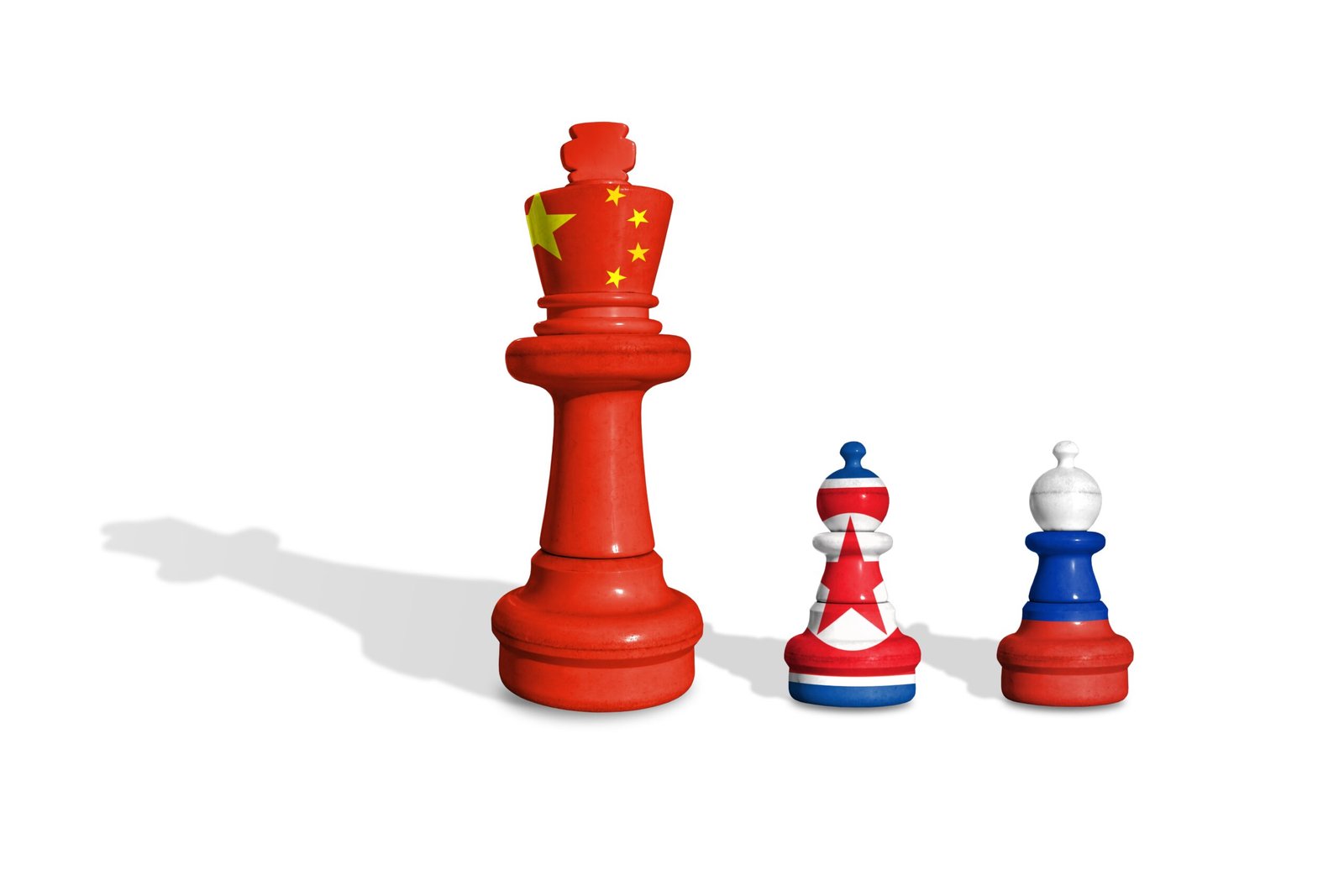
While China and North Korea have maintained a military alliance since 1961, the relationship has been characterised with ups and downs, shaped by China joining forces with the US to impose economic sanctions against North Korea’s nuclear practice and Xi Jinping’s first visit to North Korea in June 2021 to strengthen cooperation. Recent events, such as the resumption of flights from Beijing to Pyongyang for the first time since COVID-19, as well as the visit of a Chinese economic association leader to North Korea to promote trade, demonstrate the strengthening of the Sino-North Korean relationship. Most importantly, Kim Jong-un’s meeting with Chinese Foreign Minister Wang Yi demonstrated the increased exchange, with Kim Jong-un stressing developing traditional ties with China as his “top priority”. Both countries agreed on their commitments to enhance high-level exchanges and strategic communication. This furthermore translated to China’s strategic move to reassure North Korea and avoid the meeting between Washington and Pyongyang from resulting in any problems for Beijing.
The Russo-North Korean comprehensive strategic partnership agreement, signed in 2024, has made a significant impact on the Sino-North Korean relationship. Consequently, this lowered the dependence that North Korea had on China, as it has been Pyongyang’s top trading partner for more than two decades, keen on keeping up the dependency.
The change from North Korea being a hermit kingdom isolating itself to expanding its ties with other countries, including Russia, Belarus, Iran and Syria, this creates fear of the destabilization of the international system and fosters global chaos, while raising concerns about its impact on the Korean conflict. This raises the question: In what way has the current Sino-North Korean relationship changed in light of recent events such as the Russo-North Korean partnership?
Strategic relations with North Korea
Before the Russian invasion of Ukraine, nuclear-armed North Korea was seen as a liability by China due to its leaders’ unpredictable behaviour. Due to China being North Korea’s primary energy supplier, food aid provider, largest trading partner and economic collaborator, China had leverage on North Korea while using it as a buffer zone in international politics. This image is further presented by Beijing’s depiction of the PRC-DPRK relationship as being one of “lips and teeth”, which illustrates the strategic geopolitics of North Korea being considered a buffer state between China and US ally South Korea. Additionally, Pyongyang is crucial for its support of China’s human rights violations of the Uyghur and Xinjiang minorities, as well as the One China policy in Taiwan and Hong Kong.
North Korea’s new positioning
Remco Breuker, professor in Korea Studies and HIG’s Korea analyst, states that North Korea is considered to be China’s back door, referring to North Korea’s geostrategic position on the peninsula. While the countries are politically and economically intertwined, Breuker emphasises that they fundamentally mistrust each other, which is reflected by North Korea not announcing its help to Russia. Wang Yi’s meeting with Kim Jong-un demonstrated further mistrust and crisis aversion, such as a North Korean nuclear provocation, which could affect the meeting between the US and China in early April, and risk forcing Beijing into a defensive posture.
North Korea’s confidence has been growing, with a more self-confident tone in official documents; it has gained more footing in the world, to the point of forming alliances with authoritarian states, as Breuker calls it a “multilateral mini UN” of authoritarian states. The recently signed friendship and cooperation treaty between Kim Jong-un and Belarusian President Alexander Lukashenko on the 26th of March, 2026, demonstrates North Korea’s newfound international ties, connecting diplomacy, public relations, and broader concerns. Additionally, ties with countries including Laos, Vietnam, and Indonesia have also been enhanced, which aims to build up North Korea’s resilience against sanctions and its leverage in future negotiations. Breuker also stresses the importance of Taiwan as a major influence in the Sino-North Korean ties, describing North Korea as China’s “backdoor” due to its strategic position and support.
Shifting dynamics
The changing Sino-North Korean alliance under Kim Jong-un has been characterised as a “pragmatic-development partnership”, which shifts towards North Korea as a strategic balancing point, a mutual-benefit partner, a co-designer of the international order, and a partner in ideological exchange. On the other hand, some also argue that while there are efforts to rebuild ties with China, North Korea prioritises Russia. HIG’s East Asia expert Casper Wits describes that North Korea has gained a more powerful position, which has also resulted in increased recognition by China. This is demonstrated by the military parade held in Beijing on September 3, 2025, to commemorate the 80th anniversary of China’s victory in World War II, during which Kim Jong-un stood central on stage beside Xi Jinping. Wits considers the Russo-North Korean alliance as a factor which makes North Korea more attractive to China. Notably, both experts agree that there is no push from China towards stronger ties with North Korea, but both countries remain interdependent, benefiting one another.
Conclusion
Taken together, the Sino-North Korean partnership is advancing; nevertheless, mistrust remains high. North Korea continues to be crucial to China, especially in maintaining stability in Asia, as a buffer zone from US allies such as South Korea, and finally, regarding Taiwan. On the other hand, while North Korea is increasingly engaging with other countries and gaining a greater footing in the world, China remains its strongest ally and most important neighbour. It is evident that the Russo-North Korean alliance has led to growing recognition by China, which is exemplified by the presentation of North Korea at the Beijing military parade in 2025. As the hermit kingdom of North Korea is increasingly engaging with other countries, it demonstrates a significant step not only for China but for the world order. A new network between authoritarian states should be perceived as an alarming step.