

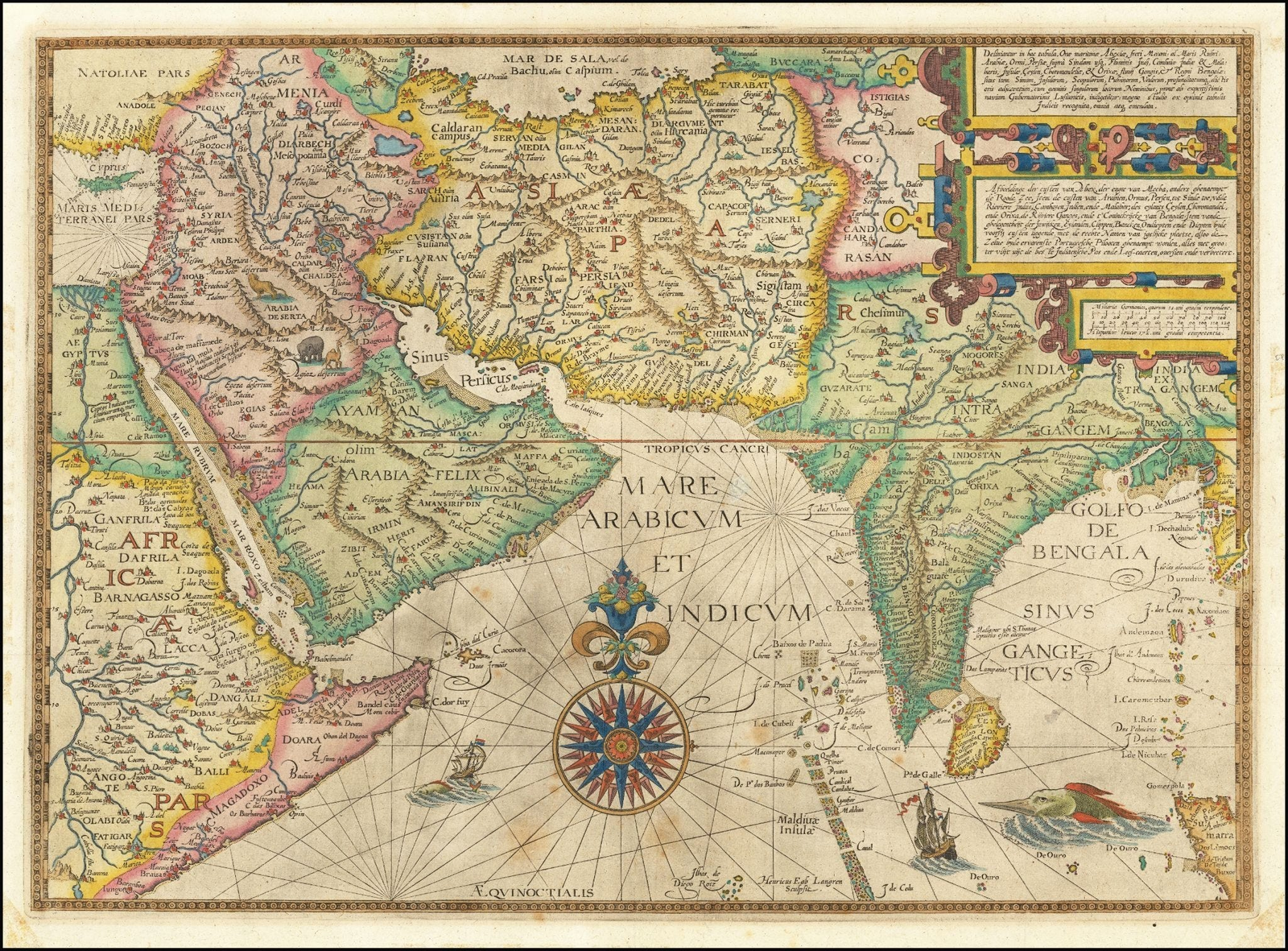
“Iran is back in the game,” says Michel Don Michaloliákos, geopolitical analyst and co-founder of Hague Institute of Geopolitics. A rabid Israel, a rudderless and receding US, and a neo-Ottoman Turkey now see the re-entry of an Islamic Republic that came out of the conflict “stronger than ever before”.
“At no point since the Second World War has the US accepted a hostile power controlling such a strategic sea lane,” Andrew Gawthorpe told me earlier in this series — a sign, he said, of the end of US hegemony.
A Washington that will not risk Hormuz will not intervene anywhere the strait can be used as a counter-threat. For every theatre in this piece the calculus has shifted. This means that rather than bringing rest to the region, this peace will likely sow the seeds for further conflict.
The credible threat of American military power, the force that underwrote the regional order for decades, is now contingent on Iranian restraint at a chokepoint Washington cannot replace. Iran knows this. Every other power in the region knows it too. There will be no winged-hussars coming to relieve the siege.
The implications of the outcome are as of yet severely understated in mainstream media. What is too rarely grasped is that this is not merely a regional story. The Caucasus, the Middle East, the Horn of Africa, the eastern Mediterranean and the Indian Ocean littoral form one interconnected geostrategic theatre. A shift in any one part reverberates across the rest.
The settlement now taking shape should therefore not be read as the start of peace. It is the start of a broader reordering, and one that may well produce more conflict before it produces less. As Polanyi noted in 1944, “it is a commonplace that to ensure peace one must eliminate the causes of war; but it is not generally realized that to do so the flow of life must be controlled at its source.”
A concert of Hormuz is forming, but one without a single stabilizing hegemon. The 19th-century balance of power maintained relative peace not through the balance itself, but through the institutional structures that sat above it, and those are precisely what now seems to be missing. What follows maps the new regional order that Iran’s return and America’s supposed retreat has set in motion, theatre by theatre, through a balance-of-power logic that has not been seen in this part of the world since the Concert of Europe.1
The lead up
The shift, ironically, began on the 8th of May 2018, when Trump tore up the Joint Comprehensive Plan of Action that Obama had negotiated with Iran in 2015. Hostility followed, but the relative balance held — yet it was upset by Trump’s action. It was only between 2023 and this year that it tilted decisively towards Israel and the US, as Iran’s proxies were dismantled one by one.
The turning point that started the current episode was October 7th. Michaloliákos reads Hamas’s attack as an Iranian-sanctioned “emergency button” — an attempt to stir the Arab street against the Gulf monarchies and halt their rapprochement with Israel. This backfired, and in the years since, Israel severely weakened the “three H’s” (Hamas, Hezbollah, the Houthis) along with the dismantlement of the Assad regime and Iran’s militias in Iraq. Iran’s strategic depth collapsed. And, as Michaloliákos puts it, “there’s always a trade-off between strategic depth on the one hand and nuclear weapons on the other.” It seemed like Israel was marching towards regional hegemony.
The reversal
“The war has turned everything on its head,” Michaloliákos says. Iran’s position had been weakening. America felt emboldened at the negotiating table. Now it’s clear Washington didn’t achieve its objectives and the Islamic Republic survived. “From what I can establish based on the current proposal, it’s mainly America that has made concessions.”
As a result, a new security logic has taken hold across the region. In a recent paper, The Hague Institute for Geopolitics describes it as a shift from strategic realignment to strategic hedging: rather than forming durable alliances against a common threat, states now pursue contradictory policies simultaneously. This means engaging economically and diplomatically with all sides while simultaneously taking out military insurance against each of them. There is no clear ordering power, and no relationship that outlasts its immediate usefulness. Alliances are competitive, pragmatic, and will be abandoned the moment jumping ship offers a better hedge.
Relevant Quote
“Therefore I say that it is a narrow policy to suppose that this country or that is to be marked out as the eternal ally or the perpetual enemy of England. We have no eternal allies, and we have no perpetual enemies. Our interests are eternal and perpetual, and those interests it is our duty to follow.” — Lord Palmerston in the British House of Commons, describing the shifting alliances of great power politics in 1848.
In that context, the rest of the Middle East must now reposition around an Iran that seems more powerful than ever before.
Two regional axes — the Saudi-Turkey-Pakistan bloc and the Emirati-Israeli bloc — had been competing mainly with each other, both operating under an American security umbrella that is now visibly fraying. What is fraying it is Iran’s return. The US-Israeli axis, arguably weakened permanently both militarily and diplomatically by total defeat in the war, now faces a third pole it cannot contain.
On the geopolitical front, Iran’s demonstrated chokehold over Hormuz has kneecapped American willingness to intervene. On the diplomatic front, popular revulsion at Israel’s genocide in Gaza combined with elite frustration over false promises, namely that regime change was achievable, that strategic objectives were within reach — have severely eroded the alliance’s cohesion.
The gamechanger: US-Israeli split
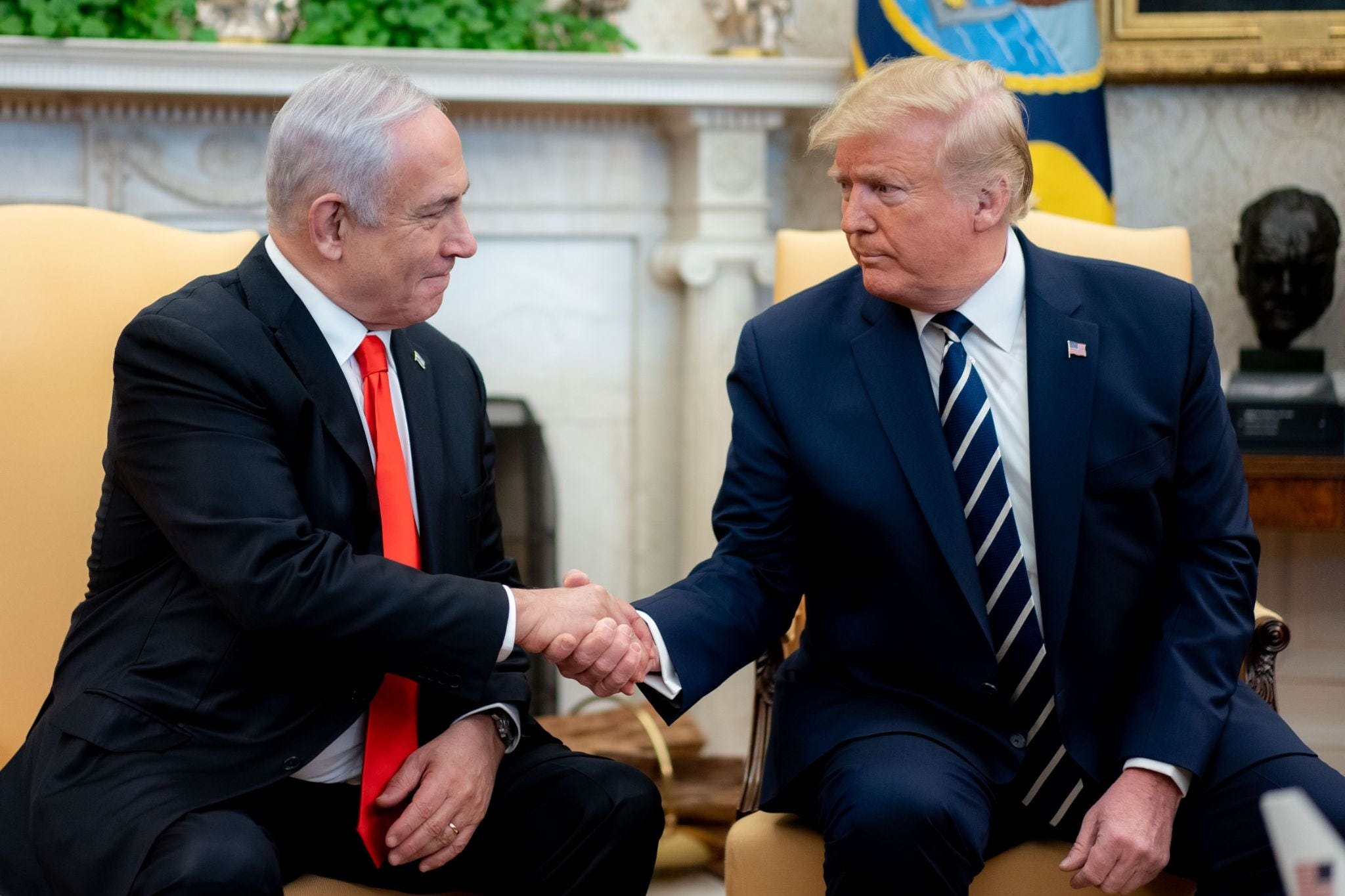
Whether the break proves permanent is for the future to tell. But as Michaloliákos sees it now, Israel’s standing in Washington has weakened “definitively”. Support has slipped across Republicans, Democrats and independents alike, narrowing the room politicians have to back Israel unconditionally. And Israel’s demands run against the promises made: a month or two ago JD Vance lashed out at Netanyahu “you promised the regime would fall, and yet we don’t see that happening,” Michaloliákos paraphrases.
The deeper problem, Michaloliákos argues, is strategic, and he sets the moral question aside deliberately to isolate the obviously inhumane Israeli actions from the strategic mistakes: Israel has, on several occasions, harmed America’s own strategic interests. Washington now wants to prevent that, and a new balance has set in. Whether it is one to welcome is another matter, because it means other powers have grown more influential. Under the “Trump regime”, Michaloliákos argues, countries like Pakistan, Qatar and Turkey suddenly hold real sway over the president.
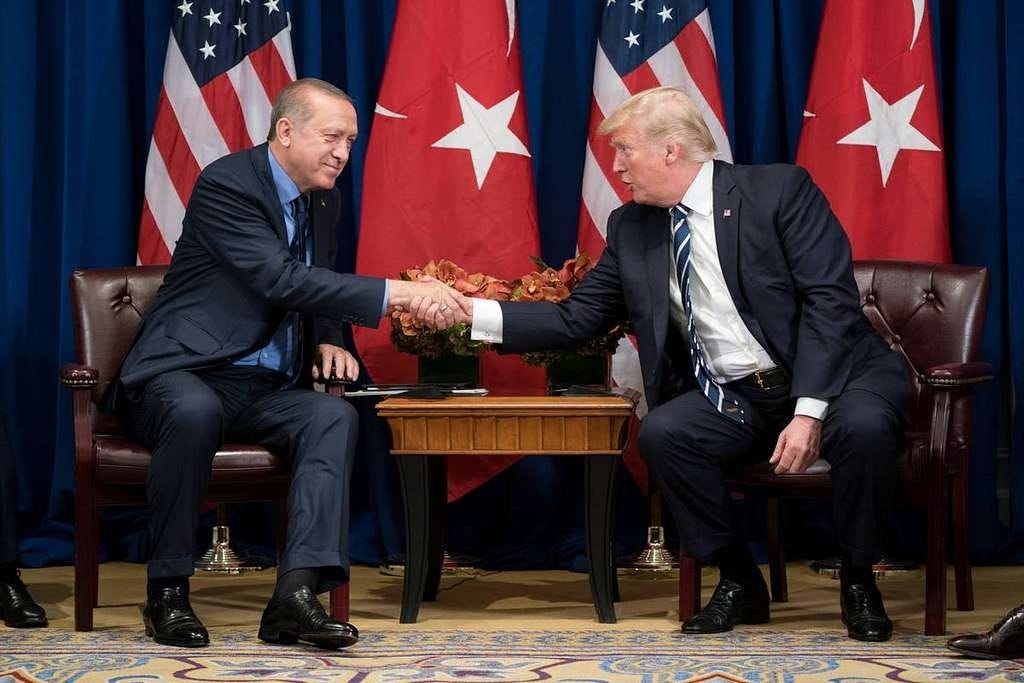
When Erdoğan recently attacked Netanyahu and a journalist put it to Trump, Trump reached not for Israel but for Turkey: “I have a great relationship with Erdoğan. He is a great leader,” Michaloliákos paraphrases.
Balance-of-power politics
Seen in that light, contemporary Middle Eastern balance-of-power politics bears a worrying resemblance to 19th-century Europe, but without a key instrument I reveal later in this article. As Europe has become increasingly pacified over the last century, the new Talleyrands, the new Metternichs, the new Bismarcks are now born in the Middle East.

Michaloliákos locates part of the explanation in diplomatic culture: statecraft run as court politics, where access is bought with flattery and warmth rather than treaties. The Trump administration is uniquely susceptible to this, it has no interest in liberal internationalism and a strong preference for the transactional. Arrive in Islamabad, he says, and you are pampered; it is well understood in diplomatic circles that Pakistan wins visitors over through sheer lavishness, and that its officials know how to work transactional figures on their own terms. Turkey has a different but equally effective attribute: “they have this sort of macho culture that really plays well with the Trump clan.”
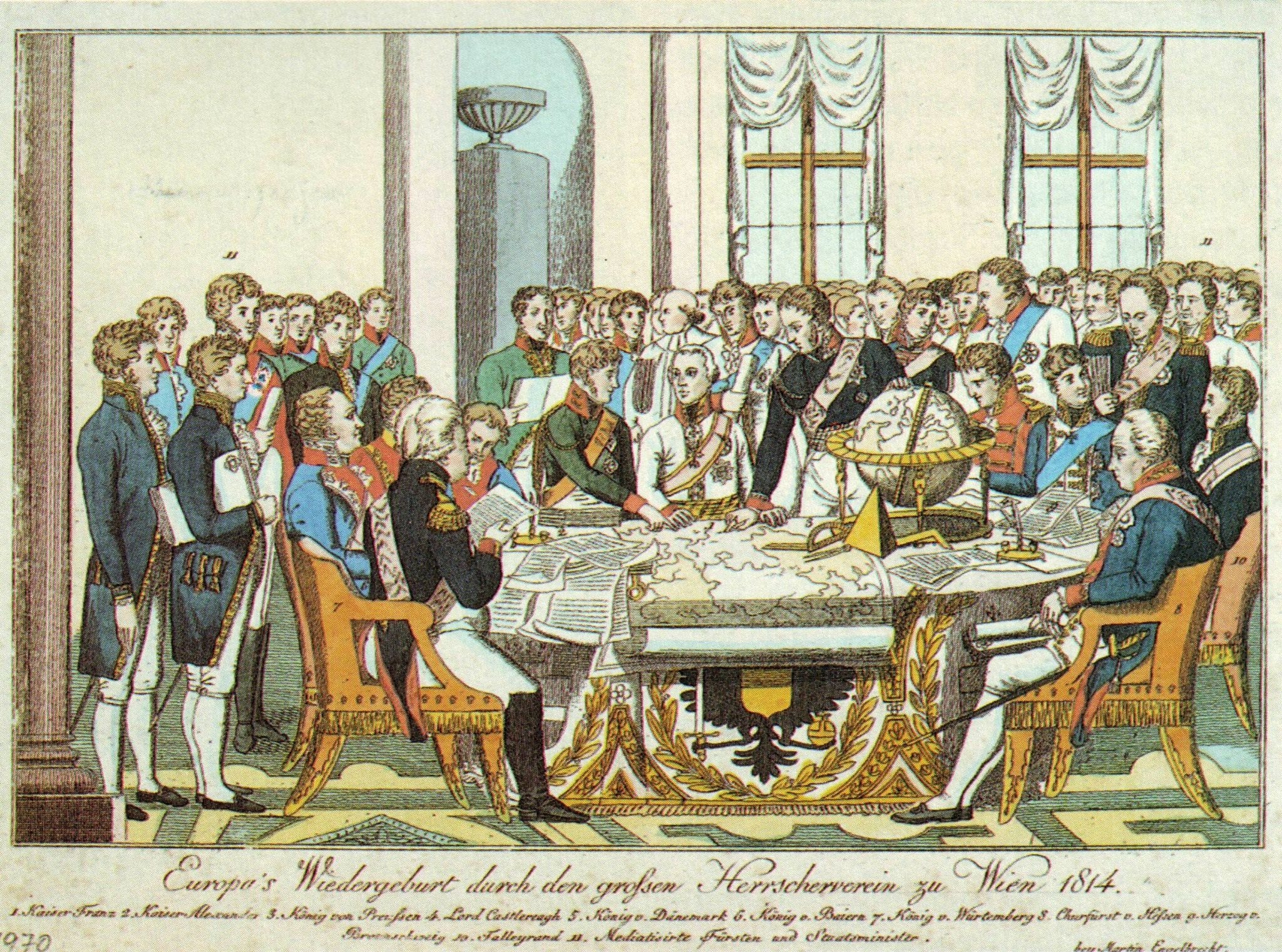
The fact I said “worrying resemblance” is deliberate. The 19th-century balance of power kept conflicts relatively modest and isolated, and avoided a general conflagration, but only under certain conditions Polanyi identified in 1944. Two prominent ones that are relevant to our modern era are as follows:
First, bloc formation had to remain fragmented and loosely connected, and a powerful hegemon had to hold the system together. As Polanyi wrote, “The Pax Britannica held its sway sometimes by the ominous poise of a heavy ship’s cannon, but more frequently it prevailed by the timely pull of a thread in the international monetary network.”
A rudderless America, one that had to give up reopening the Strait on its own terms, because as one analyst put it, “you cannot print molecules” (referring to the financial hegemony of the US), no longer reliably provides either. Crucially therefore, there is an apparent bifurcation between American military hegemony and American financial hegemony. The cannon is holstered. The monetary thread still runs, but it has become entangled by drones and landmines in the Persian Gulf, where the Eagle has found its graveyard. And the bloc formation, as the following theatres will show, is in the process of crystallization.
But in the Concert of Europe, it was also in the interest of high finance to keep the blocs fragmented. Relative peace served their balance sheets; isolated wars could even provide opportunities for profit. So too in the contemporary age. A good example is the de-facto Turkish takeover of Syria. After Assad fell, Turkish capital moved in to swoop up $11bn in reconstruction contracts.
The main risk, both for international commerce and the stability of the system, is therefore that these multipolar blocs crystallize into bipolarity — as they did before 1914. It is in the interest of international capital to prevent that: fragmented blocs serve profit better than a general conflagration.2
Whether that interest translates into stabilizing force is another matter. As Polanyi observed: “Interests, however, like intents, remain platonic unless they are translated into politics by the means of some social instrumentality.” That social instrumentality is precisely what is missing now that the US is retreating from a region dominated by Western intervention for the better part of a century. For now, therefore, the question is how bloc formation is actually developing in this vacuum.
Pieces like this will soon move partially behind a paywall to reward paid subscribers. Subscription prices are rising to €8/month and €80/year to reflect this. Subscribing now permanently locks in the current rate.Subscribe
Shifts in secondary theatres
The two axes are not fixed alliances, and neither leads everywhere. Which bloc dominates depends on the theatre, and a state’s alignment in any given one is dictated by threat perception which differs from capital to capital. For Riyadh the overriding enemy is Iran. For Abu Dhabi it is Iran and the Muslim Brotherhood. For Israel, Iran — also, above all. Indeed, this seems dangerously close to bipolar bloc formation, but there are also rivalries that make the situation more complex.
According to Michaloliákos, the Saudi axis tends to build and prop up nation-states; the Emirati-Israeli axis tends to fragment them, backing sub-state actors it can shape to its advantage.
To see why the Emirates behaves as it does, you have to understand its founding trauma. Michaloliákos calls the Muslim Brotherhood a “Pandora’s box,” an organisation Europe has been naïve about for decades.
Founded in the early twentieth century to “keep the Islamic world Islamic” and push the West out of it, the Brotherhood pursues a strategy that would have drawn Antonio Gramsci’s admiration for its successful war of position strategy. It targets not the disadvantaged, as jihadist groups do, but the cleverest. They target intellectuals, institution-builders, the people who can “burrow deep into the capillaries of society.”
When the Emirates grew suddenly rich on oil in the 1970s and imported Arab professionals to build a state apparatus, some of those it brought in were Brotherhood members who had been expelled from Egypt and Sudan. A coup was very nearly staged in 2012-13. The wound that this gambit inflicted left a permanent scar: Abu Dhabi still treats the Brotherhood as an existential threat, and because Turkey is the Brotherhood’s foremost patron, the Emirates and Turkey collide across theatre after theatre. What follows is a quid-pro-quo where the Israelis and the Emiratis unite against Turkey in whatever battle is happening, in an alliance of convenience.
Syria
Until Assad fell, Russia and Iran were dominant, the twin pillars of his regime. After al-Sharaa, better known as Abu Mohammad al-Julani, “a former IS and Al-Qaeda associate,” in Michaloliákos’s words, took power with Turkish backing, Syria slid almost entirely into Ankara’s orbit. Israel watched with displeasure and moved to secure its own position.
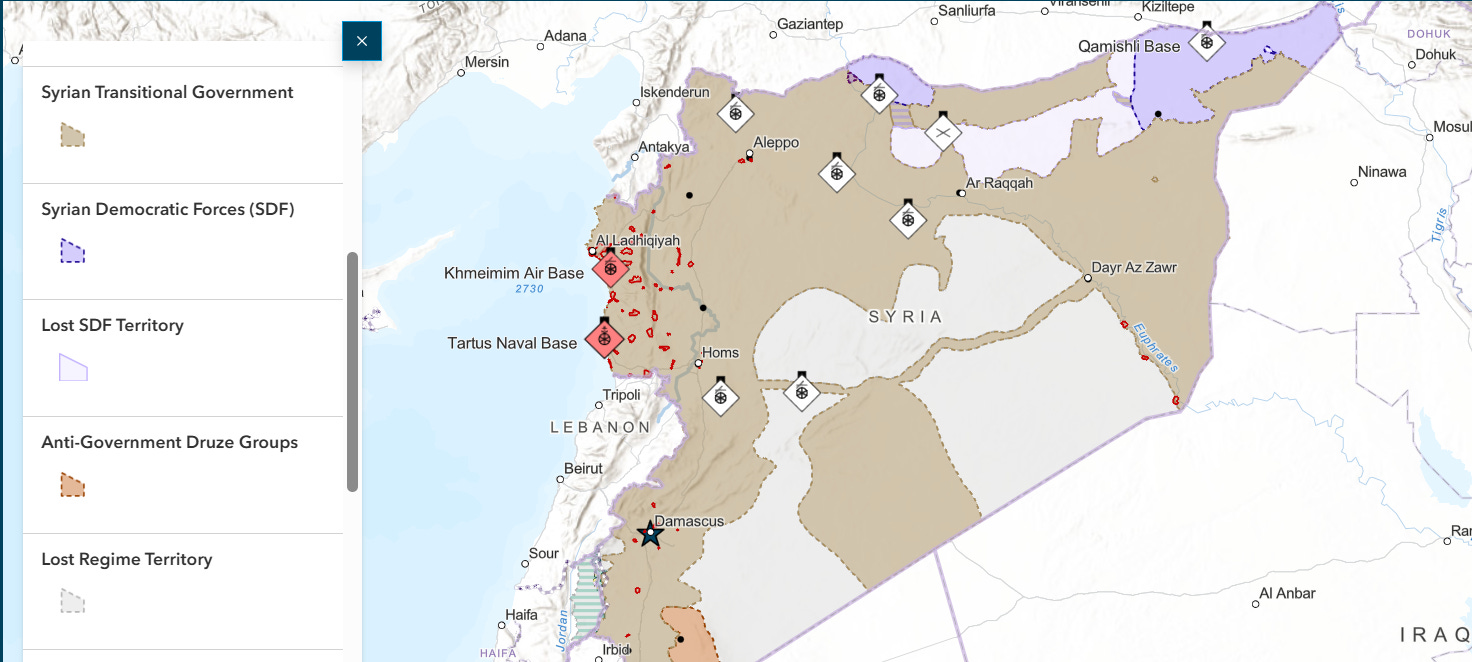
In the brief vacuum it demolished virtually the entire Syrian army, “almost all military capabilities, air defences, even fighter jets.” Michaloliákos says he understood the strategic logic: with al-Sharaa “you don’t know what you’ve got,” and you are “better off clipping his wings in advance.” Israel also tried to secure a foothold in the south and east through the Bedouin and the Kurds, to deny any land corridor running from Iraq through Syria to the Mediterranean.
The turnaround in al-Sharaa’s fortunes is remarkable. The man who once carried a ten-million-dollar American bounty on his head was given a red-carpet treatment at the White House in November 2025.
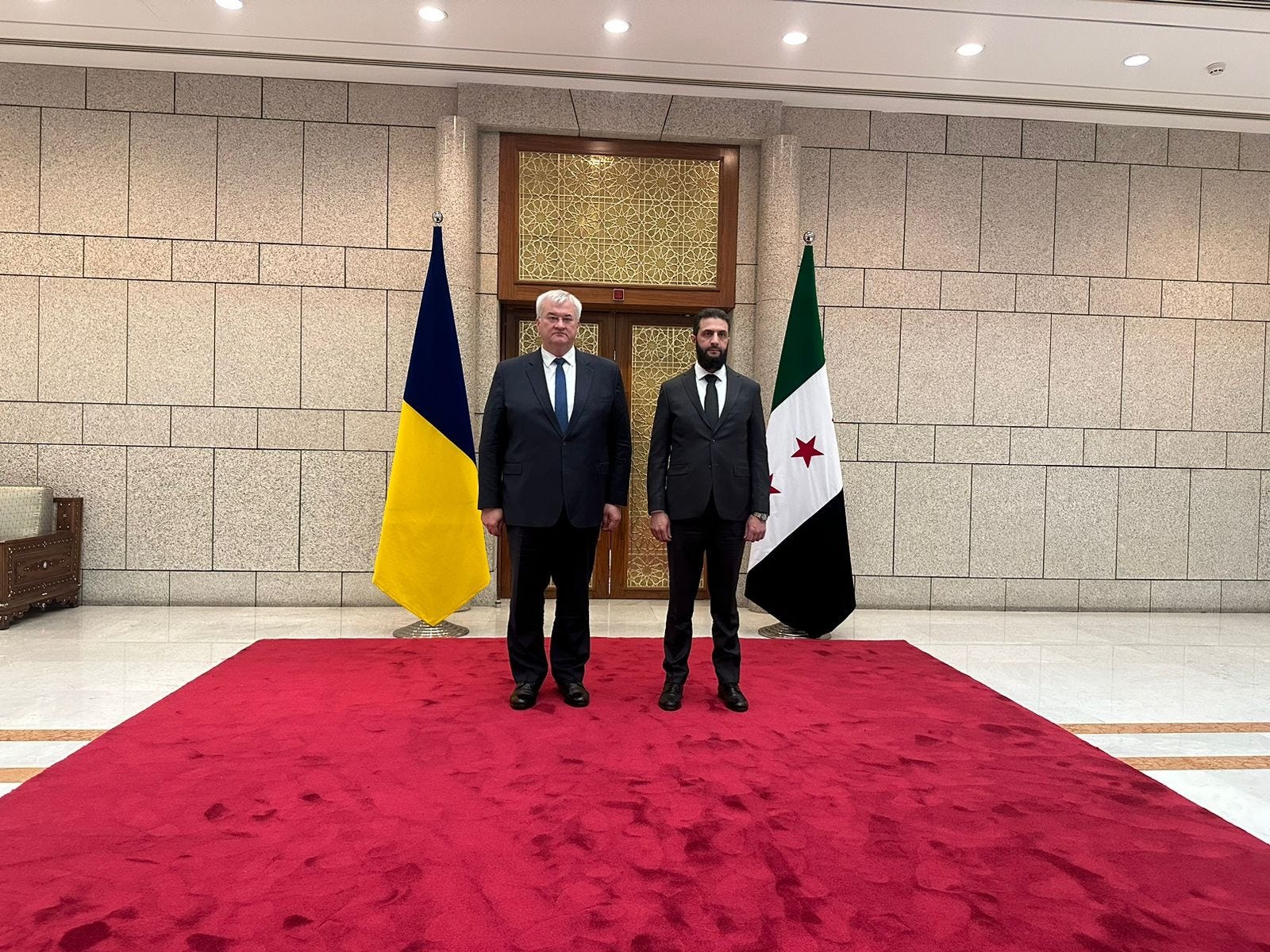
Washington paused Caesar Act sanctions and Damascus joined the US-led coalition against Islamic State. That this happened at all, Michaloliákos notes, runs against Israel’s interest.
So, who arranged it?
Erdoğan.
And Saudi Arabia backs al-Sharaa too, if with reservations, which is one more sign of Riyadh and Ankara creeping warily towards one another. Meanwhile the reconstruction spoils have flowed to Turkish capital. Now Iran is back in the game, and how and if it re-enters Syria, where al-Sharaa is now an established power, remains to be seen.
Lebanon
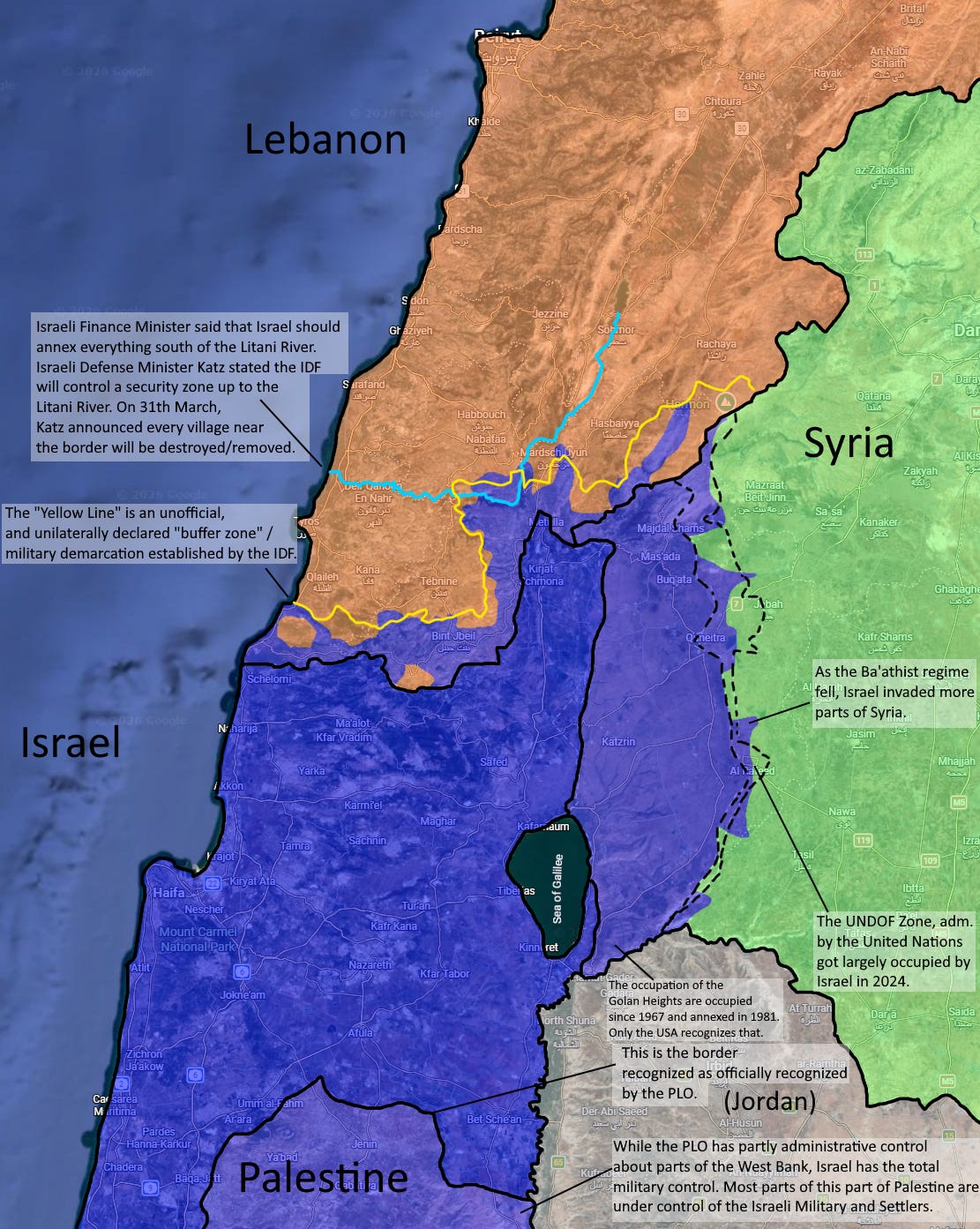
Lebanon sat largely within Iran’s orbit through Hezbollah, until Israel began dismantling the movement “enormously successfully and ingeniously,” through the exploding-pager operation and much else. Israel and the United States worked with the civilian government to disarm it, though they were not completely successful. Hezbollah is, as Michaloliákos is careful to note, an organisation with its own agency and ownership over its conduct — not a simple instrument. But the hierarchy is still there, and Iran’s leverage over it is now likely increasing: a Washington that will not risk Hormuz will not intervene in Lebanon either, which means the ceiling on what Iran can demand of and deliver through Hezbollah has risen considerably.
Lately Hezbollah has been reviving, and Israel has responded by flattening much of southern Lebanon and striking around Beirut. This includes, pointedly, an attack on Hezbollah targets in the city in the hours before the ceasefire was due to be signed, which prompted Iranian threats to walk away from the deal. Michaloliákos suspects the deeper aim is a buffer zone that would make Israel hard to attack from the north.
As of the time of writing on the 17th of June, Israeli strikes on Southern Lebanon are still being reported.
Iran insisted Lebanon be part of any deal precisely because strategic depth is in its interest, and the Hormuz leverage made that insistence credible. A Washington that could not force open the Strait of Hormuz on its own terms, was in no position to tell Tehran what its security perimeter could and could not include.
What Lebanon really exposes is a test of whether that leverage holds. With the deal in hand, Iran can turn to Washington and say: you promised Israel would withdraw, so keep your vassal in check. If you cannot, then you are either an unreliable party, or Israel has broken loose from the leash. And if so, “are you then a worthy negotiating partner for us?” That, Michaloliákos argues, is precisely what Iran is now probing.
The Horn of Africa: Somalia and Somaliland
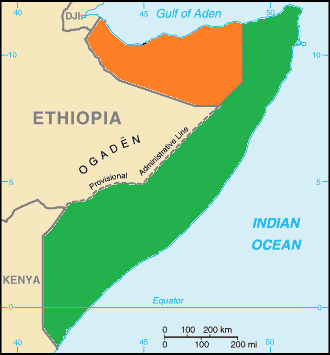
Nowhere is the state-building-against-state-breaking split clearer. Turkey backs the central government in Mogadishu, sending drones and soldiers and securing a concession to prospect for gas and oil just off the Somali coast. This is a clear example of moneyed interests and geopolitics colliding, which I will explore further in a future piece.
On the other hand, predictably, the Emirates and Israel back the breakaway republic of Somaliland, which Israel formally recognised in December 2025, the first state in the world to do so, framing it openly in the spirit of the Abraham Accords. Two specks on the map, as Michaloliákos puts it, until you notice they carry the active backing of the United States, of Ethiopia (which is keen for access to water) and of India.
India’s presence needs explaining, and Michaloliákos offers three reasons. First, the “bromance” between Netanyahu and Modi. Second, Israeli military technology that Delhi wants. Third, the increasingly dense Emirates-India relationship built on oil and a vast Indian diaspora in the Gulf. Hence the shorthand I2U2: India, Israel, the United States, the United Arab Emirates. This is a novel axis assembled to counter the Turkey-Pakistan one. The prize in the Horn is the Bab-el-Mandeb, the southern gate to the Red Sea, and Puntland (an autonomous region in Somalia) may be the next piece to break away.
Sudan
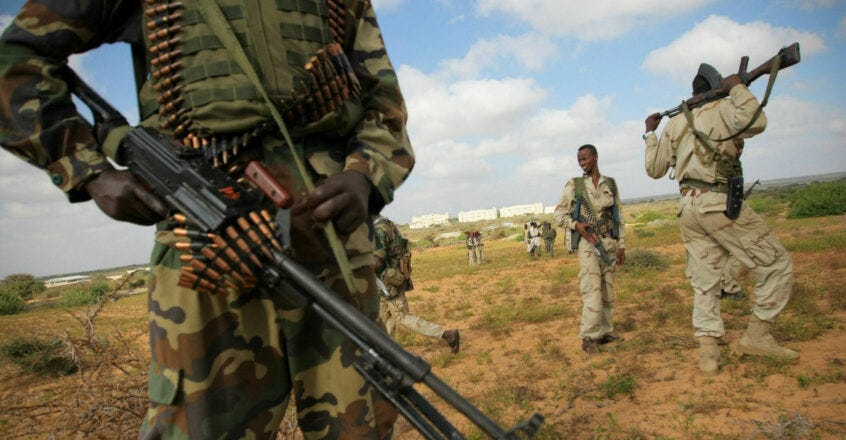
Saudi Arabia and Turkey, alongside Egypt, back the Sudanese Armed Forces, the internationally recognised army under Abdel Fattah al-Burhan. The Emirates back the Rapid Support Forces under Hemedti, chasing gold, a stretch of the western Red Sea coast, and a route into the Sahel. The bitter irony is that al-Burhan and Hemedti once worked together to topple Omar al-Bashir; now they are at each other’s throats, and the war has curdled into an underreported genocide. Neither side, Michaloliákos is careful to add, has clean hands. Ethiopia backs the RSF as well, betting that a fragmented Sudan yields it influence, and reportedly the SAF answers by supporting the Tigray, the minority Addis Ababa is at odds with.
Yemen
Yemen is where the Saudi-Emirati split is most apparent. Mohammed bin Zayed, the UAE’s ruler, and Mohammed bin Salman, Saudi Arabia’s crown prince, were once close but Yemen broke them. Both threw their forces into the war to roll back the Iran-backed Houthis, and both largely failed, achieving little beyond famine in Yemen while the Houthis endured.
At that point they split. The Emirates pulled back, took over the island of Socotra, and backed the Southern Transitional Council, a secessionist movement in the south, against Riyadh’s explicit wishes. The Saudis stayed with the internationally recognised government. Iran, meanwhile, kept arming the Houthis, who survive as Tehran’s lever over the Red Sea, and watched its two main rivals fight over the carcass of a war they had both lost.
The Concert of Hormuz
The point that ties all of this together is that the battlegrounds are wired to one another. As Michaloliákos puts it: “If Turkey supports Pakistan in Kashmir, India will support Armenia with weapon exports.” And indeed Armenia is already the single largest market for Indian arms. The Caucasus, West Asia, the Horn of Africa and the eastern Mediterranean are not separate stories. They are one four-dimensional chessboard, where any move in one corner is mirrored by a move in another.
This is what I therefore call the Concert of Hormuz — and unlike its 19th-century predecessor, its conductor has decided to leave before the orchestra has finished playing.
Where is Europe?
The irony is that Europe is arguably the original perpetrator of the instability that now plagues the Middle East. They created Israel. They laid the modern contours for Middle Eastern states through Sykes-Picot. Europe, the birthplace of the very balance-of-power politics that now dominates the Middle East, is a conspicuously absent player in a Concert where many of its strategic interests lie.
Instability in the Middle East has direct consequences for migration flows, commodity flows, and strategic advantage of an increasingly powerful (yet fragile) alliance between Russia, China and Iran.
What is perhaps telling is that this is a civilisation that has stood the test of time and resisted European colonialism. As Damon Golriz, the following guest for this series aptly quoted the German philosopher Hegel: “In Persia first arises that light which shines itself and illuminates what is around… The principle of development begins with the history of Persia; this constitutes therefore the beginning of history.”
And so, Persia continues to be a central player in the development of history. What unfolds in the following chapter, is a question that is still being answered.