

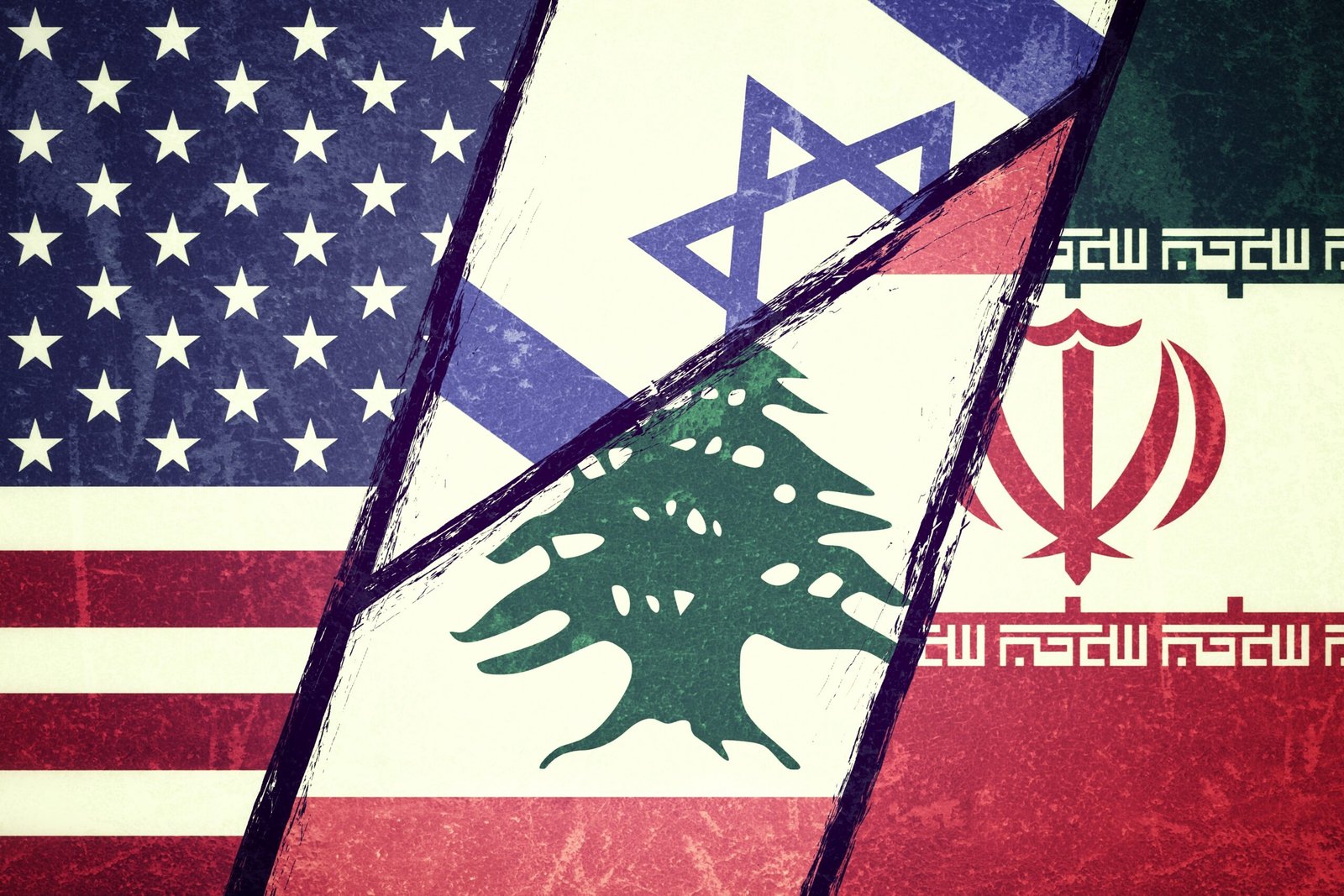
- Israel is thwarting a conclusive agreement between Washington and Tehran through Lebanon, but Iran holds the upper hand at the negotiation table.
- The blockade of the Strait of Hormuz has reinvented maritime deterrence, pushing Iran forward in shaping the new security architecture.
- The reintroduction of Iran as a significant player in the geopolitical arena has diminished Israeli dominance and US hegemony in the region.
What began as a curiously timed, joint effort between the US and Israel to dismantle Iran’s nuclear program and, to a lesser extent, restrain its missile and proxy blueprint in the region has escalated into a worldwide energy chokepoint as Iran responded by closing the vital Strait of Hormuz. Now, four months into the war, a 60-day ceasefire has been reached. However, a definitive ‘peace deal’ is still under negotiation, with at least two of the three parties acknowledging the arisen stalemate as oil and gas prices continue to surge. While Israel is less charmed by a possible truce between Washington and Tehran, we might find ourselves on the eve of a conclusive agreement – but at what costs to US and Israeli dominance? What does this deal imply for the regional security architecture?
From maximum pressure to strategic deadlock
Since its commencement, the Iran war has had extensive geopolitical implications. While Trump appears nothing short of confident on his social media, the details of the Memorandum of Understanding (MoU) suggest that Washington needs to tone it down. Prior to the war, the US found itself in a perfect storm to negotiate a fresh nuclear deal with Tehran, Michel Don Michaloliákos argues. He explains that since October 7, 2023, Iran’s regional grip has weakened, as Israel was successful in degrading its proxy network. Moreover, he notes that the internal crisis made the Iranian regime willing to concede even further than it did during the 2015 JCPOA under Obama.
Yet, the latest war has substantially improved Iran’s position. Trump’s ‘maximum pressure’ strategy has had little coercive success. Neither the US nor Israel managed to eradicate Iran’s ballistic missile program or its nuclear sites, and they proved that the age-old notion of externally enforced regime change was once again a fairy tale.
In fact, the biggest bargaining chip is in the hands of the Iranian regime due to the closure of the Strait of Hormuz. Despite its nationwide crisis, the Iranian leadership has been able to survive, not only through its closure of the vital waterway, but also through its horizontal escalation across the Gulf states, Don Michaloliákos states. Damon Golriz adds that “the American priority is no longer the obliteration of Iran’s nuclear and missile capabilities, but the preservation of maritime supremacy.” As he continues to argue that hegemony is essentially measured by control of maritime nodes, this development is historic. According to Golriz “The result is a shift in deterrence, not a nuclear weapon of mass destruction (WMD), but a maritime “weapon of mass disruption” grounded in Iran’s capacity to unsettle global trade and the maritime order.”
Still, costs are rising on either side, and signs of war fatigue are a regional reality. The zero-sum model that has been inherently present in US-Iran relations has made way for a strategic deadlock, pushing both into negotiation efforts.
The US under duress: how Iran takes the upper hand
As Iran proved to possess substantial strategic depth, “the war has left the US and Israel staring down the barrel of a farcical deal”, Don Michaloliákos reasons. He continues: “Because of Trump’s unwillingness to escalate the war, the US finds itself in a deadlock at the negotiation table.” The MoU seems to reveal a framework in which US ‘wants’ are considered and Iranian demands are met. Through maximum escalation across global supply chains and key US allied bases, Iran has forced itself out of isolation. Especially now that recent Israeli strikes on Lebanon are further shrinking the American space for negotiation, Iran’s position is strong.
The unfreezing of Iranian assets is on the table, along with the lifting of the US counter-blockade of the strait. While voices from officials signal Iranian willingness to suspend uranium enrichment for the upcoming decade, along with the transfer of its enriched stockpile, the nuclear deal has not been concluded. Doubts about the concord within the regime make the nuclear program still one of the most deferred issues in the negotiations. Moreover, the crucial fact that a renewed blockade of Hormuz will always be at Iran’s disposal hangs over the US like a dark cloud. Arabist and anthropologist Leo Kwarten underscores the success of Hormuz as a political lever. Yet, he adds that, while Iran will capitalize on the empirical results the blockade of the strait has brought about, “Iran will utilize Hormuz only at an opportune moment and possibly in an attenuated manner.”
While Iran holds the upper hand, its interests are arguably more fundamental. Both Don Michaloliákos and Golriz underscore the country’s heavy dependence on the Strait of Hormuz for its oil and petrochemical exports, especially to China. Since the double blockade of the strait, state revenues have been tanking; therefore, “for a population already enduring near-triple-digit inflation, economic desperation is not a future risk; it is the present condition,” Golriz states. Partial sanction relief and the unfreezing of Iranian assets give Iran an immediate financial boost, improving inflation rates and thus reducing domestic frustration over the country’s dire economic state.
Of course, Golriz reminds us of Tehran’s stoic attitude toward its population’s suffering, but he points out that this does not decrease the regime’s desperation for liquidity as it must additionally fund its residual proxy networks and rebuild military, industrial, and civilian infrastructure.
As for the US, an agreement would relieve political pressures on the Trump administration given the upcoming midterms, while diminishing military costs and exposure in the Gulf states. Furthermore, the US reaps economic benefits from a deal, along with the rest of the world as it would halt surging energy prices and allow the US to turn to other strategic pressure points such as China.
Iran as the ‘incrowd’ of the new security landscape
While the US and Iran are courting over their shared fear of further economic relapse, the regional security architecture is adapting accordingly. Israel, as the prominent lobbyist for the war, finds itself as the ultimate underdog in the new security reality. Golriz invokes Trump’s promise of Iran’s “unconditional surrender.” Now, the MoU commences with a ceasefire in Lebanon, which decisively places Israel as the surrendering party. The contrast is striking, Golriz continues; a reality has emerged in which Israel is contained by Iran through the Trump administration. “The political understanding effectively recasts Israel as Washington’s proxy, mirroring Hezbollah’s role for Tehran. This must be painful for Israel,” he notes.
Still, Israel remains steadfast in its war ambitions. While a brief ceasefire was reached following a tense week in US-Israel relations, Israel did not hold up its end of the bargain, continuing to strike southern Lebanon. Don Michaloliákos acknowledges Israel’s contrasting security perception, yet he also highlights its inability to carry on the war without US support. Kwarten confirms this statement: “Israel is completely dependent on the US, even for its intelligence. Without its support, it would be impossible to carry on the war with Hezbollah.”
Yet, thus far, Israel stands alone in its desire for a continued fight. Don Michaloliákos exemplifies this by pointing out the dents in, amongst others, UAE-Israel relations, as Iranian horizontal escalation has shaken the Emirati sense of security to its core. So far, the UAE has proven to endorse fragmenting politics, but as the chaos came knocking to its own territory matters have changed. While Israel shared parts of its Iron Dome technology with Abu Dhabi – intensifying military cooperation – “the UAE rather joined the KSA in its lobby to end the war,” according to Don Michaloliákos. Although the UAE-KSA rivalry remains, as is demonstrated by the UAE’s exit from OPEC and their opposing support in Sudan, Don Michaloliákos argues that “with Iran empowered, we might see former quarrels on the backburner for the sake of collaboration.”
He goes on to state that the hedging blocks are increasingly pursuing a dual strategy, as pragmatism seems more critical than ever. “The US security umbrella is no longer a given, but the width of the region maintains its ties with Israel to ensure a port to US security guarantees in any form possible” he tells.
Golriz extends this argument by claiming that the Israeli momentum has passed altogether and that Iran is poised to fill the void. He states that “the region is moving toward a new security architecture in which Iran is no longer a marginal actor, but one of the principal powers negotiating its position with the US.” Iran is increasingly attaining (maritime) territory, which does not go unnoticed, especially by the Arab Gulf states. Golriz explains that this is a direct result of the decline of the US security umbrella and that “Iran intends to present itself as a decisive regional actor capable of shaping outcomes directly.”
One thing is for certain: whether Israel is allotted a supporting role or not, Iran can no longer be shunned from the regional security dialogue.