

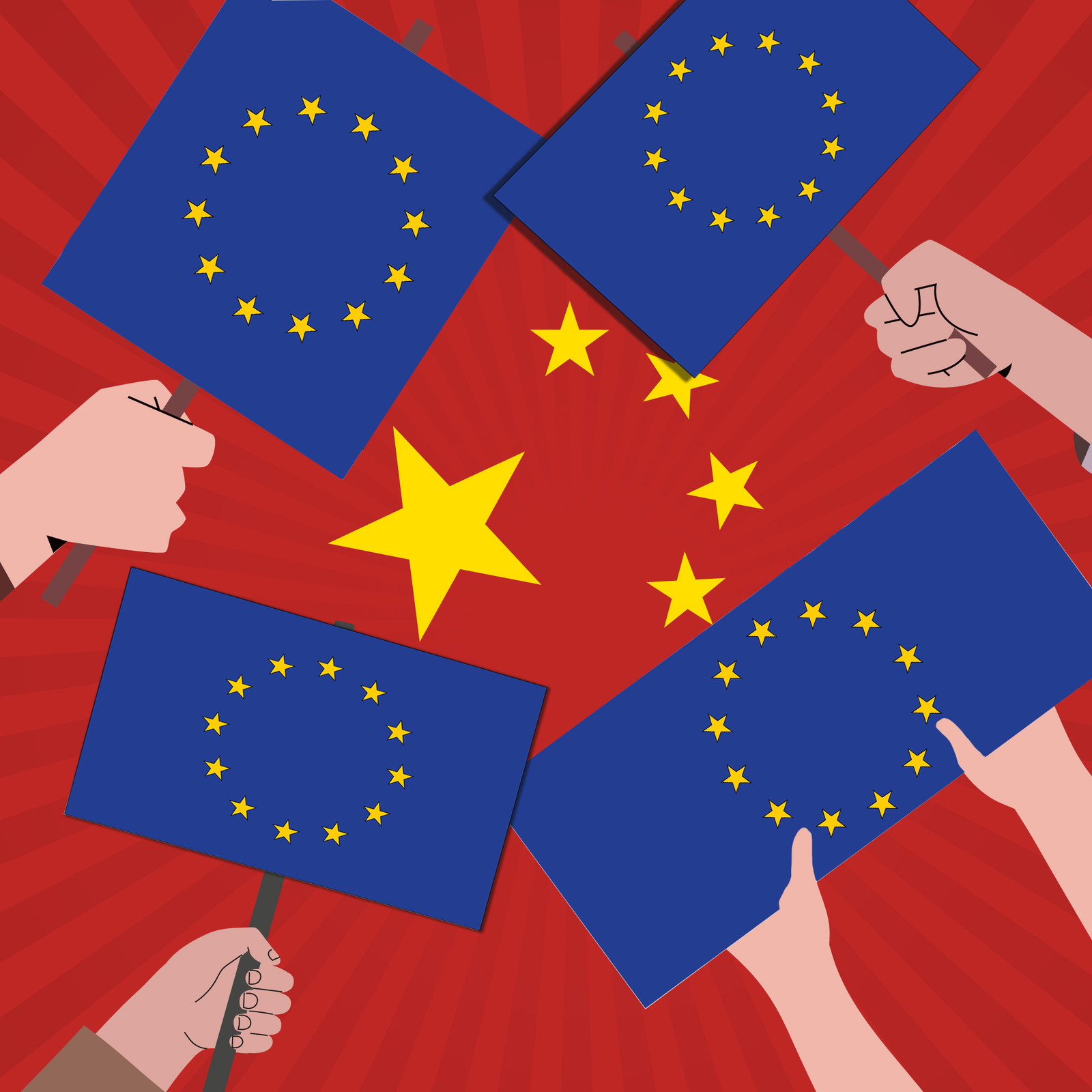
The European Union’s (EU) competitive standing against China and its Belt and Road Initiative (BRI) is influenced by an intricate combination of enduring vulnerabilities and advantages. With China’s swift and far-reaching expansion of geopolitical and geo-economic power through the BRI, the EU faces a critical need to resolve internal deficiencies to ensure its survival amidst the new global order. As part one of two, this article segments the EU to assess its capacity and standing in its competition with the economic powerhouse of China, particularly its Belt and Road Initiative. Part two of the series will explore the competitive capabilities of the EU, reflecting the strengths and weaknesses in the analysis and elaborating on the technicalities, including the Global Gateway (GG) initiative. Part one, ‘Segmenting the EU’, will focus on highlighting the foundation; hence, an examination of the EU’s strengths and weaknesses is warranted. This prompts the question: What limitations and what advantages restrict or enable the EU from competing with China and the Belt and Road Initiative?
Weaknesses
As both a supranational and intergovernmental union, the EU faces a multitude of challenges which can be categorised as weaknesses. Weakness in this article refers to any internal or structural factor that limits, constrains, or undermines the EU’s effective ability to compete with China, especially regarding the Belt and Road Initiative. This section discusses the weaknesses that most strongly affect the EU’s external position. The relevant weaknesses are:
- Lack of coherence/coordination
- Conditionality
- Distanced private and public spheres
- Obsession with Bureaucracy
- Slow Decision making
- Unclear Strategy/goal
Lack of coordination
The European Union comprises 27 Member States, each with national interests. This has been a persistence since the EU’s inception, with individual Member States disregarding agreements and/or treaties to protect national interests (e.g. the Schengen agreement being circumvented to deal with the immigration crisis). Such a lack of coherence, stemming from ‘misplaced’ priority within the Union, can seriously undermine the effective competitive potential that the EU has.
“Let us start with the shortcomings: a lack of coordination is apparent. We have significant capacity but lack the coordination mechanism to utilise its capacity to the full potential. We never have a clear and concrete strategic vision; our strategies fall short.”
– Michel Don Michaloliakos, EU analyst at HIG
National interests have historically hindered the EU’s progress and effectiveness. To illustrate, historical disagreements involving Bulgaria, a Member State, and North Macedonia, a candidate member of the EU, have an effect on the EU’s ongoing expansion. This reflects a broader challenge the EU has faced on innumerable occasions: the lack of coordination among Member States. For instance, with the COVID-19 pandemic, Member States failed to coordinate a cohesive response to the threat, positioning Italy as the ‘experimental case’.
“The general challenge the EU is facing is institutional fragmentation; we don’t have a unified, integrated EU voice on questions of infrastructure investment. And many Member States are pursuing their own bilateral deals with China. That’s why we have these types of 14+1 agreements.” – Vasilis Karakasis, PhD. Lecturer at The Hague University of Applied Sciences.
The 14+1 platform (formerly known as 16+1) refers to China’s cooperation with fourteen Central and Eastern European (CEE) countries. This platform is rooted in BRI-related cooperation, with bilateral relations and investment agreements.
Slow Decision-Making
A lack of unity among Member States often leads to delayed responses, a situation exemplified by the pandemic. This can be attributed to several factors, such as the necessity for a consensus among all 27 Member States, the complicated structure of the EU’s institutions, and the differing priorities of the 27 nations. A highly criticised case of slow decision-making at the EU level is the COVID-19 vaccine procurement, where ensuring low prices came at the cost of delayed results. The EU fell ‘a step or two’ behind, which is often described as ‘politically humiliating’ by critics.
“The lack of a unified, integrated EU voice has implications on the speed and efficiency in capital mobilization; one, the EU’s financing, some projects involve complex conditionality aspects, procurement, environment, rule of law. While the BRI is financing in a much more efficient and quicker way. And this is quite attractive to partner countries.” -Vasilis Karakasis
EU Conditionality
EU conditionality is both a strength and a weakness. Often, EU conditionality is perceived as too protective, overlooking essential demands in favour of stability and bureaucracy. For instance, Ugandan President Yoweri Museveni criticised the World Bank and the broader West for prioritising democratic reforms and the EU perspective rather than understanding Africa’s urgent need for infrastructure. Historically, the EU’s intentions in Africa are subject to differing perceptions, ranging from neo-imperialist, paternalistic, and self-centred, to an equal partner, preferred partner, and friend. The EU is viewed as ‘Eurocentric’, an entity pushing its own agenda, with conditionality at its core; promoting European values and standards of democracy, human rights and governance. Shortcomings of EU conditionality are further evidenced in the EU’s expansion through the ‘accession strategy’ under the EU Enlargement policy. The EU’s conditional approach has fostered a widespread belief in drawn-out negotiations and lengthy accession procedures, consequently diminishing the EU’s aspirations and fuelling scepticism towards it in other countries and among their citizens.
“As a result, reforms increasingly progress only where they align with Serbia’s immediate interests, while deeper structural reforms slowdown in the absence of strong, credible EU commitments. In short, weaker EU credibility has contributed to weaker reform ambition.
Ordinary citizens also are very dissatisfied with slow accession process and that is why now only around 30% supports EU membership.”
– Ivona Ladjevac, PhD. Senior Research Fellow at the Institute of International Politics and Economics (IIPE).
The EU brand
Conditionality serves as a double-edged sword, where a recipient country may perceive it as ‘controlling’, receiving money only when meeting requirements set by the EU. This perception of the EU has negative implications; its ‘brand’ gets tarnished, undervalued, and may lack recognition when the EU significantly contributes. For instance, a 2025 annual survey in Serbia revealed that only 29 per cent of the citizens know the EU is the largest financial contributor. A consensus emerged that China and Russia extend more support, with both countries surpassing the EU in terms of trust metrics.
Distanced Private and Public Spheres
EU funding, such as the Global Gateway, heavily relies on private enterprises. European companies must agree and coordinate with the EU on certain projects, partnerships and policies for the EU to succeed and provide. For example, European companies lack alignment with the EU on CRM supply chains in African countries, resulting in little progress. This highlights a flaw and an apparent gap between the public and private spheres. When compared to China’s centralised funding, the EU’s system serves as an obstacle in completion, execution, and speed, which is connected to ‘slow decision-making’ and ‘lack of coordination’. Exemplified by the Nachtigal Hydropower Plant, a flagship project under the Global Gateway, which highlights the distanced private and public spheres. As the EU public sphere pushed for the project under the Global Gateway, the private sector and companies pulled out because of risk and profitability returns. Bringing European business actors into the implementation process is a persistent challenge for the EU.
“The distinction between the private and public sphere is larger in the EU. This means that strategically, we are limited in our approach.” – Michel Don Michaloliakos
Lack of strategy/ clear goal
The Global Gateway and its flagship projects exhibit an absence of defined objectives and a unified strategic approach; this has implications for advancement. Progress assessment becomes increasingly difficult without a clear priority or strategy, as progress comparison becomes futile without a projected progression. The lack of strategy is exemplified by the Global Gateway’s limited impact in its early stages, revealing it lacked clear focus or strategy and entered widespread engagement.
“But as I mentioned before, the EU does not have a unified strategy, and China does not want the EU to have a unified strategy; hence we have the 14+ 1. The EU should find a way to engage on its own terms, not China’s.” -Vasilis Karakasis
Strengths
The EU’s complex nature requires stability, coherence, high standards, reliability, and regulations. Only strengths of the EU with relevance to this article will be listed:
Transparency
The EU provides stability, ensures human rights, debt-diplomacy, soft power-related activities, and most importantly, transparency. EU strategies, initiatives, deals, engagement, etc. are shared publicly and available. The step towards transparency is through open procurement, publicly sharing all steps, and open tenders. Tenders allow companies to submit offers in response to a tender, awarding the procurement contract to the most viable candidate. Along with providing debt-sustainability regulations, the EU specifically aims for good governance and transparency, highlighting them as key ‘principles and values’ for the Global Gateway.
“Important to mention are soft power and legitimacy. So, in general, although there has been a lot of criticism against the conditionality policies of the EU, it is mainly development assistance. Which is I think is according to the OECD, more than 50% of the total global assistance. Moreover, it is generally perceived as more transparent and less predatory than the financing from the BRI, again, this is in theory” – Vasilis Karakasis
Normative Approach
Increasing credibility and long-term trust, the EU’s normative approach is a strength that also promotes crucial principles, including human rights, democracy, and the rule of law. The normative power, as apparent in the Brussels effect, allows the EU to influence global markets, regulating them with no economic coercion or military force. The EU shapes standards, sets norms and promotes values, without imposing the standards. Instead, market forces alone result in the EU standards turning into the global standard.
“Another strength is the Brussels effect mentioned before, in this case the EU sets some global standards when it comes to, for instance, EU AI act or when it comes to GDPR when it comes to the environment, product safety; this is a form of structural influence that the BRI cannot easily replicate.” – Vasilis Karakasis
Long-term Reliability
While facing significant challenges because of historical ties (e.g. colonialism), the EU’s reputation for engagement is predictable; attempts to be more reliable and honour the principle of transparency. This reputation allows for better alignment with EU norms and standards and has implications on an immense scale (e.g. Brussels effect). The lack of predatory approaches from the EU has driven its reputation to that of a multilateral regulatory entity that can set standards globally. The soft power approach allows for better long-term participation, strong relationships, and stability. Ghana, a preferred partner for the EU, provides a solid example of the perceived EU reliability and long-term partnership. Signing the EU-Ghana partnership, Mr. Ken Ofori Atta described the EU as a reliable partner, strengthened by the signing of the Security and Defence Partnership in 2026.
High standards – Conditionality
As mentioned before, conditionality serves as a double-edged sword. Hence, it is listed as both a strength and a weakness. High standards and conditionality are interdependent. The EU sets high standards, for instance, in human rights protection, democracy, bureaucracy, and the rule of law, consequently applying them to its conditional assistance. Using high standards and conditionality allows for security, prevents misuse of funds, ensures long-term stability and sustainability, and promotes EU values and norms. Conditional assistance translates into gradual good governance, helps build institutional stability, and combats the political constraints in a country.
Conditionality serves as an incentive for structural reforms, critical for the stability and security of the EU. Conditionality broadly applies; through enlargement and development assistance conditionality offers a ‘reward’ for meeting the set conditions. Through conditionality, the EU propels the ‘Brussels effect’, spreading the EU’s high standards and providing recipients with rewards in return: long-term stability through better governance incentives and empowering civil society. Such high standards and conditionality are apparent in recipient countries of EU engagement, where partners adhere to the standards set by the EU.
Conclusion
The structural flaws within the EU are intertwined, creating a trickle-down effect where the worsening of one weakness leads to the exacerbation of other weaknesses. With ‘the lack of cooperation’ positioned at the EU’s core, it serves as a weak point which has implications for the EU’s strategic stability, competitive ability and credibility, challenging the EU’s unity, or ‘oneness’. However, the strengths portrayed in this article highlight the large potential the EU has, which allows competitive advantages over other powerhouses, such as China. The Union’s presence combined with its normative approach and the ‘Brussels effect’ shapes a unique influence, which could present an opportunity for the EU to find a path towards competing with China or benefiting from a strategic approach.
Whether these strengths and weaknesses translate into actual geopolitical leverage when confronted with a rival initiative such as China’s BRI will be explored in ‘Part 2’ of this article series.