

Following the U.S. and Israeli attack on February 28, Iran effectively blocked the Strait of Hormuz, through which approximately 20% of the world’s oil and liquefied natural gas (LNG) shipments pass, causing global oil and gas prices to rise steadily, and causing serious worries for European energy security. The European Union has different options to intervene in the emerging crisis and to slow down the rising prices in the short-term, however, the options are limited both in number and efficiency. Crisis management has to be effective in order to protect European citizens, households and industries but should not stand in opposition to the long-term goal of the energy transition.
This poses the question of: How can the European Union cope with rising energy prices and the risks posed to energy security amid the current crisis in the Middle East? Three energy and geoeconomic experts, Jilles van den Beukel (HCSS), Khaled Fouad (Asbab) and Michel Don Michaloliákos (HIG), contributed to the analysis.
THE MAIN DILEMMA
Dependence on fossil fuels for energy has long been a recognized vulnerability for the EU, threatening overall European energy security. Fouad and Michaloliákos both highlight that after the 2022 energy crisis, Europe has made significant efforts to diversify its oil and gas sources and reduce dependence on Russia. However, it resulted in EU countries sourcing 57% of their LNG imports from the US in 2025, which is political leverage for the Trump administration and a geostrategic risk for the EU.
Yet, the current war in the Middle East has once again highlighted that Europe is still vulnerable to fossil fuel shocks, serving as another reminder why a complete transition from oil and gas towards renewables is inevitable. This also corresponds to van den Beukel’s observation that, due to the global nature of oil and LNG markets, diversification does not significantly reduce the risks associated with energy security and rising energy prices and that in the long term, only a complete breakaway will ensure European energy security.
Therefore, it can be argued that the current situation at the Strait of Hormuz could be a catalyst for the more pronounced implementation of the energy transition. Van den Beukel, Fouad and Michaloliákos all agree that the long-term goal of the energy transition has to be kept in mind, while coping with the current energy crisis. Therefore, on the one hand, this current moment provides the opportunity to speed up the energy transition, by pursuing decreased demand for oil and gas. On the other hand, with prices continuing to rise, European households and industries need urgent help that only short- and medium-term measures can provide.
SEVERETY OF PRICE SHOCKS
Oil and LNG markets are global markets and the current war in the Middle East has already put security of supply in danger, increased competition between countries and continents, and increased prices gradually pushing Europe, among others, into another round of energy-market volatility. However, it must be mentioned that Europe’s fossil fuel dependencies and vulnerabilities are not as heavy as the Asian economies’.
Shell’s CEO, Wael Sawan, warned Europe that the energy crisis could become more apparent with energy shortages from April. Furthermore, on 31th March, the EU’s Energy Commissioner Dan Jørgensen warned Member States that the impact of the crisis would not be short lived. Indeed, the deepening energy crisis will negatively and long-term influence all supply chains due to the delayed effect, projecting a far-reaching economic crisis.
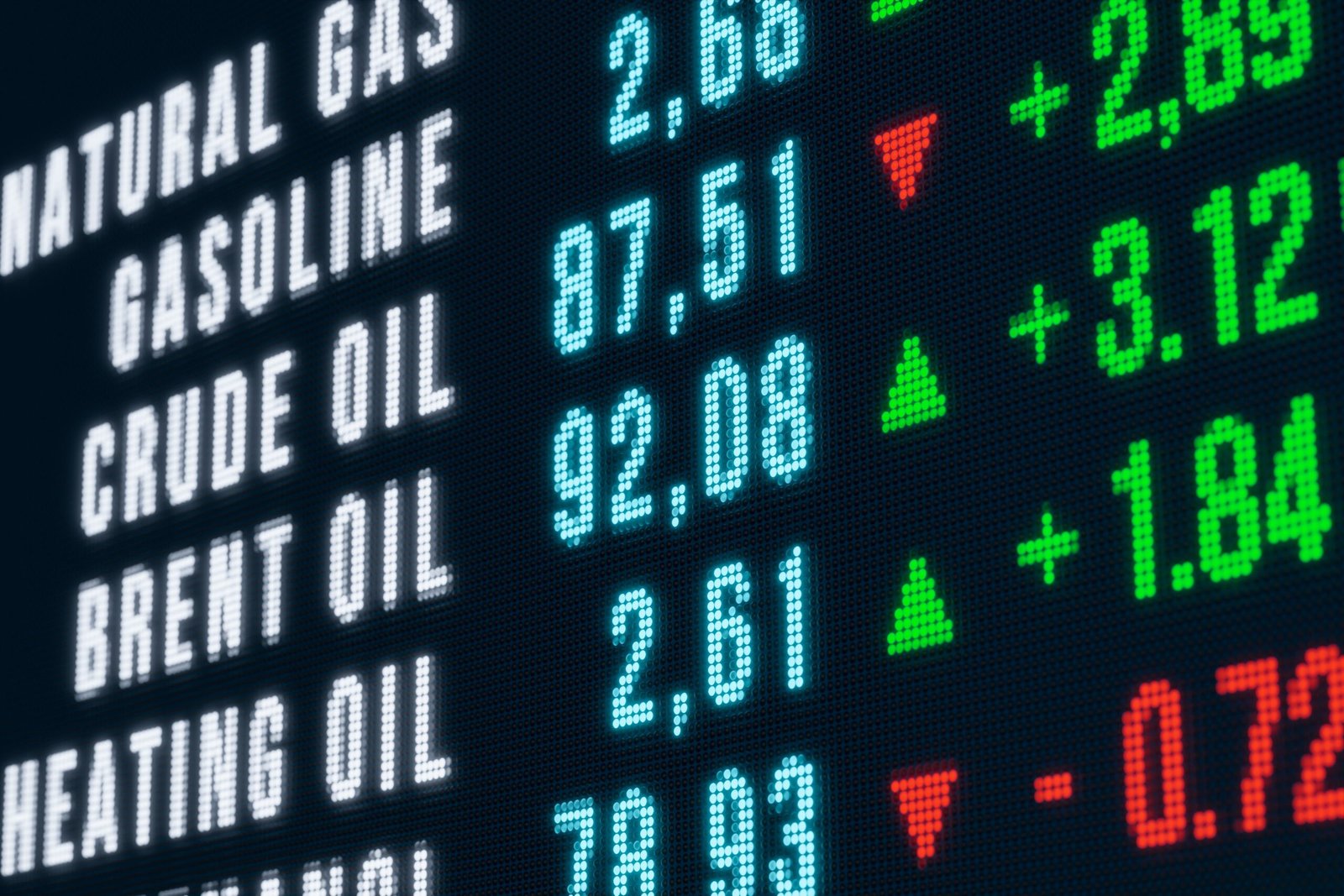
The duration of the current war is still uncertain, however signs of its severity are already apparent, especially following recent attacks on energy facilities in Qatar and Saudi Arabia.The price of Brent crude oil, which serves as the international benchmark, frequently exceeded $100 per barrel at the end of March 2026, and European gas prices hit a 13-month high.
The situation is further exacerbated by the fact that the European gas refill period runs from April to November and storage levels must reach 90 percent capacity during this time. Europe would thus need to inject nearly 60 billion cubic meters of gas to meet this target. However, if production in Qatar were to halt for two months, approximately 25 percent of the filling period would be lost.
The EU is heavily dependent on gas imports from outside the EU, accounting for approximately 90% of its supply in 2024. Appr. 62% of that is pipeline gas, supplied by a number of countries such as Norway, Algeria, Libya, Azerbaijan, Russia, and the United Kingdom. However, the remaining approximately 38% comes from LNG imports, increasingly predominantly from the United States, as previously explained.
The crisis has already been influencing Eurozone inflation as well. Bloomberg reports that the EU’s economy is already at risk of stagflation. Based on the most pessimistic estimations, a four-month energy shock could push annual eurozone inflation to around 2.2%, with second-quarter inflation averaging 2.5% and eurozone GDP slowing to appr. 0.9%.
MEASURES REGARDING OIL PRICES
The EU possesses important tools in order to tackle both oil and gas price shocks. In case of oil, all experts highlight the strategic oil reserves as the most significant. Van den Beukel states that “recent 400 million barrels release perhaps led to an oil price decrease of a few dollars per barrel (less than 10)”, indicating moderate effectiveness.
Fouad adds that it was executed in coordination with the International Energy Agency, an intergovernmental organization, established in 1974, to help industrialised countries respond to major oil shocks. Coordination is a key word when assessing the instruments of the EU. Michaloliákos highlights that the EU can only coordinate and encourage member states to release strategic reserves, however, it is legally not binding.
Furthermore, “the strategic oil reserves is a short-term tool that contributes to calming the markets, while this tool does not provide practical solutions in long-term crises with the continued shortage of global supply” adds Fouad.
Michaloliákos and van den Beukel both mention reducing oil demand as a tool that is, however, more suitable for the long term goal of continued support for the energy transition. Lastly, van den Beukel mentions limited potential for domestic EU production, which does not influence oil prices, but additional revenues could finance the energy transition or support packages.
MEASURES REGARDING GAS PRICES
The EU possesses important measures regarding natural gas prices as well. Some have been exerting their positive effects since their implementation during the 2022 energy crisis, Fouad highlights the Gas Storage Regulation and AggregateEU.
The significance of EU level gas import coordination was pointed out by all experts. It resonates with the European Commission’s updated guidance published earlier in March, which instructed EU Member States to relax procedures for approving imports of gas from suppliers other than Russia. According to Fouad’s assessment, “this provides greater flexibility in receiving gas supplies, but it is not necessarily capable of controlling prices amidst a global crisis such as the closure of the Strait of Hormuz”.
Van den Beukel mentions four main tools: (1) maintaining ample LNG import capacity that is effective and good value for money; (2) maintaining ample gas storage capacity that moderately effective; (3) long term contracts (preferably) with pricing conditions like HH indexed or oil indexed (rather than TTF indexed); (4) terminate rigid filling levels for gas storages because that is counterproductive.
Lastly, he mentions limited potential for domestic EU production. Furthermore, he adds that oil and gas being global markets means that at least other LNG and oil importing regions are in a crisis as well, not only the EU.
SHORT TERM RELIEF MEASURES
There are more severe coping mechanisms as well, which are capable of more direct and abrupt intervention regarding reducing high energy prices that put an increasingly large burden on European industries and households.
The application of price cap regulations is perhaps the most renowned short-term relief measure. An energy price cap is an upper limit set by the regulatory authority that determines how much energy suppliers can charge per unit of gas or electricity for small scale consumers, while the government may provide special subsidies for bills or pay compensation to service providers.
Michaloliákos argues that it is a tool that is not compatible with the energy transition goals, therefore he is “quite hesitant to implement price caps, only when it is strictly necessary“. He adds that right now, the overall objective is to protect the purchasing power (energy and other commodities) of citizens and SMEs, furthermore to avoid soaring inflation.
Van den Beukel shares caution over compatibility and highlights that price caps should be implemented if targeted at a limited group of people or companies, otherwise, money should be invested to stimulate the energy transition. Besides price caps being targeted, Fouad adds that they also have to be temporary, strictly to address crises. He warns, “if these measures become long-term actions, they will have negative effects on reducing demand, attracting LNG exporters, and undermining the EU’s ability to transition to renewable energy.”
CONCLUSION
The latest war in the Middle East has once again highlighted that Europe’s dependence on fossil fuels remains a serious strategic weakness, despite efforts over the past five years. Although the EU cannot legally compel its member states, it can still initiate coordinated measures to mitigate the immediate price shock, such as releasing strategic reserves, coordinating procurement, and providing targeted aid to those most in need at the most critical moments.
However, the experts interviewed for this article largely agree: once the crisis has been managed, work must proceed on implementing the long-term solution, and the only lasting solution is to reduce demand for fossil fuels and accelerate the energy transition.