

Introduction
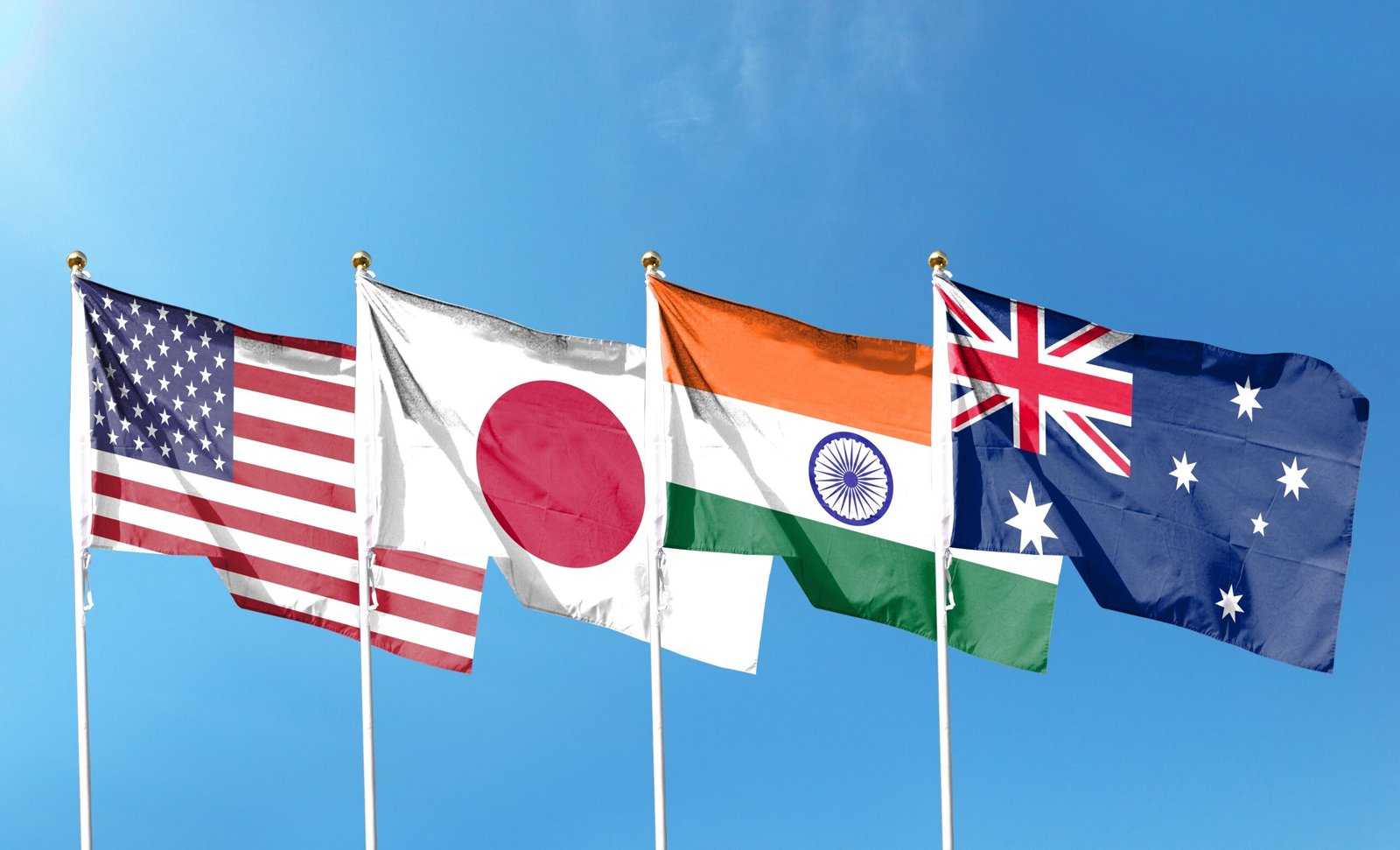
The Quadrilateral Security Dialogue, more commonly referred to as Quad, is a strategic partnership between Australia, India, Japan, and the United States. It was officially established in 2007, but ceased operations in 2008 following withdrawal by Australia in an attempt to manage its relations with China. Almost 10 years later, in 2017, the partnership was revived again with the intention of supporting a peaceful and prosperous Indo-Pacific region. However, since Trump 2.0 has entered the stage, questions surrounding Quad’s continuation and prospects have emerged. Therefore, is Quad still viable given the current capriciousness of Trump, and if it is, what is its added value?
Quad has had moments of success, from launching various programs, to hosting joint naval exercises, technology dialogues, and supply chain initiatives. In a rapidly changing geopolitical environment, Quad has attempted to reinforce regional security and provide a framework for maritime security cooperation. However, the momentum is not always strong, and has been lacking significantly in recent months. A catalyst for this was the increased tension in India-US relations, leading India to postpone the 2025 Quad Leader’s Summit, with a new date still unknown and unlikely. In addition to this, general unpredictability and lack of reliability of the US under Trump 2.0 has also contributed to the decline of Quad.
In his second term, Donald Trump’s policy toward the Indo-Pacific region has shifted. The 2025 National Security Strategy (NSS) indicated that Washington’s primary focuses will be on domestic matters and on maintaining dominance in the Western Hemisphere. While the NSS does mention Quad briefly, the 2026 National Defence Strategy does not, however, it does allocate attention to maintaining a peaceful and balanced Indo-Pacific region. The document emphasised that its allies in the Indo-Pacific region should increase their defence spending as the US has subsidised them for too long, reinforcing the transactional nature of the administration. Additionally, the administration’s imposition of tariffs across the region has impacted supply chains and damaged relations, leading many to question the reliability of the US.
Trump 2.0 has also shown that this administration no longer aligns with some of the priorities that Quad originally held. Quad had previously set out to improve regional health security, by launching the Quad Vaccine Partnership among other initiatives, but this is contrasted starkly with Trump’s Health Secretary who has actively contributed to dismantling vaccine research and funding. Other priorities had included expanding humanitarian and disaster relief aid, and climate change, however, with the cutting of USAID and withdrawal from the Paris Agreement, it can be seen that these priorities no longer hold with Trump 2.0.
Australia
David Andrews, Expert Associate at Australian National University’s National Security College, agrees that at present, the foreign policy priorities of Trump do not align with those of Quad. From the Australian perspective, Andrews explains, Quad has not been a focus in foreign policy discourse in the past year, particularly as the Albanese government seeks to diversify Australia’s bilateral relationships in Asia and the Pacific. He elaborates that Albanese is “gently distancing himself and his foreign policy from that of President Trump, trying to stress to regional partners the enduring nature of Australia’s presence and interests throughout the Indo-Pacific”.
Within Australia, there is no direct opposition to Quad but there is a clear decrease in momentum since Trump re-entered office. That being said, Andrews believes that all would benefit from a clearer definition of Quad’s values, intended role, and long-term prospects, as he finds that “even now there is no consistent set of principles or objectives which we have access to”. He is unsure whether Quad is the best vehicle to address the topics that they have already approached: regional norm-setting, vaccine diplomacy, disaster response, cyber security, and maritime domain awareness. He does, however, find that Quad is a good opportunity for “senior officials, ministers, and leaders of the four nations to meet together, hold discussions, and pursue opportunities to collaborate together in the Indo-Pacific”.
When asked about the trilateral relationship between Australia, Japan and India, Andrews stated that strengthening it would be beneficial, but the US’ economic size, technological advancement, and military capability are not replaceable. Therefore, they would leave a large void that would be difficult to fill. Despite this, the trilateral relationship “could form the basis for a larger and more inclusive regional framework of middle powers”.
Japan
Katsuya Tsukamoto, Japanese Defence Analyst at the National Institute for Defence Studies, shared his personal insights into the Japanese perspective on Quad. Tsukamoto stated that the new Takaichi administration is yet to make their perspective clear after the land-slide victory in the general election, but he believes that they are likely to inherit the same outlook on Quad as the previous administration, that it is a way to continue to promote Japan’s notion of a Free and Open Indo-Pacific. However, he believes that currently, Trump doesn’t appreciate the importance of Quad, hence a current lack of momentum, and hopes that this will not lead to efforts to scrap the framework entirely.
Tsukamoto explained that Japan has had two major concerns when it comes to Quad, the first being that Trump 2.0 doesn’t respect many of the values that Quad is trying to promote. As well, the Trump administration isn’t active in developing Quad, putting the other members in a difficult position as everyone expects the US to take the lead. Tsukamoto mentioned the second main concern to be India, given its ties to Russia, particularly as Japan supports Ukraine, thus there are doubts about India’s alignment with Japan and Quad’s interests. However, since Japan views Quad as a more values based framework, and because both India and Japan hold similar views of China as a security concern, Tsukamoto said that this makes it easier for them to accept their differences.
Overall, Tsukamoto believes that the trilateral framework is important, but for Japan, Quad is more relevant as it is essential that the countries aggregate their power against China, which requires the US. He emphasises that “Japan wants to build up in terms of multilateral frameworks and has hopes that Quad can grow into something similar to NATO, but it all depends on how China acts”. Tsukamoto elaborates that Quad can still expand cooperation in many ways even though the members may not agree on today’s geopolitical reality. “The countries do share many interests and they should focus on these even though Quad is not ideal, it is still a great framework that can be useful”.
India
The Indian perspective, as provided by Rajeev Lachmipersad, geopolitical analyst at The Hague Institute for Geopolitics, varies from that of the Japanese. Lachmipersad shared that India joined Quad because it provided them with a great opportunity to balance China without confrontation, contribute to maritime security, and gain access to strategic technology. It was important to India that Quad didn’t carry the label of a (military) alliance, and instead emphasised that it was nothing more than a talking forum. Lachmipersad notes that under Trump 1.0, Quad was strengthened but since Trump 2.0 emerged, everything has changed, particularly in India-US relations which has subsequently been reflected in Quad. With the new India-US deal, it could improve relations temporarily, but it is unlikely to make lasting change.
Within India, Quad is not a prominent focus as they are fearful of how it is framed vis-a-vis China, particularly with Trump 2.0. Lachmipersad explains that “India is very cautious of the US, they don’t know what the US wants to do vis-a-vis China and India doesn’t want to give China extra reasons to escalate the current border tensions in the Himalayas”. Rather, India would prefer to become their own player, as they continue to grow economically, they also want to become a bigger geopolitical player and not rely on alliances with other partners. As it currently stands, they would rather be a follower than a leader within Quad, and therefore, are unlikely to lead any movement to revive it.
Lachmipersad, however, emphasised that the trilateral relationship between Australia, India and Japan, is very important to India and they would rather channel energy into this than Quad. He believes that the three countries are better aligned as they act in the interest of their countries, whereas the US currently acts in regime interests. Additionally, their geopolitical interests in the long-term align well, and the trilateral relationship is less threatening to China which India prefers.
Conclusion
In conclusion, as David Andrews mentioned, the members of Quad would indeed benefit from a clearer definition of their values and intended role, as currently, the members perceive the partnership differently. Quad is ultimately still viable but may continue to lie dormant over the coming years due to difficulties in alignment among all members with Trump 2.0. Quad does, however, offer a valuable opportunity to expand to a more multilateral framework in the typically bilaterally focused Indo-Pacific. In the meantime, Australia, India and Japan could benefit from strengthening the trilateral relationship given the importance of democratic middle powers coming together. The trilateral relationship may not be able to achieve such significant feats in the absence of the US, but they could still shape the regional agenda and set norms in a way that is manageable for middle powers to sustain.