

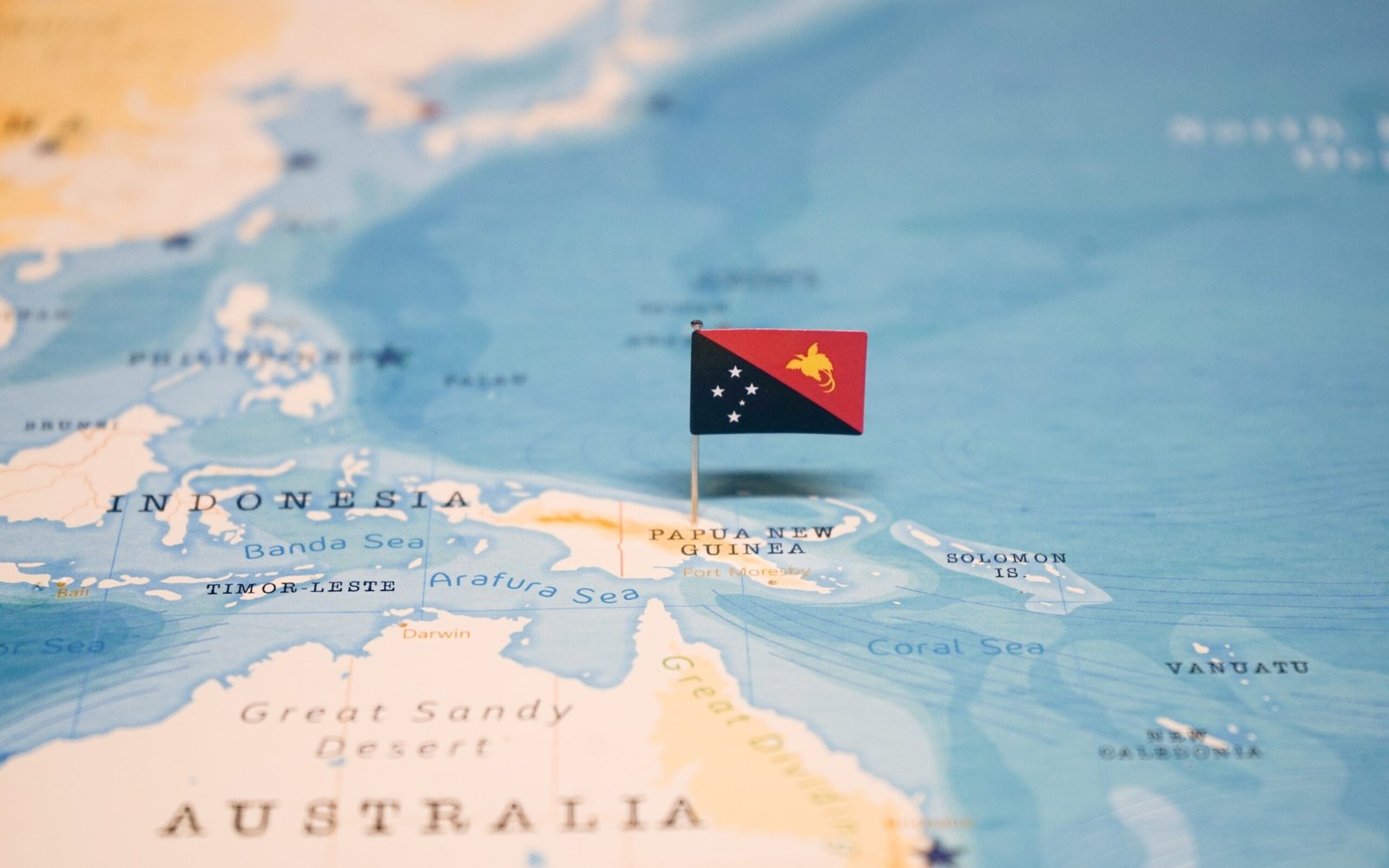
Regional Update Australia | In August 2025, Papua New Guinea (PNG) proposed a mutual defence treaty to Australia, its first since it gained independence 50 years ago. The Pukpuk Treaty, ‘pukpuk’ coming from the Tok Pisin word for crocodile, was officially signed by the two Prime Ministers in Canberra on October 6th 2025 and is now undergoing domestic approval processes. However, as Australia and China compete for power in the South Pacific, what implications will this treaty have on the geopolitical landscape?
The main features of the treaty include mutual defence commitments, capability enhancement, and safeguarding sovereignty and regional stability. For PNG, a large benefit of the treaty is being able to enhance their defence capabilities as they currently suffer from a defence capacity that is unable to protect itself. Additionally, it offers up to 10,000 citizens a pathway to Australian citizenship through serving in the Australian Defence Force which would help Australia with their recruitment struggles, and PNG with their high youth unemployment.
According to expert Mihai Sora, the Director of the Pacific Islands Program at the Lowy Institute, “this treaty will contribute to stabilising geopolitical competition in the Pacific because it is a clear commitment from PNG with respect to its national security and foreign policy”. The treaty reinforces that Australia is consistently PNG’s primary security partner. Given the capability differences between the two, it is, however, important that this treaty doesn’t lead to a situation of dependency, and rather, one of genuine partnership.
Indonesia has been one of the first to raise concerns with the treaty, asking both nations to respect its sovereignty and independence. This comes due to reasons associated with West Papua, a region of Indonesia that shares a border with PNG, and is currently experiencing conflict due to West Papua’s ongoing struggle for independence. Indonesia is concerned that should the conflict escalate along the border, Australia would come to aid PNG’s military. However, PM Marape has reassured that the treaty does not “compel Australia to assist his country in the event of a conflict on the Indonesian border,” and this is defined in article 2b of the treaty. Australia is incentivised to maintain a positive relationship with Indonesia as South East Asia’s largest country and a direct neighbour, making them an ideal strategic partner. Indonesia and Australia have fostered 76 years of diplomatic relations, including security cooperation as laid out in the Lombok Treaty (2006), and enhanced by a comprehensive strategic partnership since 2018.
While the treaty has alarmed Indonesia, China is the biggest player to be affected by this geopolitical move. As per Mihai Sora, Australia-China relations are in a state of competition regarding the Pacific, both countries seek to strengthen Pacific partnerships by expanding their diplomatic reach. The balance of power is changing, and this is also due to Pacific Islands asserting their needs more clearly.
In 2022, China signed its first bilateral security arrangement in the Pacific Ocean with the Solomon Islands. This move was met with concern by Australia, New Zealand and the United States as it signalled an expansion of China’s maritime presence and a reinforcement of its hard power in a strategic location of the Pacific region. The implications of this move on the geopolitical landscape of the Pacific region are substantial. Although the Prime Minister of the Solomon Islands guaranteed that a Chinese military base in the country was not part of the security agreement, it still allows for greater maritime presence of the Chinese, which threatens regional security.
As stated by Casper Wits, an East Asia specialist at The Hague Institute for Geopolitics, China seeks to gain access to the South Pacific to push the US out of the region. However, due to the US’ chain of military bases in the Western Pacific, this is made significantly difficult.
Australia and PNG both have reason to be skeptical of China’s movements in the Pacific. In February 2025, Chinese warships appeared off the coast of Australia and conducted live fire drills in the Tasman Sea, and around that same time, a Chinese drone entered PNG’s airspace. Both of these occurrences happened without notifying the respective local authorities. These actions signal that China’s journey to gather intelligence on the South Pacific continues, and would allow them to be prepared for any future confrontations that could take place in the region.
Casper Wits believes that “while China currently favours soft power, such as investment in infrastructure and development finance, their interests don’t stop there, and building these relationships is only the first step”. Ultimately, “their long term goal is a continuation of their expansionism in the South China Sea and becoming militarily stronger in the South Pacific”.
Australia, however, walks a fine line with its relationship to China, favouring economic agreements with them, China being one of their top trade partners, but simultaneously feeling threatened by their expansion into the South Pacific Ocean. This also leads to friction in the Australia-US relationship as Australia is wanting to balance both its trade relations with China, and its alliance with the US.
The US is another key player in the geopolitical landscape of the Pacific region, however, their role is shifting under the new Trump administration. During Trump’s first term, the Pacific Islands saw a level of commitment from the US as they prioritised their importance to US national security. However, there has been a notable shift during Trump’s second term with the ending of USAID projects, the implementation of tariffs with significant impacts on the Pacific Islands, and a shift of focus away from the issue of climate change, seen by their withdrawal from the Paris Agreement.
Gregory Brown, Senior Fellow at the Australian Strategic Policy Institute USA and Adjunct Professor at Georgetown University, contributed that while the Trump administration has shifted its focus within the Pacific, they are prioritising putting money into what matters to US interests: defence access, resource security, and strategic positioning. Brown noted that “the shift we’re witnessing is from charity to transaction,” although in his analysis, their current spending is not sufficient to achieve their target outcomes.
As the US has decreased financial input to the region and damaged levels of trust, China has been able to step in and fill the gaps. To counter this growing presence of China in the region, Australia is needing to step up and challenge them due to the perceived threat to national security and interests. The US within the Pacific, as Gregory Brown explained, “needs denial of Chinese basing, operational access for contingencies, and resource security”. Therefore, they are prioritising focusing resources where interests align and managing competition where they don’t.
In sum, the geopolitical landscape of the Pacific is in constant motion with shifts in priorities and changing relationships. Australia has consolidated power and its position in the Pacific Ocean through the signing of the Pukpuk treaty, a tactical move in the broader strategy to counter China’s growing presence in the Pacific. Despite Australia serving as the primary security partner for many Pacific Islands, China will continue to inch its way further into the security sector of the Pacific to achieve its expansionist goals. Simultaneously, the US, under the current Trump administration, has redirected its focus in the region to be primarily transactional based on their current strategic goals.