

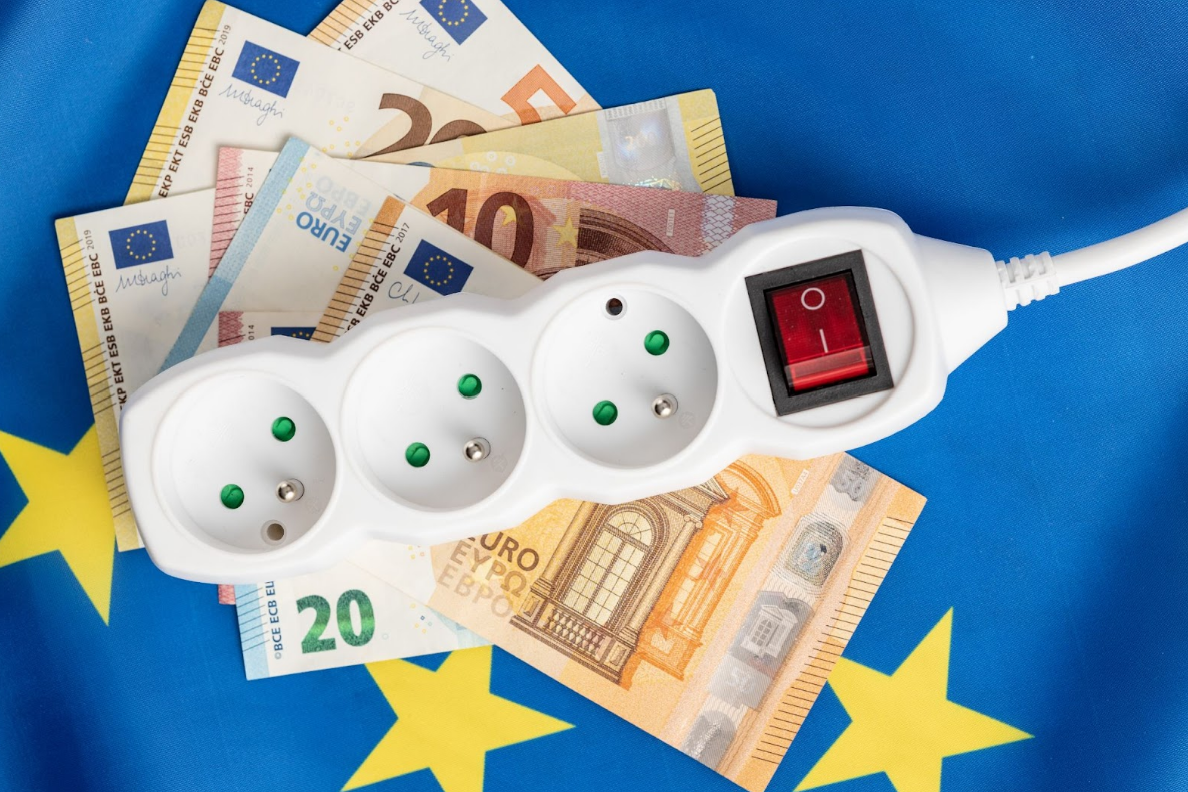
Regional Update Europe and the Mediterranean | In November 2025, the European Parliament’s center-right, right-wing and far-right parties approved the EU’s first Omnibus Simplification Package, cutting green reporting rules for companies, in order to support their competitiveness and boost European industries. Although political discourse following the decision was focused on the outrage around the center-right EPP voting with the far right, the legislation exposes a much broader issue: the great trilemma of the energy transition between climate ambitions, industrial competitiveness and strategic autonomy. Although these are mutually reinforcing to some, others argue that they clash under certain circumstances. This poses the question: to what extent will the EU be able to simultaneously achieve all three?
The 13th of November was an important day for the EU’s climate ambitions as the European Parliament (EP) endorsed two adjustments. On the one hand, the EP decided to adopt updated rules as part of the Omnibus I simplification package in order to simplify and reduce sustainability reporting obligations and due diligence requirements in the name of ‘competitiveness and regulatory relief’. On the other hand, a cross‑party majority accepted watered‑down climate targets for 2040, agreeing to reduce domestic emissions by 85 percent (compared to 1990 levels) and the remaining 5 percent to be outsourced by purchasing international carbon offsets; in order to offer governments and industries more flexibility with decarbonization.
GREEN DEAL EUPHORIA IN DECLINE
The two decisions showcase that EU lawmakers passed through a reality check regarding the feasibility of climate ambitions and are now recalibrating those. While rapporteur of the Legal Affairs Committee Jörgen Warborn (EPP, SE) after the voting said ”Today’s vote shows that Europe can be both sustainable and competitive.”, reflecting optimism, the votes expose the growing difficulty for the EU to manage its climate ambitions, industrial competitiveness and strategic autonomy.
Strategic geoeconomic analyst Ron Stoop of The Hague Centre for Strategic Studies shares the idea that the three aspects can be achieved at the same time, in fact, he argues “that ambitious climate policy measures can reinforce competitiveness and strategic autonomy if manifested through fast and thoroughly considered investment in new technologies in areas such as electric vehicles, batteries, solar energy, and smart grids as cleaner solutions are becoming cheaper and more efficient”.
On the other hand, geopolitical and geoeconomic analyst of Europe, Michel Don Michaloliákos of The Hague Institute for Geopolitics, argues that “lowering specific short term climate goals could strengthen European competitiveness and strategic autonomy, for instance, in strategic sectors where green alternatives for fossil fuels are not available or affordable yet, or where grid congestion limits electrification.”
However, both experts warn that slowing down or delaying the energy transition could potentially lead to a backlog in technological advancement, including future industries gaining momentum with the energy transition, further weakening the EU’s competitiveness and strategic autonomy.
SHIFT IN PRIORITIES?
The significance of the two votes reaches far beyond the party-political layer that the press and the general political discourse mainly dealt with afterwards. The magnitude of the hardship of the energy transition and the geopolitical and geoeconomic developments it brings has made EU lawmakers and citizens face a political reality of 2025 that is entirely different from the one in the 2010s.
According to Michel Don Michaloliákos, out of strategic autonomy, competitiveness and climate ambitions, “the latter clearly dominated the EU’s agenda from the mid-2010s, peaking in 2019, with the Green Deal and the electoral successes of Green parties. The EU was pursuing green normative leadership and tried to promote its regulatory approach. These policies changed the energy mixture of Europe with lasting positive effects, but also had some evident shortcomings. It underestimated the strain on the electricity grid. Additionally, there was a strong emphasis on phasing out fossil fuels, but not enough on delivering renewable supply at scale, which created the recipe for energy scarcity and high energy prices.”
However, the COVID 19 pandemic, then the full-scale invasion of Ukraine, soaring energy prices, and Trump’s election have turned the tide to some extent. Industrial competitiveness and strategic autonomy have taken center stage. He argues that this demonstrates a shift in priorities and adds two important layers to it: rising living costs that helped raise public concern and the growing influence of corporate lobbying. In his view, the two votes and especially the end of the traditional cordon sanitaire around the far right confirms the shift. According to Michel Don Michaloliákos, there is only one way forward: ‘’the EU should invest itself out of the trilemma by massive, large scale investments – private and public’’.
Ron Stoop also acknowledges that security and defence issues have become more important over the past two years but insists that Mario Draghi’s competitiveness agenda is compatible with Europe’s climate goals if it is used to support clean technologies rather than undermine them, therefore, none should be prioritised at the expense of the other. In his view, the EU focused too much on regulation and compliance costs and not enough on investment, constructive industrial policy, and the expansion of green industries. He believes that this shift is essential to make because “the technologies that drive the energy transition are the technologies that will drive Europe’s future economy.”
A NEW ENERGY ORDER
The ambitious climate objectives and the energy transition further increase the degree of dependencies, as the shift from fossil fuels to renewables requires an ever-larger amount of rare earth and critical raw materials, which are cheapest and most readily accessible in China. Nowadays, energy and critical raw materials are not merely economic commodities as during the heydays of globalization, but have increasingly become strategic and geopolitical tools, exposing the EU to significant vulnerability in energy security. Lacking capacity in the refining industry and lacking resource extraction are at the heart of this.
Possessing capacity in refining is crucial for energy independence and control over energy supply, however, the EU has been struggling with achieving it. There is a similar lack of current prospects in extraction as well: permitting new mines has been a slow process, furthermore, significant local and general social resistance is inevitable due to environmental concerns. Consequently, the EU has to rely on external supply chains which, in case of the refining of rare earth metals and other critical raw materials, has been highly concentrated in China that weaponizes its near monopoly geopolitically. Even though Chinese imports remain important, the EU has tried to lower its dependency by enacting the Critical Raw Materials Act in March 2024, setting targets of 10% extraction, 40% processing, and 25% recycling domestically. It is undeniably a step forward; however, the implementation so far has been criticized for lacking financial incentives and is in general considered unrealistic to achieve.
FROM STRATEGIC AUTONOMY TO STRATEGIC DEPENDENCIES
In this context, the EU has to realize that “strategic autonomy” should not refer to complete self-sufficiency but to the strategic management of inevitable dependencies. Michel Don Michaloliakos emphasizes that in order for Europe to manage or resolve the trilemma, it has to develop a new solution model, including the acceptance of possibly uncomfortable trade-offs for the sake of security of supply and energy grid.
In the long term, the aspects of the trilemma fundamentally reinforce each other, however, in the short and medium term, compromises are inevitable. Lowering climate goals may reduce the cost and regulatory burden on companies but could potentially slow down the pace and extent of technological innovation, not to mention jeopardizing Europe’s possible clean technology leadership and consequently its strategic autonomy. On the other hand, it is essential to prioritise the competitiveness of certain fossil-based industries (e.g., steel or petrochemicals) that struggle with sustainability, but this maintains dependence on external suppliers, such as Russia and Gulf States, undermining long-term strategic autonomy.
Ursula von der Leyen has already positioned the European Commission as a “Geopolitical Commission” during her first presidency, which showcases recognition of the broader geopolitical developments that the energy transition brings along. However, what we can see according to Ron Stoop is that “Europe’s main problem is that we still do not have a united strategy. Too many countries are pursuing short-term national interests instead of a shared European approach”. Michel Don Michaloliákos calls for a “stronger EU industry policy”, otherwise the EU will be unable to build its own technological base (which would be essential for regaining control over its energy system and economic security), resulting in the increasing loss of its autonomous geopolitical role and instead becoming another major battleground for the United States and China.
As a solution, both experts call for a twofold dependency diversification strategy: on the one hand, having deeper cooperation with democratic middle powers such as Australia, Japan, Korea, and Canada, and on the other hand, creating new partnerships with emerging middle powers in Asia, Central Asia, and South America such as Indonesia or Chile that combine mineral resources and growing industrial capacity.