

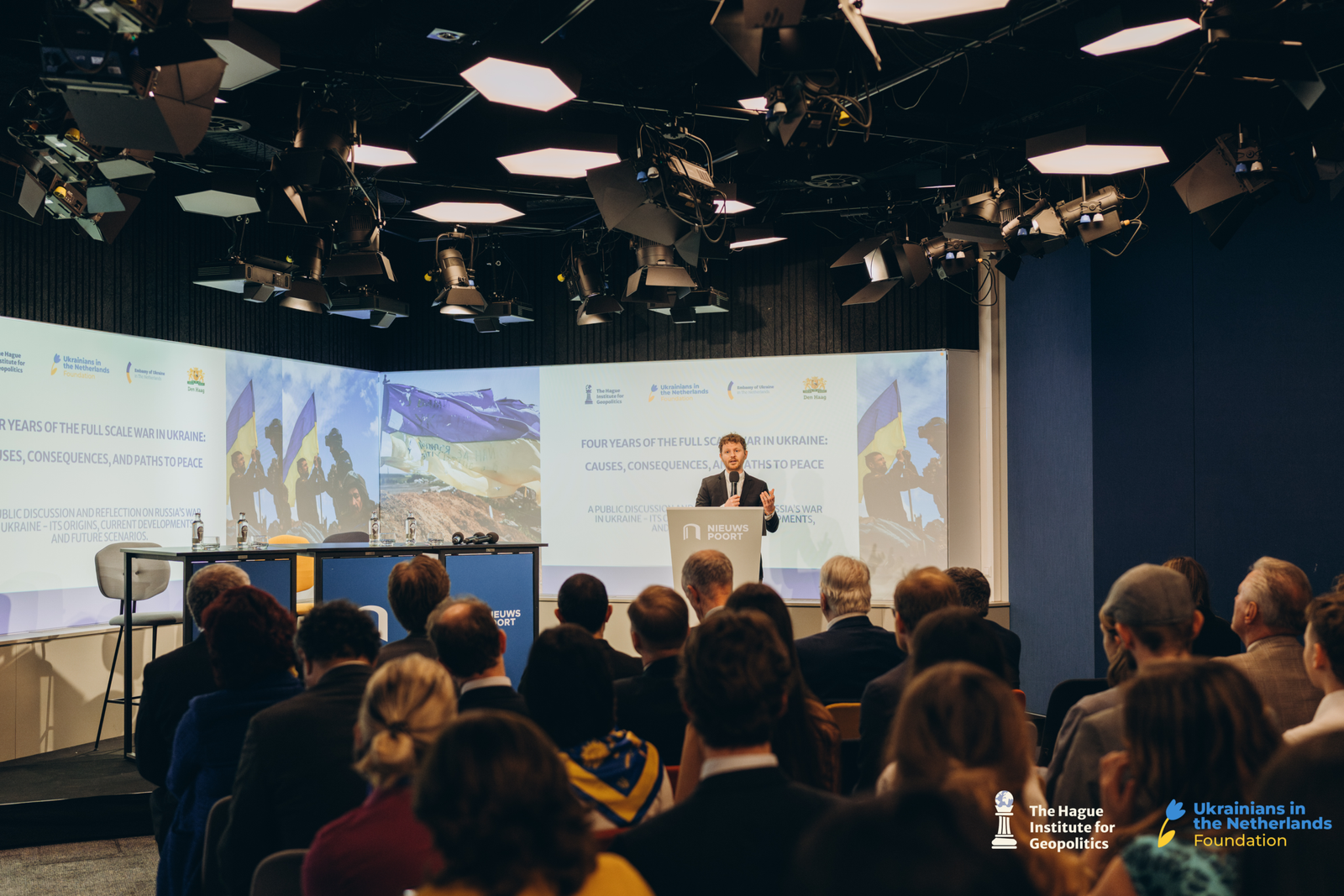
On 24 February 2026, the Hague Institute for Geopolitics, together with the Ukrainians in the Netherlands Foundation, marked four years since the start of Russia’s full-scale invasion by hosting a high-level conference in The Hague: “Four Years of the Full-Scale War in Ukraine: Causes, Consequences and Paths to Peace.” Together with senior policymakers, diplomats, security experts, academics and civil society representatives, we examined the roots of the conflict and the conditions for a sustainable peace. The event was supported by the Municipality of The Hague and the Embassy of Ukraine in the Kingdom of the Netherlands
Ambassador Andriy Kostin opened with a stark reminder of what was at stake four years ago and what has been achieved. “Four years ago, Russia expected Ukraine to fall in days. But Ukraine stands. So does our shared determination to defend freedom, international law, just and lasting peace”.
He noted that at least 15,000 civilians have been killed, over 41,000 injured and millions displaced, and stressed that more than 200,000 war crimes have been registered. Without accountability, he argued, there can be no sustainable peace.

Leader of the VVD Parliamentary Fraction, Ruben Brekelmans, underscored that Russia’s initial war objectives have largely failed. He reassured the audience that the Netherlands remains committed to providing security guarantees and long-term support for Ukraine – military, humanitarian and financial assistance.

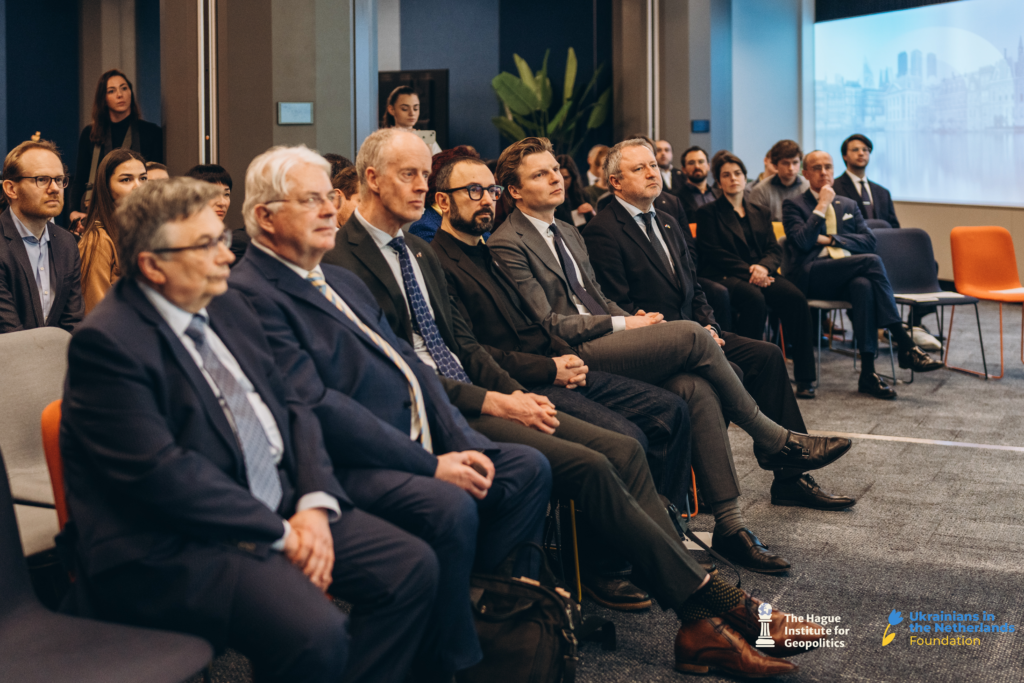
The conference was attended by ambassadors of Austria, Portugal, Estonia and Latvia, as well as representatives of the embassies of Germany, the United States, Romania, Georgia, Greece, Qatar, Algeria, Panama, Chile and the Republic of Korea. Several Dutch ministries were represented, including Defence, Foreign Affairs, Justice and Security, Finance, and Economic Affairs.
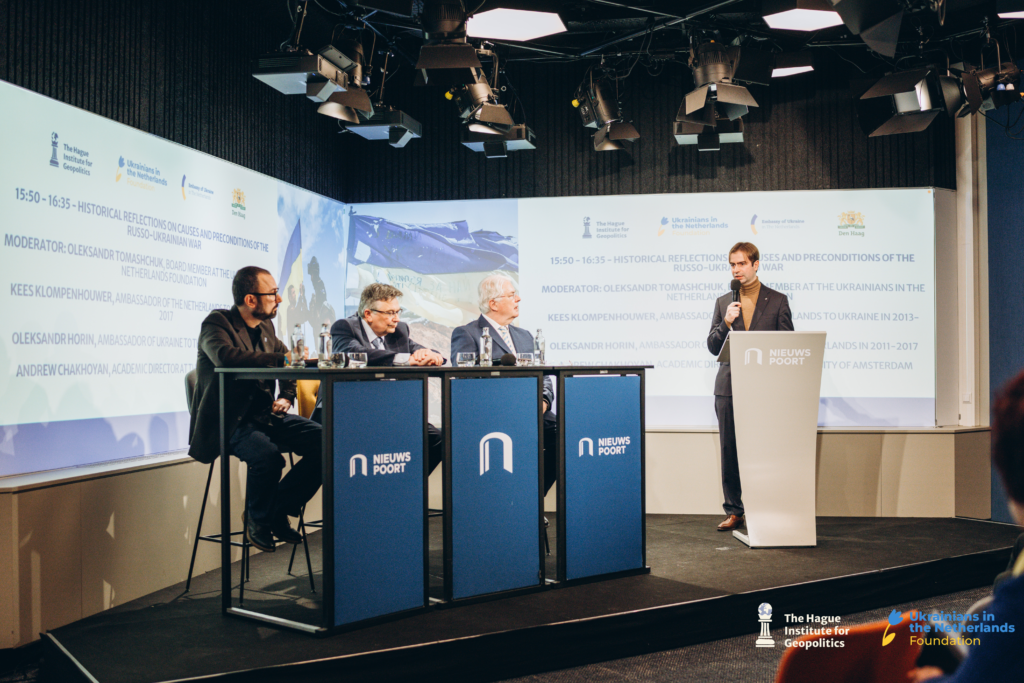
The event featured two panel discussions. The first examined the historical and ideological roots of Russia’s aggression and was moderated by Oleksandr Tomashchuk, Board member of the Foundation “Ukrainians in the Netherlands”. Panellists Andrew Chakhoyan (academic director at the University of Amsterdam), Oleksandr Horin (Ambassador of Ukraine to the Netherlands in 2011-2017) and Kees Klompenhouwer (Ambassador of the Netherlands to Ukraine in 2013-2017) argued that the war reflects long-standing imperial logic rather than a single policy decision, that it is fundamentally about Ukraine’s sovereign right to determine its own foreign policy course. The speakers also noted that the delayed international response following 2014 enabled further escalation.
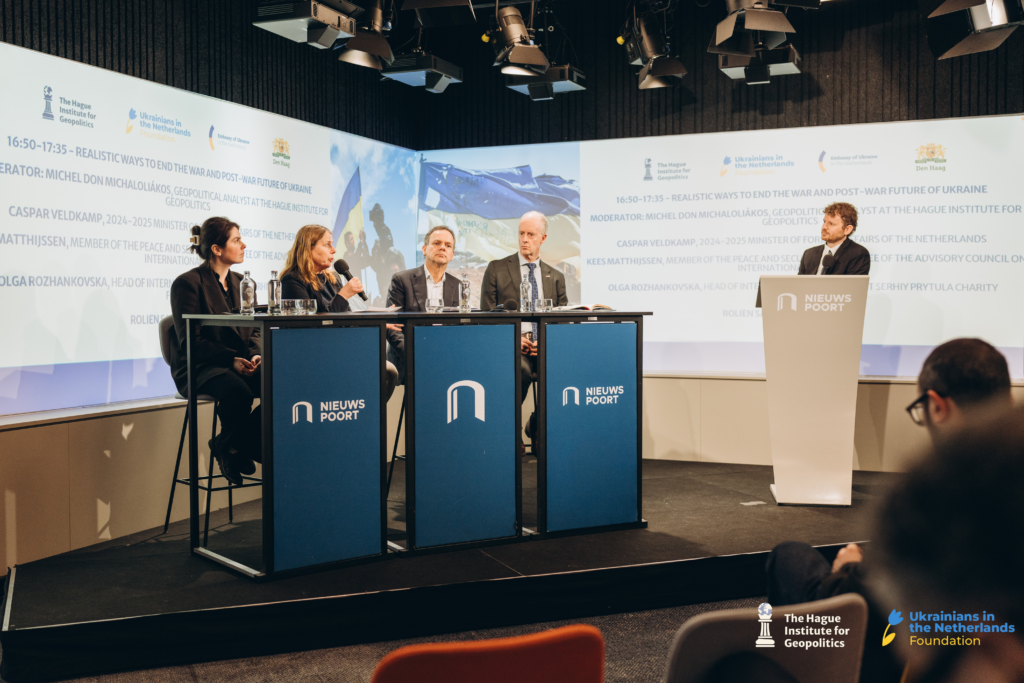
The second panel was moderated by Michel Don Michaloliákos (Founder and Geopolitical Analyst at HIG), and featured Caspar Veldkamp (former Dutch Foreign Minister), Kees Matthijssen (Member of the Peace and Security Committee of the Advisory Council on International Affairs), Olga Rozhankovska (Head of International Relations at Serhiy Prytula Charity Foundation) and Rolien Sasse (Director of PAX). The panel discussed present realities and future pathways, including the international support, particularly air defence, and the challenge of reconstruction, including infrastructure, displacement, trauma and reintegration
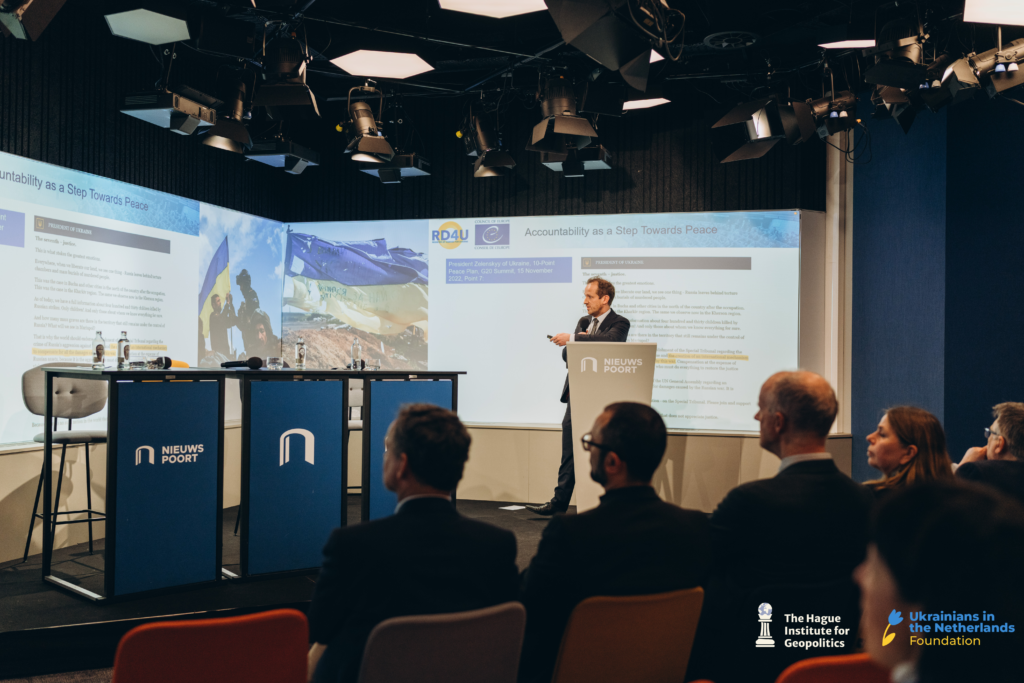
A dedicated presentation from Jan Ortgies presented the work of the Register of Damages for Ukraine, which documents claims and lays the legal groundwork for a future compensation mechanism.
In her speech, Mariëlle Vavier, The Hague’s Deputy Mayor for Poverty, Inclusion, Public Health and International Affairs, highlighted the Municipality of The Hague’s dedication to just peace and democracy.

HIG thanks all speakers, panellists, moderators and participants for their contributions!