

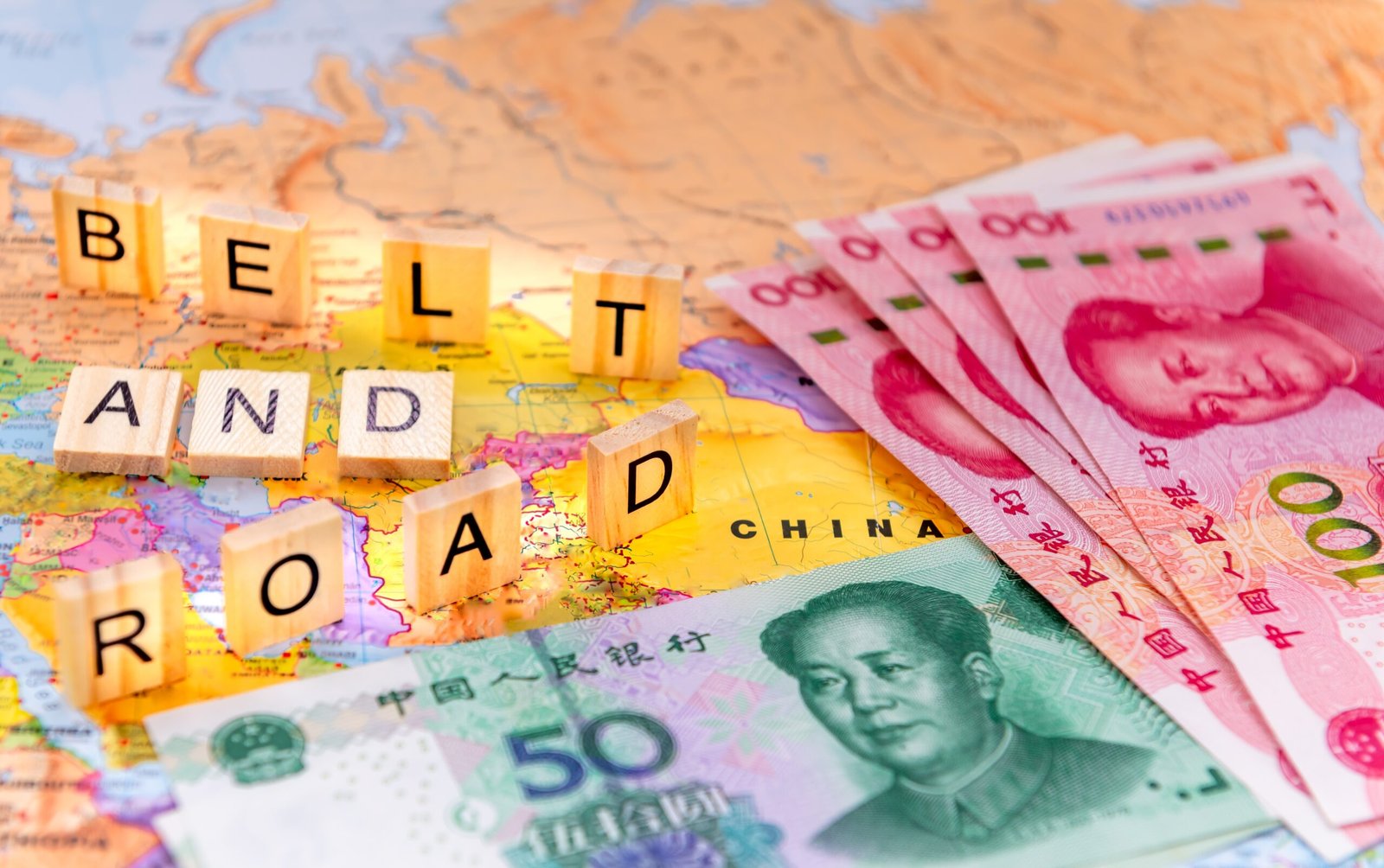
Central Asia’s integral position within the Belt and Road Initiative (BRI) was underscored by the June 2025 signing of the Treaty of Permanent Good-Neighbourliness and Friendly Cooperation, which confirmed amplified cooperation and trade, and established the Belt and Road Initiative as a cornerstone. China’s engagement boom in natural resource-rich, and landlocked Central Asia holds significant implications for the region. Deeply embedded historical ties to Russia are a significant factor in the region’s influence on China’s approach. The Sino-Russian strategic cooperative rivalry faces new challenges from recent geopolitical and geoeconomic developments, which influence both economic and political arenas. With its extensive involvement in the BRI, China is poised to become Central Asia’s main economic partner, overtaking both Russia and the EU. This raises the question: To what extent has the Belt and Road Initiative affected the balance of power in Central Asia in China’s favour – a geostrategic theatre historically dominated by Russia?
Central Asia’s Theatre
Before and after the Soviet Union’s fall, Russian influence historically held sway over the region, acting as its main military force, economic backbone, and culturally dominant standard. Western influence in the region was notably circumscribed, yet the U.S. provided an unmatched stabilizing presence with the invasion of Afghanistan, alongside NATO’s military operations to counter prevalent terrorism threats in Central Asia. Russia and China, via the Shanghai Cooperation Organisation (SCO), aimed to curb U.S. regional influence. The U.S. military’s absence in Afghanistan, resulted in diminished U.S. influence, benefiing China and Russia following the 2021 retreat. Concerns are growing in Moscow and Beijing because the lack of a Western stabilizing military presence has led to renewed radicalization threats. The European Union’s regional influence was primarily economic, stemming from the significant flow of energy exports from Turkmenistan and Kazakhstan to the EU, contrasted with imports originating from neighboring China.
The contemporary balance is much more intricate, combining the existing cooperative rivalry between China and Russia, and the growing Western concern regarding stability and growing powers in the region. Russia and China closely cooperate in overlapping interests, such as the success of the SCO to oppose Western influence and to ensure the stability of the region.
“Right now, I think the U.S. interest in Central Asia has to do probably mostly with rare earths and related minerals, on which, of course, the U.S. has been badly burnt on.”
– Johannes Linn, Nonresident Senior Fellow, Brookings Center for Sustainable Development
Following the Russian invasion of Ukraine, the efficacy of Russia’s role as a security guarantor has been reduced in Central Asia; however, military cooperation between Russia and the region remains strong, with a majority of the region dependent on Russia for security. Economically, China and Russia are at a crossroads, balancing cooperation with rivalry. Each aims to develop its respective project (Belt and Road Initiative versus the Eurasian Economic Union). Resulting in China successfully sidelining Russia as the main economic partner to the region, aggressively pulling the region into its economic orbit through the BRI. In addition, the 2025 treaty coupled with the Russo-Ukraine war, places pressure on Russia’s geopolitical and geoeconomic standing, as the superpower faces newfound challenges. Furthermore, China has officially replaced the EU as a more dominant economic influence in the region, becoming the region’s largest trade partner and exporter.
“Chinese economic power in Central Asia undermines Russian influence, but the two countries have been cautious to avoid frictions because of this.”
– Frans-Paul van der Putten, Clingendael Institute
China’s Goals
When outlining Beijing’s goals in Central Asia, its behavioural patterns grow increasingly relevant in contrast to the listed action plan. Beijing’s approach to the region emphasises energy security as a primary aim, underscored by ongoing investment and participation in the energy sector, and the crucial role of critical minerals. The resource-rich region’s exports are dominated by raw-materials, critical minerals, mineral fuels, and oils; with China as the paramount export destination for the region, as well as the largest trade-partner to the region.
“Energy security has always been a priority in China’s economic and security policy.”
– Waltraut Urban, Senior Research Associate at wiiw
While investments in the transport sector have been declining, ‘connectivity‘ has become the slogan of the Belt and Road Initiative. Connectivity seems to be the long-term goal, superseding even the high demand for energy security. China’s strategic approach to Central Asia through the BRI is pivotal, with increased connection with the New Eurasia Land Bridge and the China-Central Asia-West Asia Corridor, transportation time is cut, connectivity- and competitiveness increases.
China’s foreign policy, which seeks to maintain stability in its surrounding regions, makes Central Asian stability a matter of national interest for China. Beijing aims to slowly shift towards fulfilling a security role following the full-scale Russian invasion of Ukraine, attempting to gain a foothold in the traditionally Russia-dominated security sphere in the region.
The overarching, but most crucial, goal is the expansion of economic and political influence, coupled with leverage in the region. Through demilitarised policies and outward initiatives, China discovered the formula for creating cooperation platforms in crucial regions (e.g. Central Asia). Through significant engagement in the region, China could foster economic dominance, create dependencies, and hold unmatched leverage over the region. With each strategic goal backed by China’s significant economic power, Beijing has created a win-win situation for both sides, whilst improving its geopolitical standing.
China’s Role
Central Asia is among the more crucial regions for China. The Silk Road Economic Belt (SREB), which is the primary land component of the Belt and Road Initiative, focuses on connectivity from China through the Central Asian region to Europe. The accessibility and transportation to European markets rely on the developmental capacity of this region (e.g. better connectivity translates to better accessibility to European markets); hence, the region has seen exponential growth, propelled by Chinese investment.
China’s interest in the region is connected to its resource-rich nature. Energy supplies in the region are a major driver for China’s engagement, allowing for energy imports to fuel its economy. As of June 18th 2025, China entered the Treaty of Permanent Good-Neighbourliness and Friendly Cooperation with all five Central Asian states, using the BRI as a foundation for enhancing cooperation.
“It’s important to understand that, with its landlocked nature, Central Asia has no direct access to major oceans. Therefore, over-land transportation networks are actually critical for the Central Asian countries’ access, not only among each other and therefore supporting trade and creating larger markets that then allow more economic growth and benefits, but also access to international markets, which is crucial in the longer term for economic development. So, land transport is absolutely critical. And yes, the Chinese investments in that area have been very important.”
– Johannes Linn
Central Asia is landlocked; it has no access to major oceans. It creates dependencies on overland transportation and results in a substantial need for infrastructure to sustain its economy. The Belt and Road Initiative sees Chinese investments mainly directed towards infrastructural projects. As a result, significant Chinese investment reached Central Asia, with 2025 marking a 375 per cent increase, following the 1044 per cent increase in 2024. Central Asia has significantly benefited from improved logistics corridors, cross-border rail and digital infrastructure. However, most of the substantial growth is mainly driven by mining-and-processing-related investments.
“Mining and metals, the second biggest sector, will remain important as well, with the global fight for scarce mineral resources getting fiercer.”
– Waltraut Urban
With Kazakhstan, Chinese engagement (e.g. through investment) in the Metals and Mining sector reached a record high, becoming the most important engagement, and Kazakhstan the single largest recipient. The Metals and Mining sector has broken records in 2025, coupled with China’s energy engagement more than doubling compared to 2024. As described in my previous article, local refining and processing could significantly benefit the local economy, which could apply to Kazakhstan. Because the processing of minerals and metals creates most of the value added (VAD), by importing raw materials to China and processing them domestically, China will generate VAD, which will benefit its economy instead of Kazakhstan’s. This shows China’s aim in the region, emphasising the precedence of its own economy over the development of Central Asia, or Kazakhstan specifically.
“However, most value added (VAD) is created by processing the minerals to get the final products needed in manufacturing or elsewhere (typically metals or metal alloys). By processing the minerals in China, the bulk of VAD will be generated in China and thus benefit the Chinese economy. Accordingly, if the mineral is processed where it is extracted, the additional VAD would benefit the local economy.”
– Waltraut Urban
Economically, the Central Asian territory increased trade with China in 2025, surpassing the USD 100 billion mark. The increased cooperative efforts between China and Central Asia translate into developing trade routes passing through Central Asia, connecting to Europe. Increased connectivity is linked to reduced shipment times, which increases competitiveness and exports. The Foreign Direct Investment (FDI) is positively affected by the reduction in shipment times, with a 10 per cent shipment-time reduction translating to (on average) a 12 per cent increase in FDI flow into BRI countries. The recipient countries see economic benefits through higher FDI and increased exports, which increase Gross Domestic Product (GDP). China’s interest in energy security bodes well for Central Asia. The region’s exports are dominated by oil, gas and raw materials, enabling the region to enter a longer period of effective trade with China to meet its domestic economy’s demand.
However, the region faces a trade deficit, where only Turkmenistan records a trade surplus. As Chinese investment in the Belt and Road Initiative increased, engagement in Central Asia nearly quadrupled in 2025. While increased trade is beneficial to economies, it is tied to drawbacks. The engagements, similar toother regions, raise concerns regarding transparency, debt sustainability, environmental degradation, dependencies, and safety standards (e.g. labour conditions). Central Asian states face domestic challenges, such as authoritarian regimes, weak civil society, uneven socio-economic development, and the inability to address domestic challenges because of the fragility of the state. The domestic challenges become apparent in public dissatisfaction, which is linked to China-related corruption, generating anti-China demonstrations (e.g. in Kyrgyzstan). The public dissatisfaction is amplified by the large number of Chinese migrant workers and the higher wages for those workers compared to local staff. Here, the fragility of a less robust civil society becomes evident. Trade unions are in no position to negotiate wages on collective agreements. The unions seem to pay no mind to the broader implications of Chinese engagements and investments. Without pressure from civil society, workers, or unions the foreign investors aim to meet the minimum standards of local labour legislation; often resulting in poor labour conditions.
“There is also the issue of bringing in Chinese labour on a large scale for many projects, which limits the local economic multiplier effect of Chinese investments.”
– Johannes Linn
Fiscal vulnerability hangs over the region, as trade deficits and borrowing do not generate sufficient returns. With Kyrgyzstan, accelerated borrowing and engagements enabled it to re-enter dangerous territory, following the debt-trajectory of its post-Soviet transition. Kyrgyzstan owes a significant share of its debt to the Chinese Export-Import (EXIM) Bank, a key actor within the BRI. With its relatively low exports, with the top export destination being China, Beijing creates dependencies and significant leverage. The region also faces hidden-debt,not included in official statistics, with Turkmenistan and Kazakhstan standing out as recipients of particularly high hidden-debt.
Conclusion
Central Asia (CA) balances the complex contemporary nature of the fragmented world order, with Kazakhstan as an example, applying a multi-vector approach to foreign policy. Similar to the Western Balkans, the region experiences many external powers (e.g. Russia, China, the U.S. and the EU). Each distinct power pursues varying interests, and each influences the region through separate means. Russia and China have the most interest in the neighbouring region, seeking stability, economic cooperation and increased connectivity.
“But, from my perspective, the EU has also had an inconsistent engagement in Central Asia. So it boils down to Russia and China being the big neighbours, the big elephants. And therefore, what you try to do as a policymaker in Central Asia is to make sure you don’t get stepped on by them.”
– Johannes Linn
China has sidelined Russia and the EU as a dominant economic partner to the region, allowing the landlocked region to benefit from increased investments through the Belt and Road Initiative, further solidified by the Treaty of Permanent Good-Neighbourliness and Friendly Cooperation. However, the increased engagement brings negative implications for the region, with growing public discontent, concerns regarding poor labour conditions, and deepened dependencies. While not all the consequences are caused by the Belt and Road Initiative, vulnerabilities are amplified or worsened with engagements (e.g. weak civil society, corruptive-tendencies and weak state capabilities). Yet, the significant growth in investments related to mining and energy, combined with improved (digital) infrastructural developments, outweighs the consequences, indicating that the BRI in Central Asia creates more opportunities than risks. The growing partnership between Central Asia and Beijing pulls the region into China’s geopolitical orbit. However, the power dynamics in the region remains balanced, with China and Russia as dominating actors.