

Drones and the New Face of War
Russia’s war in Ukraine has brought out numerous parallels from the previous wars and conflicts, including comparison with WWI when it comes to the warfare in trenches or the assessment of the global effects compared to WW2. One of the most distinguishing elements of this war, except for the role of information, is the drone technology. Even though the use of the UAV (Unmanned Aerial Vehicles) dates back to the 19th century, only now have drones become a revolutionary addition to the traditional means of combat. They are cheap, accessible and easy to master, making a drone operator job one of the most demanded in Ukrainian army.
Nowadays, drones are an essential part of all the military operations happening in Ukraine. From FPV (first-person view) drones saving lives in the battlefield, to the naval drones damaging the Crimea Bridge, long-range drones targeting critical infrastructure in Russia, and interceptor drones – that are protecting the skies for civilians and covering critical Ukrainian infrastructure from Russian combat drones.
The latter is an urgent issue for Europe now, since the Shahed drones spotted in Polish skies were shot down using AIM-120C-7 missiles that cost between $1.5 and $2 million. This could have been done using an interceptor drone that has a price range of $300 to $2,000 depending on the functionality. There are a lot of initiatives coming from the European MilTech (Military Technology) companies that are working on the development of the interceptors for their own governments and NATO, however, the doctrines on this are still to be updated.
This poses the question: How can Europe make sure to develop an effective mechanism of protecting its skies against Russian (drone) aggression?
From Patriots to Interceptors: A Cost Revolution
As many other drone developments, the interceptor drones came out as a solution to the Russian mass air attacks that Ukrainians cannot afford to effectively deter with traditional military means. Through sophisticated self-navigation elements, these drones are able to pursue the drone of the adversary using a wide range of payload capabilities –net launchers, electronic jammers, or even kamikaze-style impactors.
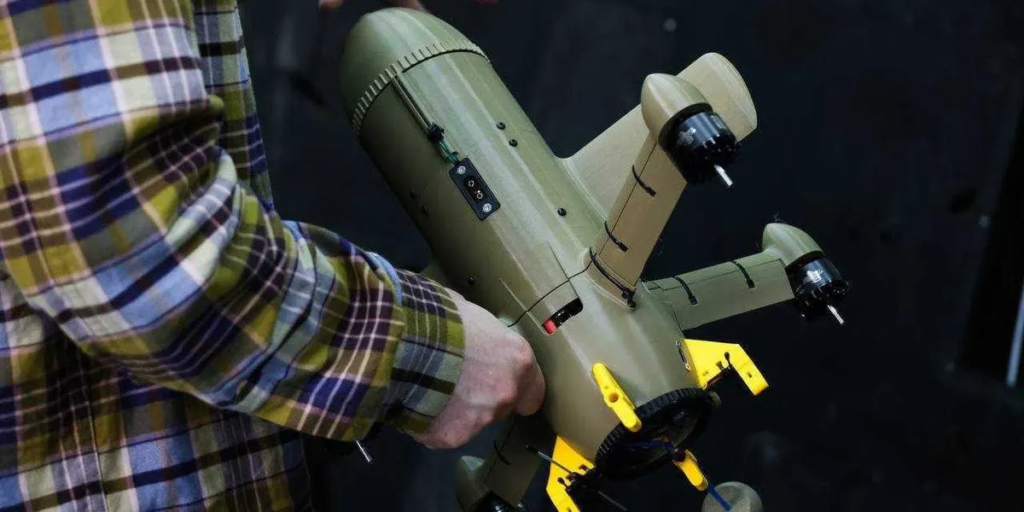
Ukrainian drone “Sting” of the Wild Hornets company
The drones, however, have limited lethality level, together with being comparatively slow.
Fabian Hoffman, a missile industry expert and Doctoral Research Fellow at the Oslo Nuclear Project (ONP) argues:
“Interceptor drones hold a cost advantage, with a capability drawback in their use”
The involvement of these technologies is increasingly changing the economy of war, where instead of costly Patriots (or other air-defence), the parties are turning to a mass-production of the cheaper alternatives. This can be seen on the battlefield with the FPV drones that are used for reconnaissance and also attacks, compensating for the lack of artillery. Mirroring this development, interceptors are replacing the expensive systems quite effectively, as seen in the table below:
Price comparison
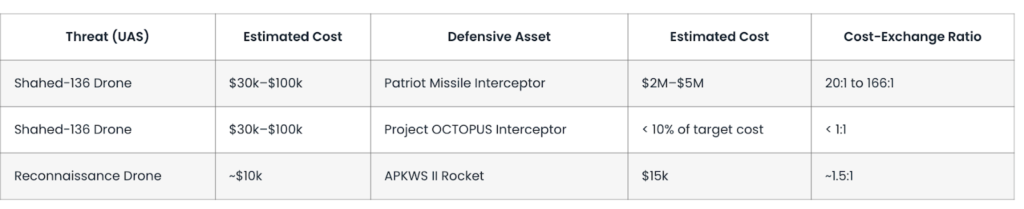
Attacking drone Cost of the drone Defence system Cost of the system Ratio
Rapid Innovation Under Fire: Ukraine’s Drone Advantage
The effectiveness of Ukrainian drone technology lies in the model of their development.
“Ukraine is the world leader in drone design and execution, with drone technology evolving, on average, every six weeks”
– stated the UK Government after signing an agreement on drone cooperation with Ukraine.
Introducing the interceptor drone came out as a response to mass attacks performed by cheap Shahed drones. The initiative was brought by Mykhailo Fedorov, a former Minister of Digital Transformation of Ukraine, who recently became the new Defence Minister, as a part of Zelenskyy’s government changes. This also reflects his will to develop the industry and focus on the new technologies in Defence. The new minister started to act directly in the sector, settingto Deliver 40,000 Interceptor Drones to the Military by the end of January which has to help build an anti-drone-dome eventually, since only in 2025, Ukraine was attacked by up to 100.000 drones.
There are various ways of production that happen in a collaboration with the Ministry of Defence, volunteer funds, MilTech companies and drone operators in the military units. The fact that the drones are made with precise feedback of the operators has a direct impact on their development, making the process as effective as possible. This short feedback loop is reducing bureaucratic actions that make the process quick and efficient. The Russian side is working on the interceptor drones as well, having their Yolka drone as a flagship that is backed by Artificial Intelligence.
As a part of the recently released The United States’ NDS (National Defence Strategy ), the federal government made claims, encouraging European states to take a greater responsibility for its own defence, developing security infrastructure. Considering the input of the US to NATO before the Trump Administration, EU leaders started to put more emphasis on domestic production. As mentioned before, relying on conventional air-defence systems to stop cheap Shahed drones is not sustainable. That is why European countries, in cooperation with Ukrainian experts, must continue developing their own counter-drone technologies and domestic UAVs for defence.
A New Paradigm for European Air Security
The European defence industry is already aware of the opportunities that interceptor drones provide for the new era of non-conventional air defence. The industry is present in France, Netherlands, and many more countries including Latvia, where Origin Robotics recently received a €4.5 million investment from the European Defence Fund. Interceptors are already included in the European Commission’s Defence Readiness Roadmap 2030 as a part of European Drone Defence Initiative (EDDI), embedding drone technology in its doctrine.
Unlike Ukraine, Europe has a great technological advantage with its industry, it only needs to develop stable mechanisms of testing the new prototypes. This can be done in collaboration with Ukrainian companies that would be willing to share the experience with their partners and potentially hold testing in Ukraine. This mechanism of work can be seen at the French ALM Meca, which developed a jet-powered interceptor, designed to put down Russian Shaheds, which demonstrates the readiness and commitment to solving the drawbacks outlined before.
“Drone development in Ukraine and Europe is two different ecosystems that work at different paces, with both having their own advantages and downsides”
Fabian Hoffman
It is now crucial for European policymakers to merge the advantages of these ecosystems, creating a competitive, highly technological industry that will bring effective air protection to the continent. European industry should incorporate the quick testing and provide more opportunities for growing MilTech companies in the drone area. With Ukrainian battlefield testing and European technology, the drones can reach the level needed to effectively deter Russian mass-attacks.
The continent’s greatest advantage is time – and using it decisively will determine Europe’s future air security.