


Munich as Reckoning
On the morning of February 14, a fragile confidence still persisted across Europe that the Transatlantic relationship, however strained, would ultimately endure. Minor disagreements between allies were a familiar occurrence. Relations had long followed a cyclical rhythm, shaped by elections and changing political moods across Europe and the United States. Governments shifted, rhetoric hardened, tensions flared only to recede and soften again. The underlying assumption, however, remained intact: the alliance was structural, durable, and anchored in a shared vision and common values. By the end of the day, that assumption was no longer tenable.
At the Munich Security Conference, a forum long associated with reassurance, continuity, and the quiet maintenance of order, senior representatives of the incoming U.S. administration addressed Europe in terms that felt unmistakably different. This was not the language of partnership navigating shared challenges, nor of allies managing friction. Europe was spoken to as a subordinate that had failed to meet expectations. The tone was not corrective but chastising and contemptuous, the posture not diplomatic but disciplinary. Europe, they suggested, had lost its freedoms, its democratic values, plagued by the specter of state censorship and incapable of defending itself from the flood of migrants.
In retrospect, Munich was not an outburst, nor a miscalculation. It was a rupture and a diagnostic moment of a strategic shift. The posture on display that day would soon find its doctrinal expression in the 2025 U.S. National Security Strategy.
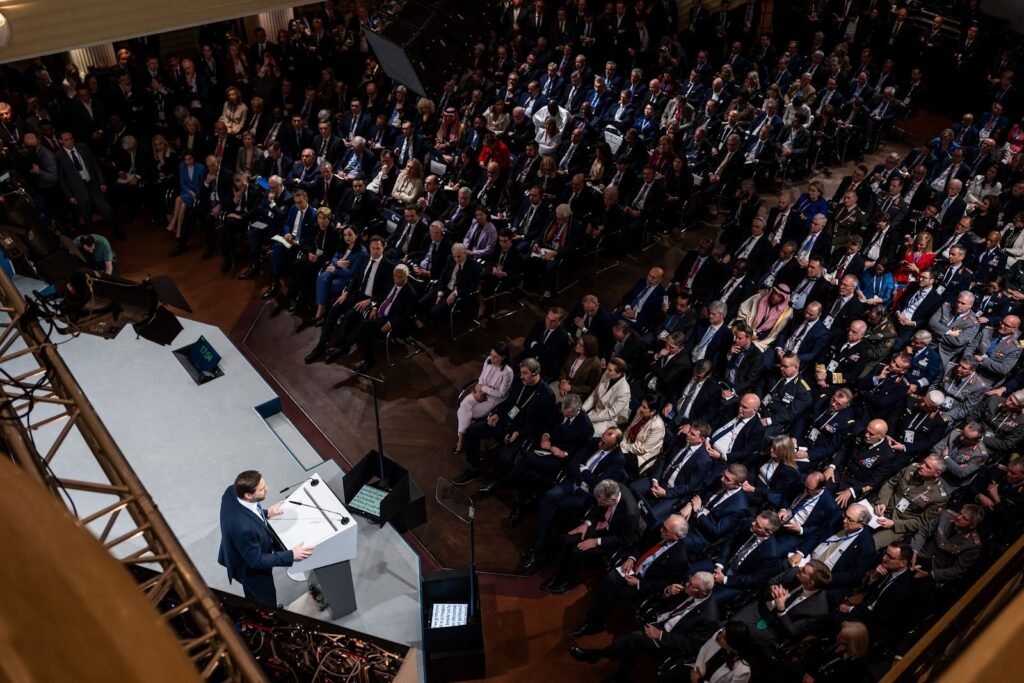
JD Vance at MSC 2025 (© MSC/Hecker) Source: Munich Security Conference 2025
From Leviathan to Arkhē
For much of the post–Second World War era, the United States functioned as a stabilizing sovereign creating order in a previously anarchic system. In Hobbesian terms, it approximated a Leviathan, it absorbed costs to enforce rules, underwrote collective defense, stabilized markets, and embedded its power within institutions that made cooperation predictable and legitimate. This posture reflected a strategic calculation: American security and prosperity depended on the stability of the order it had built. The 2025 National Security Strategy marks a decisive break from that logic. What disappears is not American power, but American responsibility for maintaining order. The language of stewardship and shared governance gives way to a vocabulary of sovereignty, mercantilism, extraction, and control. Institutions once framed as force multipliers are recast as constraints on freedom of action and national autonomy. Alliances are no longer instruments of long-term stability, but conditional arrangements evaluated by immediate return.
As Michel Don Michaloliákos has observed, “There is a clear shift in what the U.S. perceives as its vital interests and how to promote these. The NSS seems like a commercial strategy recorded by Silicon Valley and Wall Street, aimed at exploiting other countries as (digital) colonies.” The document seems to ask not how to defend an order, but what benefits the United States can extract from participation in it. Security becomes transactional, commitment is questioned based on direct gains, and legitimacy gives way to conditional engagement.
The Strategy does not represent American retreat from the world. On the contrary, it represents the deliberate relinquishment of responsibility for global order, in favor of a narrower conception of power oriented toward control, bargaining, and selective intervention rather than system guardianship.
A Return to a Gilded Age Logic
This impulse has clear precedents in American history. The document evokes the logic of the Gilded Age at the turn of the twentieth century, a period often misremembered as one of prosperity, but more accurately defined by extreme inequality, monopolization, corruption, and anxiety over immigration, national identity, and social cohesion. During that era, domestic instability was paired with strategic consolidation abroad. The United States narrowed its focus to the Western Hemisphere, asserting regional primacy while avoiding deeper entanglement in European politics. Instruments such as the Monroe Doctrine, the Platt Amendment, and later the Roosevelt Corollary formalized this approach. In Latin America, sovereignty was treated as conditional when instability, debt, or external influence threatened regional order. Through dollar diplomacy and episodic intervention, Washington justified its actions in a moral and civilizational register: stability, progress, and order were framed as collective goods, even when imposed asymmetrically.
The 2025 National Security Strategy revives this logic in updated form. The Western Hemisphere is once again defined as the core security theater. Migration routes, border enforcement, governance failures, drug trafficking, strategic assets, and external economic influence are cited as justifications for preemptive control rather than cooperative management. The structure is familiar: stability is again equated with controllability. The difference lies in context and in language. The Gilded Age unfolded within an international order the United States did not design and did not yet lead, British imperial power still anchored the system. Today’s retrenchment occurs within an order the United States strategically built after 1945. More strikingly, the new security doctrine strips intervention of even the rhetorical commitment to collective stabilization. Where earlier hemispheric doctrines cloaked power in moral purpose, the current Strategy speaks almost exclusively in the language of interest, leverage, and return on investments.
Sovereignty is elevated as a core principle, but primarily as an American entitlement. For others, it appears contingent, instrumental, and negotiable. The result is not a revival of Theodore Roosevelt’s maxim to “speak softly and carry a big stick”, but something closer to carrying the stick without the soft voice: coercion without the pretense of guardianship, intervention without the ambition to sustain order for its own sake. That shift is what makes the parallel destabilizing rather than cyclical.
Domestic Primacy as Strategy
The doctrinal shift is structural and is reflected in the document’s architecture. Previous National Security Strategies began with the international environment and treated American renewal as enabling leadership abroad. The 2025 Strategy reverses that logic. It begins at home. National borders are framed as the primary element of security, migration is treated as an existential force reshaping legitimacy and cohesion. Industrial capacity, energy dominance, supply chains, and even cultural and spiritual health are elevated to survival concerns. Only then does the Strategy turn outward, and even then, engagement is subordinate to national priorities. This is not isolationism, rather it is domestic primacy as strategy.
Alliances Without Allegiance
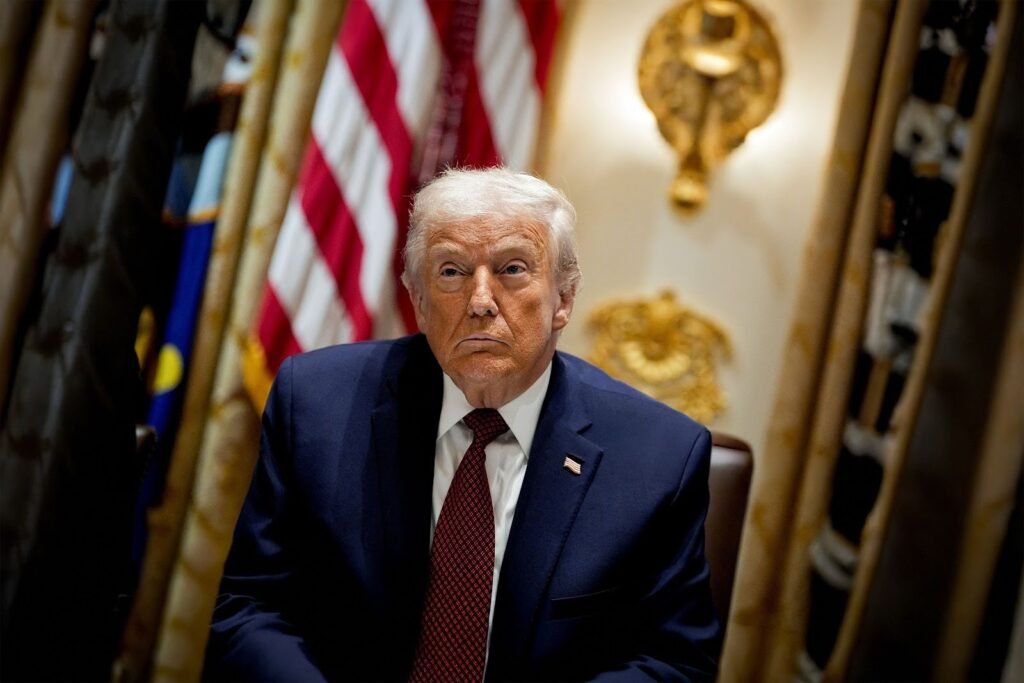
Nowhere is the rupture clearer than in the treatment of alliances. Anna van Zoest notes that “under previous administrations, alliances were understood as durable political commitments. Biden, and presidents before him, used NATO as a platform to build coalitions with like-minded partners. Alliances were a vehicle for furthering American interests”. However, under the current administration and its new doctrine, alliances are understood as “bilateral arrangements evaluated case by case”. It is up to Europe to “ hopefully gradually become less dependent or pair [of the U.S.]”. Van Zoest continues “In the meantime, Europe must demonstrate the strategic importance it can play in future fields like the race for the Arctic. Right now NATO Allies safeguard access to the North Atlantic and help the U.S. reinstate itself in an area where it competes with others for access and natural resources. In doing so, they show why NATO is a strategic asset for the U.S. too”. The NSS systemically redefines the concept of alliance: burden sharing becomes burden shifting, collective defense gives way to regional responsibility, support is conditional, potentially rewarded through trade concessions, technology access, or procurement advantages rather than concrete security guarantees. Europe is no longer framed as a stabilizing partner, but as a volatile entity weakened by demographic change, regulatory overreach, plagued by democratic erosion and cultural fragmentation. The European Union appears less as a force multiplier than as an elite-driven project, depicted as constraining national sovereignty and insulating decision-making from democratic accountability This downgrading of the EU is not merely rhetorical, as Don Michaloliákos argues, “ the neglect of European and Ukrainian security interests is closely related to the US attack on the rule making power of the EU”. Europe is chastised, paradoxically, for becoming what the post-1945 American order encouraged it to be. The Strategy rejects the values the United States previously championed: democracy promotion, institutional legitimacy, and rule-based cooperation are no longer security assets. Intervention, when contemplated, is stripped of normative language and justified purely instrumentally and stability matters only insofar as it benefits American interests. Openness is vulnerability, institutions are constraints operating from ideological frameworks, and legitimate leadership is expendable.
Thucydides’s Warning: from Hegemonia to Arkhē
Some describe this turn as Machiavellian, but the analogy fails. Machiavelli’s prince is preoccupied with durability and cautions against alienating allies or mistaking fear for loyalty.
The governing logic of the NSS 2025 aligns far more closely with the form of power Thucydides describes at moments of imperial decay. In his account, it is not power itself that corrodes authority, but the reduction- or abdication- of leadership to fear, shortsighted interests, and asymmetry. Justice and rules applies only among equals and cooperation endures only so long as it remains advantageous. For the Athenian historian, imperial decay precedes decline, for decline begins not with weakness, but with the abandonment of legitimacy.
Crucially, Thucydides draws a distinction between hegemony sustained through timē – honor, restraint, and leadership accepted by others- and a form of arkhē that prioritizes ōpheleia, short-term advantages, over legitimacy bestowed through consent. In Thucydidean terms, the danger is not that primacy disappears, but that legitimated leadership (hegemonia) is hollowed out, leaving space to a form of control (arkhē) increasingly reliant on leverage and coercion, a shift that corrodes authority and invites overreach. Such a system is not yet tyranny, but it marks the erosion of hegemony itself. To be more specific, the transition from hegemony to arkhē occurs when immediate gains and narrow self-interest are prioritized over collective benefit and leadership by consent. In this sense, America has not declined or collapsed, it has chosen to forfeit the foundations of its authority, consent gives way to coercion and leadership to dominance.
In this reading, the United States is not withdrawing from the world, nor is it in structural decline. It is making a strategic decision: to exchange the burdens of hegemonic leadership for the freedoms of unconstrained and self-interested power. It is reentering the international system on harsher terms, accepting a global volatility not as a condition to be mitigated, but as a terrain to be exploited.
What does this choice mean in practice? It does not amount to isolationism or a complete withdrawal. American power remains present, active, and often decisive. What changes is the nature of engagement: the U.S. no longer positions itself as the guarantor of a system but as an actor operating within it, advancing national interests and disengaging from obligations. This posture is sometimes framed as a return to America’s original instincts: a Republic wary of foreign entanglements and commitments. But the United States of the twenty-first century is not the republic of the thirteen colonies. It is the principal architect of the post-1945 international order, whether it seeks the role or not, for now the U.S. remains a point of reference in the international system. History suggests that when great powers abandon legitimacy in favor of leverage, they do not regain sovereignty, they instead accelerate the disorder they fear.
If America has long imagined itself as the shining city on a hill, then today its light feels unmistakably dimmer. The city still stands, but its gaze has turned inward, guarded, transactional, and war of the world it once sought to shape. The 2025 NSS captures this shift with unusual clarity. It reads less like a blueprint for sustaining the existing order than a diagnosis of national vulnerability. And in that diagnosis lies a deliberate departure from the role America once chose to play.