

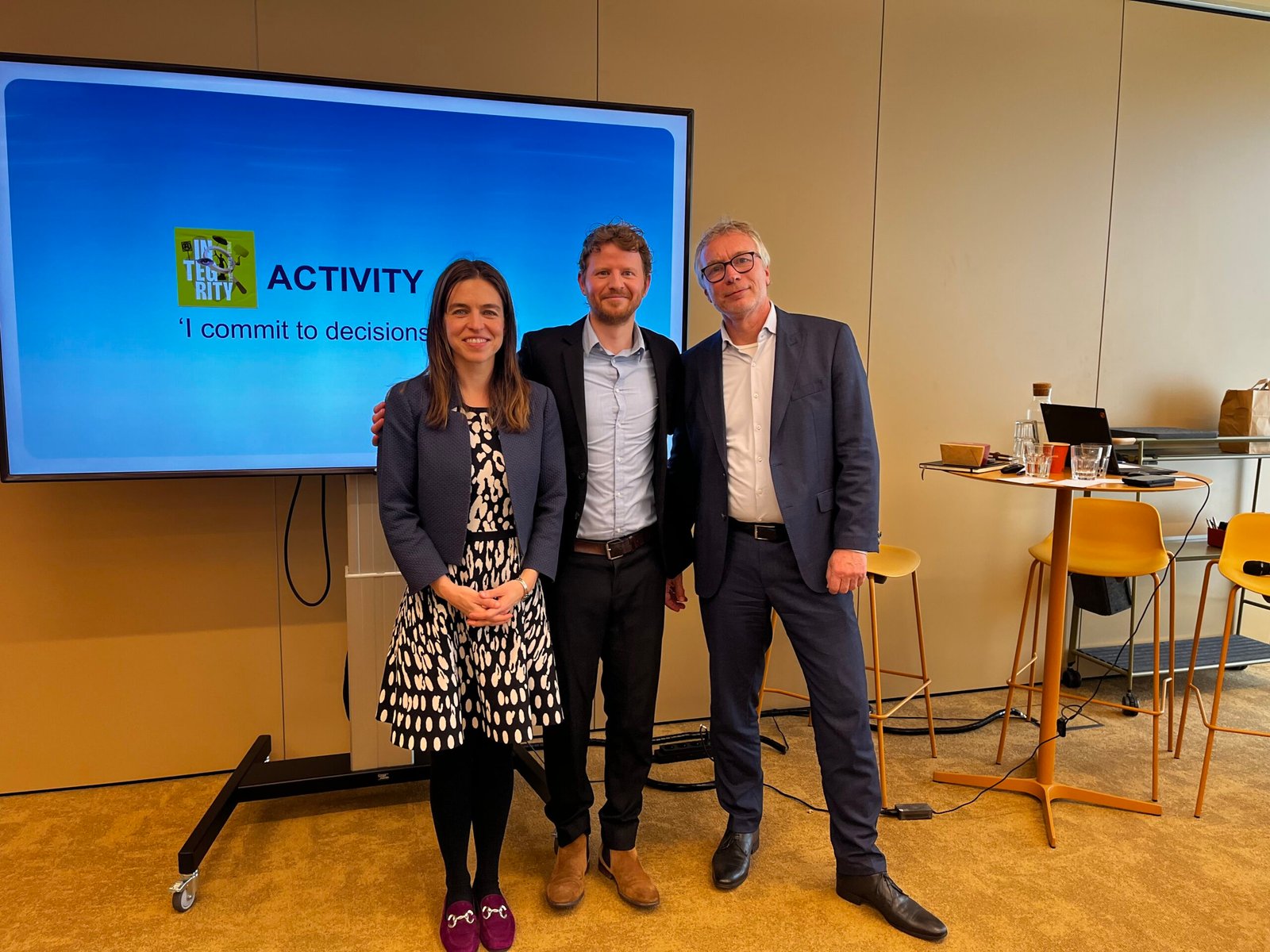
On April 14th, The Hague Institute for Geopolitics (HIG) was invited to give a masterclass at FMO, the Dutch entrepreneurial development bank, to examine the intersection of geopolitics and geoeconomics in an increasingly fragmented global order. As a bank, FMO is actively seeking strategic guidance on future investments direction and HIG was contracted to deliver some guidance in helping navigating the current geopolitical and geoeconomics uncertainty.
The session was led by Michel don Michaloliákos, co-founder of HIG, centered on a core question: how should long-term investments strategies adapt in a world defined less by stability and more by structural uncertainty?
The conversation examined the difficulties emerging from the unraveling of the post Cold War order and moved beyond surface-level risk assessments, mapping out potential trajectories of the international systems, with a focus on developing markets. During the masterclass, different topics were explored: technological and political developments, capital flows, institutional resilience, as well as the economic limitations of countries with hegemonic ambitions. The masterclass gave space to a lively debate and what emerged from it was a shared recognition that volatility/instability itself is a defining feature of the global landscape. As such, by mastering the complexities of geopolitics it is possible to anticipate valuable investments to further FMO’s mission to support jobs and improve people’s lives in the over 85 countries they operate in. A key recommendation was to prioritize investment in CTM supply chains, with the dual objective of strengthening Europe’s resilience and position on the world stage, and supporting economic transformation in partner countries. In addition, HIG emphasized the two main structural economic transformations:
- the shift from agrarian to industrial economies
- the transition from industrial to service based economies
and how aligning investments with these transitions would allow FMO to play a more active and consequential role in shaping sustainable development.
Within this context, Michel emphasized the role of middle powers. As traditional hegemonic structures face strain, these states may act as strategic coordinators. The argument advanced by don Michaloliákos was that cooperation among middle powers offers a more sustainable pathway to safeguarding democracy and collective interest. Investments decisions must take into account geopolitical developments to acquire strategic competition and, as HIG states in its mission statement, the need for adaptive, geopolitically informed decision making has never bene more urgent.
We would like to thank FMO for the opportunity to offer this masterclass and we extend our gratitude to the participants whose engagement made the day ever more rewarding.