

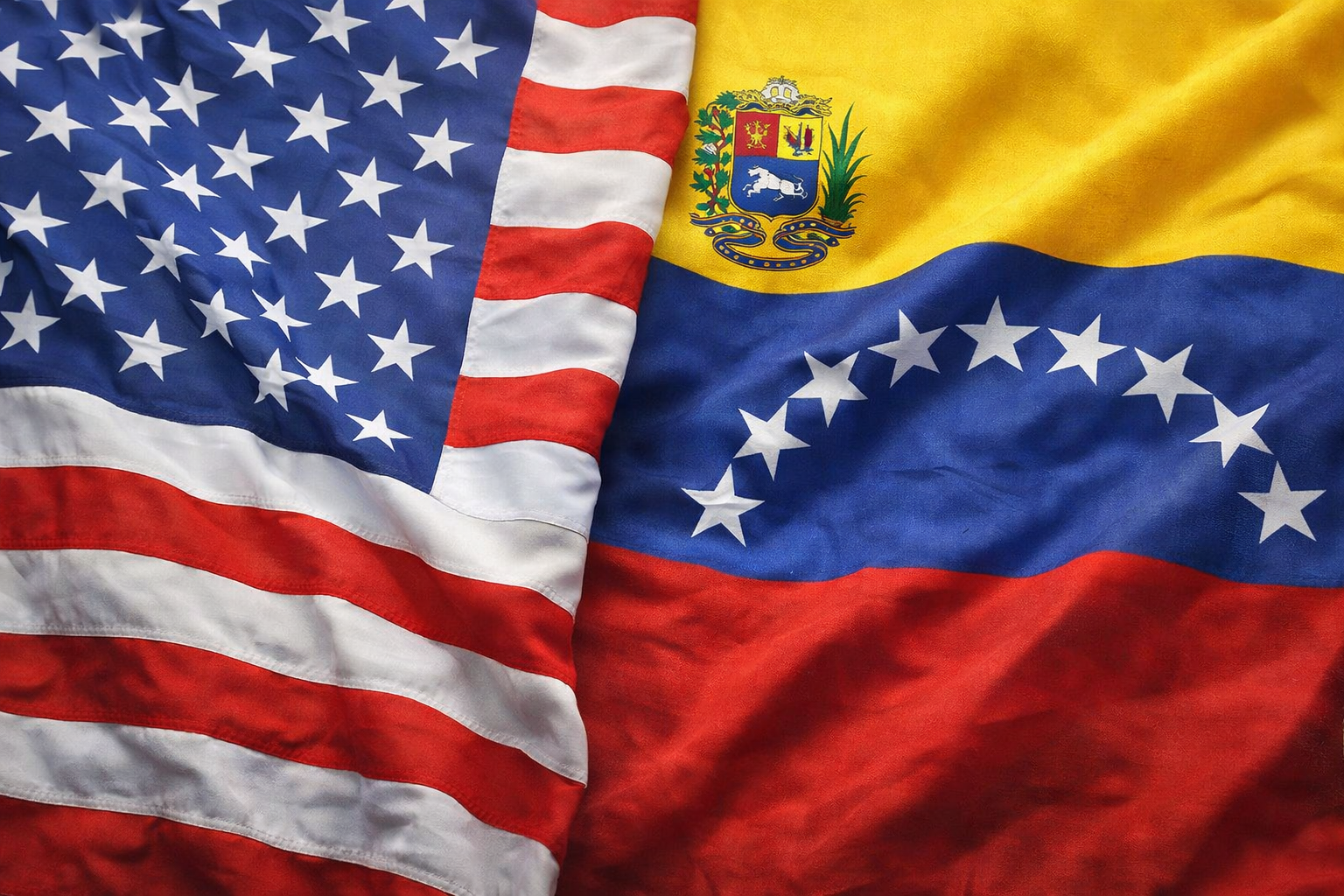
- The January 3rd raid was a military success: precise execution, no American fatalities, and objective secured. But military competence does not answer the strategic questions: why now? And what is the political end-state?
- U.S. interventionism in Latin America is not new. What has changed is the context and modality: in a post-Cold War, interconnected world, overt hemispheric primacy signals a turn toward spheres-of-influence politics, raising questions about whether the United States is narrowing its conception of leadership.
- The 2025 NSS prominently invokes sovereignty, but the concept is applied asymmetrically. For the United States it is absolute; for others it becomes conditional, revealing a hierarchy of rights rather than a universal norm.
It is tempting to read January 3rd as a technically remarkable raid, a mission that, by most accounts, executed its objective with surgical precision. That lens is not wrong but it is too narrow: it evaluates performance not consequence. Zooming out, the operation matters less as a feat of military craft than as a revealing episode in the current administration’s foreign policy.
A month has passed and Nicolàs Maduro remains in U.S. custody, awaiting trial on American soil. Yet the fate of Venezuela itself, of its people, its institutions, its future, stays undefined. The operation was months in the making, not only in secret rooms and training grounds, but in public. The informational terrain was prepared loudly and over months. Americans were told stories of a looming narco-state, of “narco-terrorism,” of pipelines anchored in Caracas, of drugs leaving Venezuelan shore, drugs reaching U.S. communities, a threat framed as national security.
Much has been said since about legality, about precedent, and about what this signals for the international order. Many across the democratic world felt relief at Maduro’s removal. He was indisputably a dictator: illegitimate, corrupt, destructive by any serious measure. For many Venezuelans, his removal will feel like the end of a long suffocation, even as the future remains uncertain. But Venezuela is more than the removal of a single man. Once the adrenaline and exhilaration of military might faded, and Maduro was in custody, the harder questions surfaced.
Tactical brilliance but strategic myopia
It is hard not to be impressed by the mechanics of the raid. From what has been reported, the operation unfolded with an almost cinematic smoothness. Months of surveillance and rehearsal compressed uncertainty into routine, until little was left to chance. When the night came, communications were cut, power grids across Caracas went dark, and U.S. forces moved with the efficiency of something long prepared. In purely military terms, it was competence on display and proof that American might remains unmatched. But competence alone is not a strategy, and reality is not a movie.
The morning after, Venezuela woke up with its state apparatus still standing, networks and lines still intact, and only a vacuum where one man had been. Maduro was gone, but the system that made Maduro possible did not vanish with him. In Venezuela, removing the head did not kill the snake, it simply forced the organism to adapt, and so it did. The regime did not collapse, it recalibrated around Delcy Rodriguez – for now- moving quickly to prevent any real break in control. And so, institutional continuity was preserved. And that is the hinge on which this turns. The real question is not whether the raid was “successful,” but what it was for.
What occurred was not regime change in the classical sense, but decapitation of leadership without articulated reconstruction. As Dr. Thompson, lecturer in American studies at the University of Amsterdam, notes in the current administration “decision making appears more instinct-driven and less tethered to a structured strategy than in previous administrations.”
If the purpose was a democratic opening, one would expect at least the outline of a strategy: a transnational unifying authority, a timetable, safeguards, perhaps international coordination, even if posthumous. None of that has appeared with clarity, then or since. In the first press conference, the narcotrafficking angle surfaced only briefly giving way to a different priority: oil, leverage, and absolute control. Most striking was what was absent. Democracy, the word that once made so much work in American rhetoric, was not mentioned once. There was no democratic horizon and, in its place, came the language of management, stability, and coercion.
The raid itself had been carefully prepared; the aftermath was not. For the first week, even the basic question of who would run the country remained unanswered.
Out with the new, In with the old
Read against American history, U.S. intervention in Central and Latin America is not new. The impulse to treat the Western Hemisphere as a territorial extension of the contiguous United States finds numerous precedents throughout the decades. The intellectual and “legal” lineage runs from the Monroe Doctrine
(1823) to the Roosevelt Corollary, from Taft’s “dollar diplomacy” to Wilson’s “moral” interventionism. Together, they created a durable template: US intervention justified as prevention and protection of interests. The premise was simple: instability and debt in America’s backyard invited European footholds, thus Washington reserved the right to intervene, militarily or otherwise. What followed in the early 20th century was not full annexation, but something closer to managerial control: customs houses, fiscal receiverships, Marines on the ground, and local governments reshaped around “order”. That is a U.S. aligned order. The clearest case of such strategy was the Banana wars: national sovereignty was formally preserved, but in practice it became conditional.
Dr. Thompson explains, “if you put Venezuela next to earlier U.S. interventions in the hemisphere, the differences are easy to overstate. Washington has repeatedly treated the region as a “backyard” and removed regimes it disliked, especially when stability and U.S. interested were at stake”. And indeed, that historical pattern matters because it shows that American power has long had a hemispheric mode in which geo-strategic and commercial motives fuse together. “Stability,” “security,” and “good governance” functioned as the legitimizing wrapper, but the mechanics mostly revolved around access, debt control, and private investment protection. In that sense, today’s geo-economic language has deep roots: the Western Hemisphere as a space where the United States can claim special rights.
However, history also shows that this posture was not inevitable and course correction could be applied. FDR’s “Good Neighbor Policy” represented a deliberate rhetorical and operational retreat from overt intervention, partly because occupations were costly and unpopular and partly because legitimacy and diplomacy were deemed as more effective than coercive supervision and brute force. The pivot did not end U.S. influence, it transformed it: less direct control, more negotiated partnerships.
That duality in American outward impulses helps clarify the present moment. If the early twentieth century offered a model of direct hemispheric intervention, justified in the language of stability and “management”, the Good Neighbor turn showed that the United States could choose a different theory of influence, one built on restraint, bargaining, and legitimacy. As the world reshaped itself after WWII, Cold War logic reasserted a harder hierarchy of priorities: containing communism outranked liberal ideals around the world, while Washington still paid lip service to democratic values. In Latin America, there is a long record of destabilizing interventions made in the name of “security.” As Dr. Thompson points out “during the Cold War, U.S. officials would admit the tradeoff: supporting right-wing dictators wasn’t ideal, but they argued it was preferable to the alternative.”
From this perspective, the Venezuela raid signals a return to the past. Yet the old Corollary-style logic – whether it is Roosevelt’s or Trump’s- lands as anachronistic and discordant in a densely interconnected world. What troubles more than anything, perhaps, is that the moral vocabulary that once varnished American intervention, however inconsistently practiced, has disappeared entirely and ceded ground to unabashed imperialism.
NSS and Venezuela: correlation does not mean causation
This doctrinal change should not come as a surprise. The 2025 National Security Strategy accurately described the priorities of this administration. However, one should not interpret the 2025 NSS as a literal operational blueprint. Dr. Thompson cautions “such documents rarely function as straightforward roadmaps. They are better understood as a window into an administration worldview rather than a prescription of specific actions.” Moreover, Dr. Paul Van Hooft, research leader at RAND and expert in American grand strategy, notes “National Security Strategies are artifacts of compromise and best understood as Venn diagrams of overlapping interests within the different factions that shape an administration’s foreign policy.” Thus, what the 2025 NSS provides is not a script, but a constellation of motives and a hierarchy of priorities within which such an intervention becomes politically intelligible.
The NSS was not the causal driver of the intervention: Venezuela was a long-running thorn in the side of U.S. hemispheric policy, well before Trump’s second term. Dr. van Hooft argues “Venezuela has occupied a structurally fraught position in US foreign policy. An intervention was predictable, and it would have been predictable seven years ago as well.”
What distinguishes January 3rd is not the objective of removal, but the modality through which it was executed. Unlike past interventions, this operation appears narrowly tailored. It did not seek to reshape governance. Its logic was more transactional than transformative: remove the individual who obstructs U.S. strategic and economic priorities and allow the existing system to recalibrate under more pliable leadership.
Equally striking is the absence of the traditional framing devices that once accompanied American interventions. Even when imperfectly applied, previous administrations tended to use military action within a minimal architecture of legitimacy appeals to international law and references to regional security and stability. Those frames were merely rhetorical but still signaled that power was being exercised within a normative order. In Venezuela, the intervention followed a more direct logic: the capability to execute existed, therefore the operation followed. This is not simply a tonal difference: it suggests a recalibration of how power is justified and deployed. And so the question shifts from “is it legitimate?” to “is it feasible?”.
Read in that light, the 2025 NSS becomes analytically relevant and offers a grammar that makes the raid in Venezuela and its modality comprehensible. Not only it treats the Western Hemisphere as a core priority, but it also treats economic assets (oil, rare earth materials and so on) as instruments of national security and economic prosperity. And so, Venezuela becomes a case study of this doctrine, where regional primacy materializes in practice as regime removal and coercive control of local sources.
It is also important to note how prominently the National Security Strategy invokes the language of sovereignty. Yet this very concept is applied selectively and rather asymmetrically. For the United States, it is treated as absolute; for others, it becomes conditional, or as Van Hooft puts it “rights for me not for thee.” Venezuela is the fourth and, so far, clearest case but far from the only one. The threats and coercive rhetoric towards Greenland, Cuba, Mexico, Colombia all reflect the same logic. And thus, the sovereignty principle functions less as a universal norm and more as a hierarchy of rights where might makes right.
Hegemonic downgrade and “flexible realism”
The administration has offered its own label for this shift: “Flexible Realism”, a foreign policy that claims to see the world “clear-eyed” and not through the lenses of “utopian idealism”. Power and strength become the organizing principles of a new world order, one where the theoretical preference for strength over norms is expressed through kinetic action. The United States, long a global hegemon, is increasingly and willingly acting as a regional superpower rather than stewards of a rules-based order. This reads effectively as a downgrade in the sense that global leadership is replaced with spheres of influence politics.
That shift is a risky bet and has direct consequences beyond values. In an interconnected world, still structured around multilateral institutions and collective security alliances, a model that prioritizes short term gains over long term stability not only erodes American power, but it also invites copycat actions. Rivals like China and Russia might – or already- mirror these coercive postures generating international instability.
If, as Stephen Miller put it, the old “international niceties”of diplomacy are a thing of the past, a question naturally arises: what replaces them exactly and what kind of world awaits us? A world in which hubris goes unchecked and might becomes the primary metric of policy rather than stability and cooperation.
Perhaps, a counterweight will not come from the hegemon itself, at least not now. It may emerge from middle powers acting in concert, forming coalitions that still see value in rules, law, institutional constraint, and that choose consent over coercion.